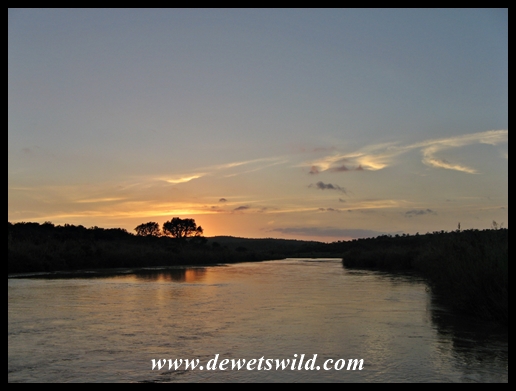
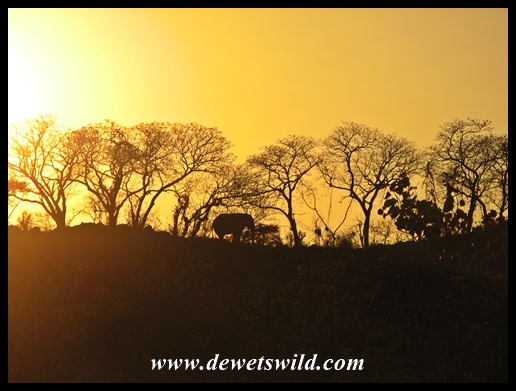
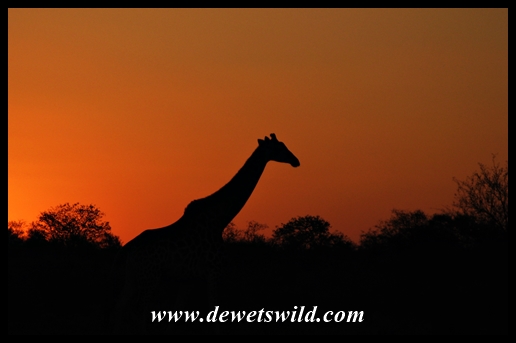
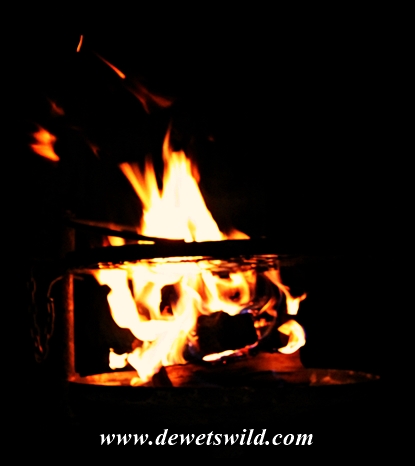
Fire was the first source of light that humans learned to control, and to this day it remains an essential ingredient of any night spent in the great outdoors!

“Let there be light” is the theme for this week’s WordPress Photo Challenge.
Fire was the first source of light that humans learned to control, and to this day it remains an essential ingredient of any night spent in the great outdoors!

“Let there be light” is the theme for this week’s WordPress Photo Challenge.
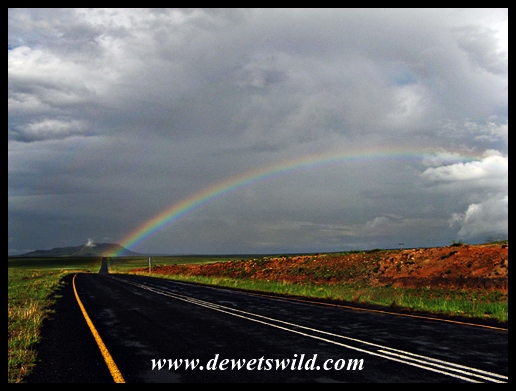
I made a quick solo visit to Golden Gate Highlands National Park today for work, and of course the cameras went along! With summer now in full swing the Park is looking absolutely beautiful. You can click on any of the images to view them in a carousel gallery:
To read more about Golden Gate Highlands National Park, have a look at our special post on the Park’s 50th anniversary)
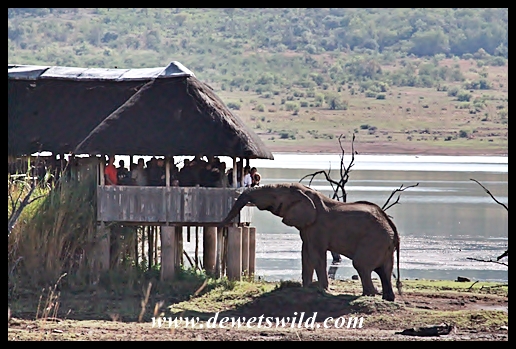
Joubert and I have just returned from a most enjoyable weekend spent camping in the Pilanesberg National Park with my brother Niel. More about our trip in an upcoming installment of de Wets Wild!
Tonight we’re sharing this picture from our trip, taken at the Mankwe game-viewing hide, yesterday:


Almost right in the south-east corner of the Kruger National Park lies quaint Crocodile Bridge, which serves both as an entrance gate into the Park and a rest camp providing overnight accommodation and other amenities to visitors.

Crocodile Bridge sunset
The first Europeans to set foot in what is today the Kruger National Park was a Dutch expedition from Delagoa Bay (today Maputo, Mozambique) in 1725, under command of Francois de Kuiper, who was forced to turn around at Gomondwane just north of Crocodile Bridge by antagonistic locals.
By 1894 work started on the railway bridge across the Crocodile River, an important section of the Selati Line.

Crocodile Bridge railway bridge
Crocodile Bridge was one of the first four ranger stations in the Sabie Game Reserve, which later became the Kruger National Park. The first stretch of road in the Park was built by ranger de la Porte from Crocodile Bridge to his post at Lower Sabie for use by his personal Model-T Ford, but it was too rough to be used by visitors and so had to be upgraded soon after the Park’s proclamation in 1926. The pontoon over the Crocodile River was in use until 1945, the last in the Park to be replaced with a low-level causeway.

Misty Crocodile Bridge sunrise
In March 1929, the Crocodile Bridge area was the scene of one of the most notorious events in the young Park’s history. Two lorry loads of American tourists, visiting South Africa on a cruise ship tour, were driven into the Park on their way to Lower Sabie, when they were caught in a thunderstorm and decided to turn back. A dry stream they had crossed earlier was now in flash flood, but the drivers decided to cross it nevertheless, with dreadful consequence, as the first truck was summarily overturned by the raging water. Luckily no one was killed or seriously injured. When lions started roaring nearby, the soggy tourists climbed into the thorn trees and this is where the local ranger found them hours later; cold, miserable, wet, muddy and tattered. The subsequent reports all over the world describing the Park as a “death trap” lead to it being closed to visitors annually through the wet season, a ruling that was scrapped only in the late 1970’s.

The perils of working as the ranger guide at the Hippo Pools – a herd of buffalo may just cause you to be late for work!
Today, the area around Crocodile Bridge is one of the most popular regions in the Park – little wonder considering that the immediate area around the camp supports large numbers of a huge variety of animals and birds. The tarred road leading to Lower Sabie carries most of the “traffic”, and so we prefer to travel on the gravel roads instead when we are in the vicinity. The S25 road that follows the course of the Crocodile River westwards towards Malelane is a particular favourite that often delivers sightings of predators. A short turn-off from this road takes you to the Hippo Pools, where an armed ranger escorts visitors to the river’s edge for a closer view of the hippos, crocodiles and riverine birds. The S28 Nhlowa Road is an alternative, and highly recommended, route through to Lower Sabie. Near camp, Gezantfombi Dam is just the place to enjoy that first morning coffee or to while away the last couple of minutes before the gates close for the night.
The camp lies on the bank of the Crocodile River and its shady grounds are frequented by a myriad of small animals and a rich birdlife – just keep a watchful eye on the little vervet monkeys who’ll part you from any food left in the open in the blink of an eye! Crocodile Bridge first opened to visitors in the 1930’s but was completely rebuilt in 1987. It offers twenty 3-bed bungalows with their own bathrooms and kitchenettes, eight safari tents that make use of communal facilities, and a small campsite (with plugpoints). The camp also has a small, but well stocked, shop and a fuel station.
It’s the family-friendly atmosphere that draws us to Crocodile Bridge most. The spacious, green, shady lawns of the camp, the game-rich surroundings and the peacefulness of it all will see us return again and again…

Crocodile Bridge
Finding a little bat in a corner of a kitchen at Shingwedzi Rest Camp, was definitely an unexpected, but not unwelcome, surprise.

“Unexpected” is this week’s weekly photo challenge from WordPress.
For this week’s photo challenge, themed “Layers“, we’re taking you back to one of our all time favourite destinations, the Golden Gate Highlands National Park, where the layers of differently coloured sandstone cliffs are the Park’s most recognisable feature.
(click on any of the images to see them enlarged)
Joubert and I spent the afternoon strolling through our local Moreletakloof Nature Reserve today, encountering a variety of animals along the way and accompanied by a most relaxing chorus of birdsong.


It’s not only humans that are pre-occupied with grooming!


This week, “habit” is the theme for WordPress’ photo challenge
Punda Maria, the Kruger National Park’s northern-most rest camp, is a unique place rich in character, history and natural beauty.

Pafuri
In 1919 Captain JJ Coetzer, after serving in the military in East Africa, was appointed to a new ranger post in the north of the then Shingwedzi Game Reserve. He named his base, at the Shikokololo fountain at the foot of Dimbo Hill, Punda Maria – a combination of punda milia, Swahili for zebra, after the first animals he encountered in the area, and his wife’s name, Maria, who reportedly loved wearing striped dresses.

Pafuri
The original lattice-and-mud, white-washed walls and thatched roofs of the accommodation units constructed in 1933 are still used to house guests today. The interiors of the units were modernised in the 1980’s without altering the exterior appearance, preserving Punda Maria’s wilderness outpost atmosphere. The camp also offers two comfortable family cottages and seven two-sleeper safari tents, as well as a large camping area at the foot of the hill. Facilities in the camp includes a small shop, restaurant, filling station, laundry, swimming pool and a hide overlooking a flood-lit waterhole next to the perimeter fence. Guided drives and walks are available and the self-guided Paradise Flycatcher Trail that meanders through a piece of natural vegetation on the hillside within the camp allows an opportunity to get close to the small animals and numerous birds that call Punda Maria home.
The area around Punda Maria is exceptionally rich in plant, animal and bird life and is renowned for its scenic splendour.

Dzundwini

Dzundwini
Close to camp, on the S60 heading towards Pafuri, lies the long, flat hill of Gumbandebvu, regarded as sacred and haunted. The hill is named after a chief who’s daughter, Khama, was reputed to have had the gift of rain-making.

Khama working her rain-making magic over Gumbandebvu
No visit to the North of the Kruger National Park would be complete without a pilgrimage to Pafuri. This is one of the Kruger’s most unspoilt areas and is regarded as one of the best birding locations in the entire country. The Pafuri Picnic Spot is a peaceful place to enjoy a leisurely meal or cool drink, watching the waters of the Luvuvhu River flow slowly past, with only the constant twittering of colourful birds, the call of a fish eagle, the bark of a baboon or the snort of a hippo to break the silence.
Thulamela, located on a hill overlooking the Luvuvhu River at the end of the short Nyala Loop, was a 16th century citadel from the same culture responsible for Great Zimbabwe. Artifacts found on the site is evidence of trade between this sophisticated hierarchical society and places as far afield as India, China and West Africa. Guided tours of the ruins can be undertaken from Punda Maria.

Thulamela Hill
At the confluence of the Luvuvhu and Limpopo Rivers three countries meet – South Africa, Mozambique and Zimbabwe. Because all kinds of smugglers, bandits and poachers from the late 1800’s and early 1900’s could evade capture by the law-enforcement authorities of these countries by simply slipping across the borders, the area quickly became known as “Crook’s Corner”.

Crooks Corner

Crooks Corner
If you long to touch the wilderness, if you want to experience the Kruger National Park at its uncluttered wildest and if your pioneering spirit wants to drift back to more romantic times, then ensure that you include Punda Maria in your Kruger Park itinerary!

Pafuri
A spotted hyena heading for home at first light in the Hluhluwe-Imfolozi Park, and carrying with him a sizable chunk of wildebeest…

WordPress’ new theme for their weekly photo challenge is “Eerie“