Tag Archives: outdoors

Baobab

Adansonia digitata

African legend has it that God got upset with the baobab and kicked it out of heaven. It smashed into the earth upside down, with its roots sticking into the air.

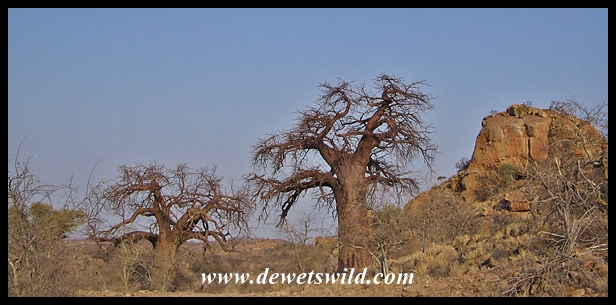
Baobab, Mapungubwe (1)

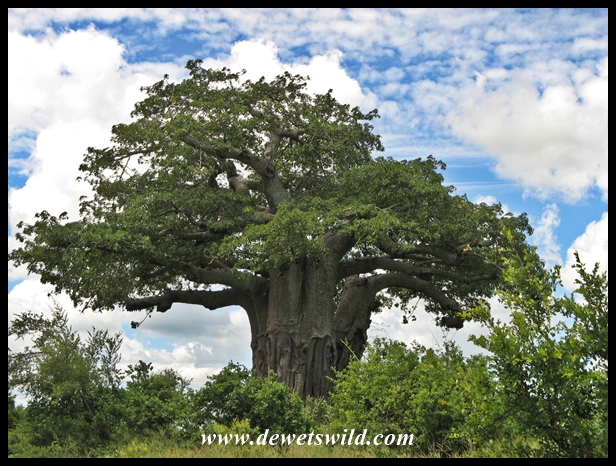
Due to its size, an adult baobab cannot be mistaken for any other tree. They reach heights of over 20m, with trunks sometimes more than 10m in diameter. Trees this size are estimated to be between 2000 and 4000 years old and have served as landmarks in the vast African wilderness for centuries.

Baobabs are deciduous trees, covered in dense green leaves during summer and completely devoid of their foliage in winter. The wood is very soft, and when the tree dies disintegrates quickly into a heap of fibres.

Unfortunately, elephants have a particular fondness for the baobab and especially the bark, often causing the death of the trees by their very destructive feeding habits. Several other animals, including baboons, monkeys, birds, and predators use the tree for food or shelter.

The baobab has many traditional uses: the fruit can be used to make a most refreshing cooldrink with water or milk, the seeds roasted as a coffee substitute, the roots can be used to make a kind of porridge, young leaves cooked like vegetables, and the fibrous bark, apart from being used in traditional medicine, can be woven into mats used to build shelter or as floor covering.

In South Africa, the baobab occurs naturally only in the extreme northern and eastern parts of the Limpopo Province, with magnificent specimens to be found in the Kruger and Mapungubwe National Parks.

Contrast

Summer Lovin’

The midday heat of a Lowveld summer can get exceedingly oppressive. If you can muster the courage to keep yourself out of the swimming pool and head to a waterhole, you may just be lucky enough to enjoy the antics of a herd of elephant playing around in the refreshing water. These shots were taken at the Klopperfontein Dam, near Punda Maria in the Kruger National Park.

Summer Lovin‘” is the theme for this week’s WordPress Photo Challenge

Berg-en-Dal Rest Camp, Kruger National Park

Nestled along the Matjulu Spruit, in the mountainous south-western corner of the Kruger National Park, just 12km from the Malelane Gate, lies the aptly named and very popular Berg-en-Dal Rest Camp (Afrikaans for “Mountain-and-Valley”).

When it opened in February 1984, Berg-en-Dal’s face-brick architecture was a considerable departure from the “traditional” appearance of other Kruger camps. The camp’s buildings blend in perfectly with the mountainous surroundings and the small dam at the central visitor complex is a popular attraction to visitors who enjoy quietly watching a wide variety of game and birds come to the water.

The camp covers an area of approximately 24 hectares, in which the natural vegetation has been preserved as far as possible, providing both privacy and a closeness with nature to Berg-en-Dal’s guests. The camping area has space for up to 70 caravans and tents, and accommodation is available in 69 bungalows, 23 cottages and two luxury guest houses. Facilities available include a restaurant and take-away kiosk, shop, fuel station, conference facilities, laundromat, swimming pool and amphitheatre in which wildlife films are shown in the evenings. Guided game-viewing drives and bush walks (the only way to see some of the San rock art found in the area if you are not booked on the three-night Bushman Wilderness Trail) can be booked in advance or at reception. In the reception building, the information centre provides fascinating insights into the biology and conservation of the black and white rhino. A new picnic facility for day visitors has recently been opened just a short distance from the camp, on the way to Malelane Gate.

The Rhino Trail meanders from the dam at the restaurant along the camp’s fence for a total distance of over 2km, exposing guests to a wide variety of aromatic bushes and trees with frequent sightings of Berg-en-Dal’s avian inhabitants and sometimes even encounters with big game, safely on the other side of the electrified perimeter fence. The first part of the trail, about 600m in length, is made accessible to visually impaired nature enthusiasts by a guide rope linking displays and braille information boards.

Malelane is a small camp just 3km from the entrance gate with the same name, and 9km from Berg-en-Dal. The name means “out-of-sight”, referring to the outpost of warriors posted here to protect Swazi interests in the area in pre-colonial days. Agricultural and industrial development across the Crocodile River, which forms the southern border of the Kruger Park, unfortunately do detract from the visitor experience at this otherwise lovely camp and was a deciding factor in the National Parks Board opting to build Berg-en-Dal in the hills nearby. The Malelane of today is much smaller than the original camp, offering five bungalows and 15 campsites compared to the original camp of 25 huts and 30 camping sites, and does not offer any of the other amenities available at Berg-en-Dal.

Game-viewing in the scenic surroundings of Malelane and Berg-en-Dal can be a richly rewarding experience. Lion and hyena are often seen, but it is leopards and wild dogs that the area is renowned for. Kudu, giraffe and impala, being browsing animals, are frequently encountered, while elephant and buffalo are attracted to the area by the relative abundance of water. A firm favourite (late afternoon) destination with many visitors is the Matjulu waterhole just 4km from Berg-en-Dal, where they while away the last minutes of sunlight before heading back to camp before the gates close for the night. Further afield the H3 main road through to Afsaal picnic site, and the gravel roads to the east of it linking up with the gravel S114-road to the Biyamiti causeway (and onwards to Skukuza) and the S25 that leads to Crocodile Bridge, seldom fails to deliver something exciting.

Containers

Safely (well, relatively) packed into their tin cans, humans can explore the wild places of South Africa to their hearts content…

Containers” is the theme for this week’s WordPress Photo Challenge

Contrast

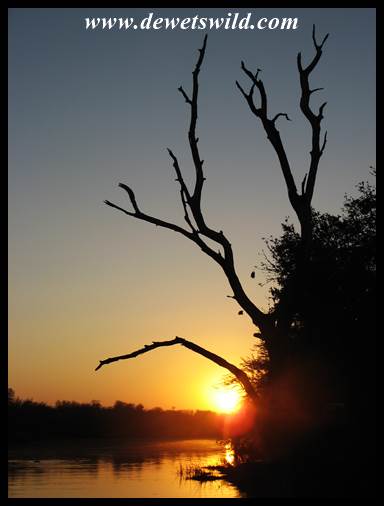
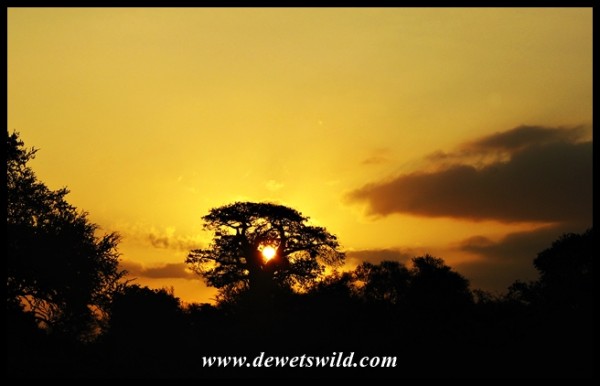
Baobab sunset, near Shimuwini in the Kruger National Park

Contrast

Contrasts” is the theme for the WordPress Weekly Photo Challenge

Between

There’s a very close bond between the members of an elephant herd, and they are extremely protective of their young, always trying their very best to ensure that the little ones are kept safely between the adults when on the move (but there’s bound to be at least one little rebel, isn’t there?)

Between

Between” is the theme for this week’s WordPress Photo Challenge. This photograph was taken in the Pilanesberg National Park.

Extra!

Sometimes, you’re forced to get out of the car in big-five territory, for a little extra (unplanned) adventure, like I had to here in the Hluhluwe-Imfolozi Park 😀

Extra

Extra, Extra” is the theme for this week’s WordPress photo challenge

Room to roam

Joubert exploring the Golden Gate Highlands National Park

Room to roam

Room” is the theme for this week’s photo challenge from WordPress

Autumn in Kruger: Berg-en-Dal, May 2014

Along came the 1st of May, and we had another long drive southwards from Orpen to Berg-en-Dal Rest Camp, in the far south-west corner of the Kruger National Park. The three nights we’d spend at Berg-en-Dal would conclude our autumn visit to the Park, and though the thought that our time in Kruger was coming to an end weighed heavy on our minds, we were looking forward to finding out what was still lying in wait for us.

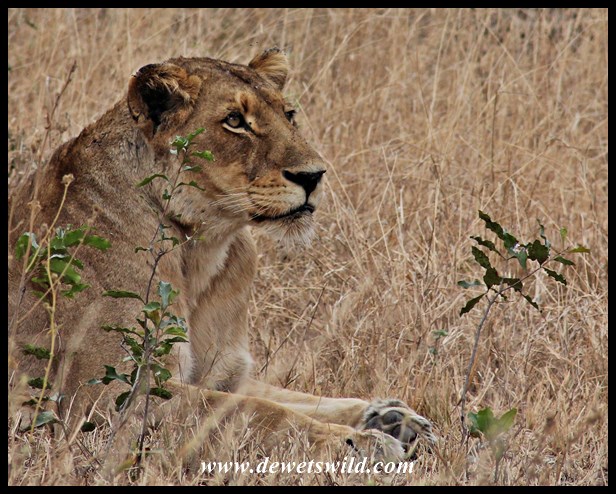
Lions between Orpen and Satara

Lions between Orpen and Satara

As expected, we had wonderful sightings along the way and we enjoyed a nice lunch with good friends at the Skukuza Golf Club.


We’ll dedicate a special post to Berg-en-Dal soon, but wanted to include some photos of the camp and our accommodation (Wielewaal Cottage, #26) as a little appetiser.

Berg-en-Dal_May2014 (19)

Wielewaal Cottage

Berg-en-Dal_May2014 (18)

Educational displays in the Rhino Hall

Apart from the wonderful array of wildlife in the Berg-en-Dal area, it is one of the most scenic parts of the Kruger Park.

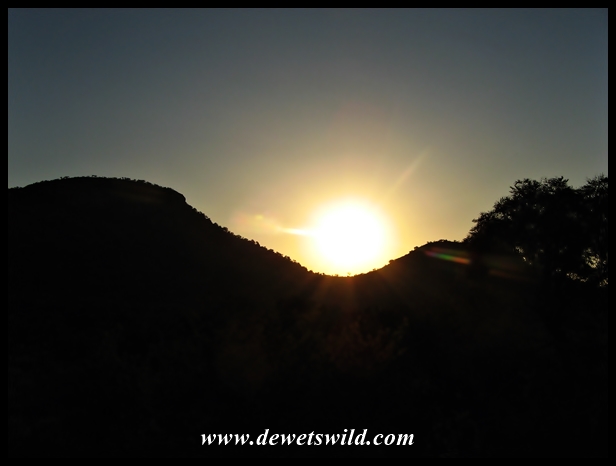
Berg-en-Dal sunset

Berg-en-Dal sunset

Taking a morning drive to the Biyamiti weir turned out to be one of our most enjoyable drives of the trip.

Biyamiti Weir is a beautiful photography spot

Biyamiti Weir is a beautiful photography spot


How Marilize managed to spot this boomslang at a distance of about 50 metres still has me amazed!

Can you spot the snake?

Can you spot the snake?

In camp, the Rhino Trail offers up close-and-personal encounters with a variety of wildlife; big and small, furry and feathery.

Time for one final afternoon drive:

And as it often does, Kruger keeps the best for last. Heading back to camp on our final afternoon, with the sun almost at the horizon, we come across a pack of wild dogs in the road, one of them heavily pregnant. These are among Africa’s rarest animals, and it was indeed a very special treat to have such a close encounter with these top predators.

It was the morning of the 4th of May and our autumn 2014 visit to the Kruger National Park has come to an end.

Thick-knee (Dikkop) in camp

Thick-knee (Dikkop) in camp

On the way to Malelane Gate we had a splendid sighting of more hyenas in the very early morning.

Spotted hyena on the way to Malelane Gate

Spotted hyena on the way to Malelane Gate

Eight nights of serene peace and quiet flew past in the wink of an eye. And of course we’re counting the days till we return!

Split-Second Story

Sometimes, South Africa’s wildlife just do not want their photographs taken. You have your subject framed and focused, and then as you press the shutter…

Split-second story

Split-Second Story” is this week’s photo challenge theme from WordPress