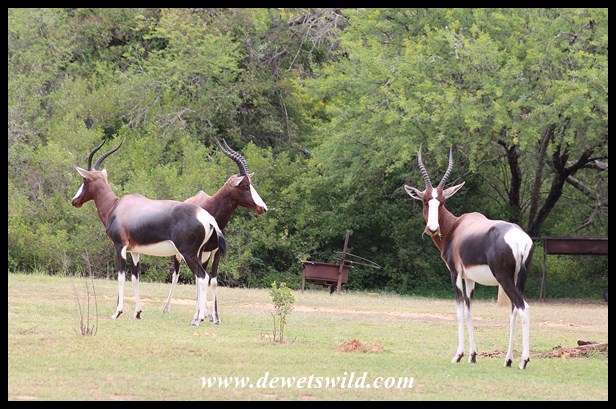
These three Bontebok were aptly waiting to welcome us to our campsite at the next stop on our summer holidays: The Lang Elsie’s Kraal Rest Camp at the Bontebok National Park.
More on Bontebok – the antelope and the Park -soon!

These three Bontebok were aptly waiting to welcome us to our campsite at the next stop on our summer holidays: The Lang Elsie’s Kraal Rest Camp at the Bontebok National Park.
More on Bontebok – the antelope and the Park -soon!
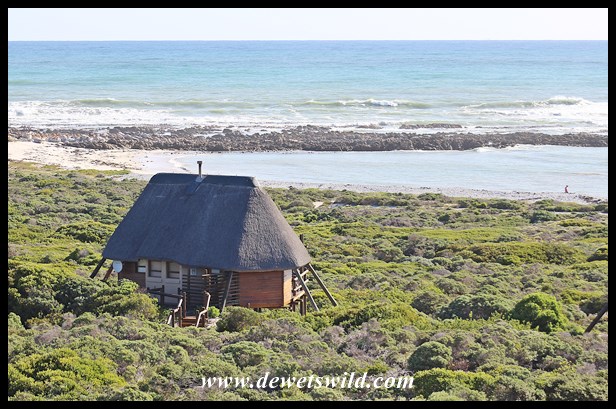
We’ve arrived at Agulhas National Park, the next stop on our summer itinerary.
This is our home for the next two nights.
Jealous?
—-
If you enjoy de Wets Wild as much as we enjoy sharing our love for South Africa’s wild places and their denizens with you, please vote for us in the 2017 South African Blog Awards.
We’ve entered the categories for “Best Travel Blog” and “Best Environmental Blog”, and you are allowed to vote for us in both. Clicking on the badge below will bring you to the voting site. After voting, you’ll receive an e-mail requiring you to click on a link to confirm your votes.
Thank you very much for your support!


This morning we visited the colony of African Penguins breeding at Boulders Beach in Simonstown, the historic naval town located south of Cape Town on the coast of False Bay.


Of course we’ll share more about Boulders, and the African Penguin, when we return from our holiday!
—–
If you enjoy de Wets Wild as much as we enjoy sharing our love for South Africa’s wild places and their denizens with you, please vote for us in the 2017 South African Blog Awards.
We’ve entered the categories for “Best Travel Blog” and “Best Environmental Blog”, and you are allowed to vote for us in both. Clicking on the badge below will bring you to the voting site. After voting, you’ll receive an e-mail requiring you to click on a link to confirm your votes.
Thank you very much for your support!
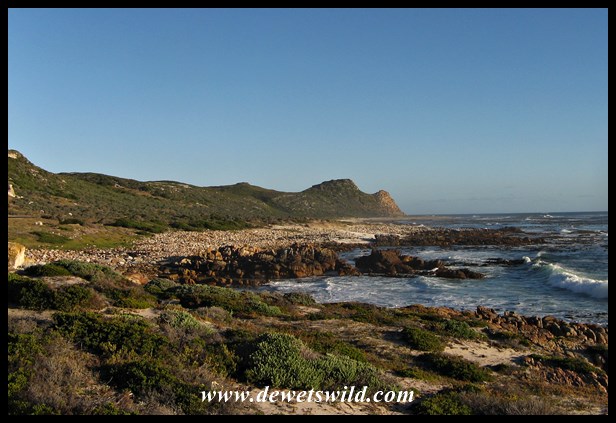
According to Sir Francis Drake, a famous 16th century English admiral, the Cape of Good Hope “is a most stately thing and the fairest cape we saw in the whole circumference of the earth“.
We couldn’t agree more.
We’ve arrived at the next destination on our summer holidays: The Cape of Good Hope in the Table Mountain National Park.


—–
If you enjoy de Wets Wild as much as we enjoy sharing our love for South Africa’s wild places and their denizens with you, please vote for us in the 2017 South African Blog Awards.
We’ve entered the categories for “Best Travel Blog” and “Best Environmental Blog”, and you are allowed to vote for us in both. Clicking on the badge below will bring you to the voting site. After voting, you’ll receive an e-mail requiring you to click on a link to confirm your votes.
Thank you very much for your support!

The beautiful Gemsbok is just one of several antelope species that find sanctuary here at the Karoo National Park, and is one of the most frequently observed large mammals out on the reserve’s extensive network of drives.

—–
If you enjoy de Wets Wild as much as we enjoy sharing our love for South Africa’s wild places and their denizens with you, please vote for us in the 2017 South African Blog Awards.
We’ve entered the categories for “Best Travel Blog” and “Best Environmental Blog”, and you are allowed to vote for us in both. Clicking on the badge below will bring you to the voting site. After voting, you’ll receive an e-mail requiring you to click on a link to confirm your votes.
Thank you very much for your support!

We spent our day in awe of the Karoo’s rugged beauty 
—–
If you enjoy de Wets Wild as much as we enjoy sharing our love for South Africa’s wild places and their denizens with you, please vote for us in the 2017 South African Blog Awards.
We’ve entered the categories for “Best Travel Blog” and “Best Environmental Blog”, and you are allowed to vote for us in both. Clicking on the badge below will bring you to the voting site. After voting, you’ll receive an e-mail requiring you to click on a link to confirm your votes.
Thank you very much for your support!

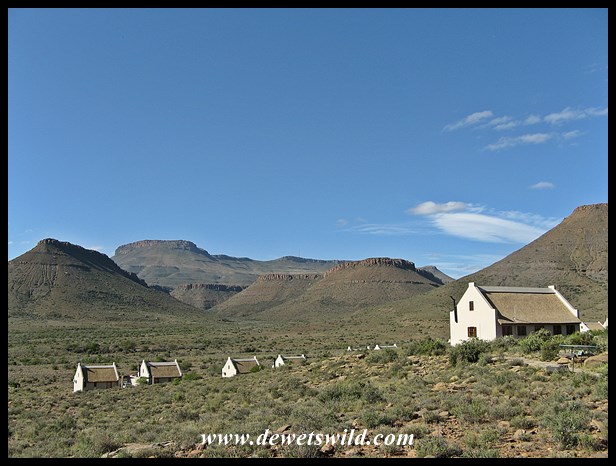
Good evening from the Karoo National Park in South Africa’s Western Cape Province – the first stop on another epic adventure in South Africa’s wild places for the Wild de Wets!
If you enjoy de Wets Wild as much as we enjoy sharing our love for South Africa’s wild places and their denizens with you, please vote for us in the 2017 South African Blog Awards.
We’ve entered the categories for “Best Travel Blog” and “Best Environmental Blog”, and you are allowed to vote for us in both. Clicking on the badge below will bring you to the voting site. After voting, you’ll receive an e-mail requiring you to click on a link to confirm your votes.
Thank you very much for your support!

The Chorister Robin-Chat occurs only in South Africa (marginally into Swaziland), where it inhabits evergreen montane and coastal forests from the Garden Route, through the Eastern Cape and Kwazulu-Natal and onto the escarpment of Mpumalanga and Limpopo. Insects, other invertebrates and a variety of fruits and berries make up the biggest part of their diet. At 20cm long and a weight of up to 56g, the Chorister Robin-Chat is the biggest species of Robin-Chat in our country. They have an amazing repertoire of calls, often imitating other birds and even human whistling, dogs barking or the croaking of frogs!
Chorister Robin-Chats breed from October to December, usually in rotten holes in trees which the female lines with moss, leaves, lichens and soft grass. Clutches of 2 or 3 eggs are incubated by the female for 2-3 weeks, with chicks remaining dependent on their parents for up to 8 weeks after hatching.
The IUCN considers the Chorister Robin-Chat to be of least concern, however it also notes that the population is probably declining due to habitat destruction.


—–
If you enjoy de Wets Wild as much as we enjoy sharing our love for South Africa’s wild places and their denizens with you, please vote for us in the 2017 South African Blog Awards.
We’ve entered the categories for “Best Travel Blog” and “Best Environmental Blog”, and you are allowed to vote for us in both. Clicking on the badge below will bring you to the voting site. After voting, you’ll receive an e-mail requiring you to click on a link to confirm your votes.
Thank you very much for your support!

Mocking Cliff Chats inhabits well-wooded rocky outcrops, bouldered mountainsides, cliffs, ravines and rocky river valleys. It would appear that they move away from high-lying areas during the harshest part of winter. It feeds mainly on insects, but does include fruit and nectar in its diet. Adults grow to 22cm in length, weighing between 46-53g, and can become quite tame and confiding around humans.
Mocking Cliff Chats often take over the nests of swallows, though they will build their own nests of twigs, other plant material and fur in rocky hollows. They breed during spring and summer. Clutches contain 2-4 eggs and are incubated by the female for about 2 weeks. Both parents care for the chicks, which fledge at 3 weeks of age. They are usually encountered in pairs or small family groups numbering up to 6.
The Mocking Cliff Chat occurs patchily over a large area of Sub-Saharan Africa, wherever suitably rocky habitat is found, with the exception of the dense equatorial forests. in South Africa it can be found from the Eastern Cape northwards, through Kwazulu-Natal and the Free State to Limpopo Province. The IUCN considers it to be of least concern.


Joubert caught these two Mocking Cliff Chats in a tiff at the Rhino & Lion Nature Reserve.


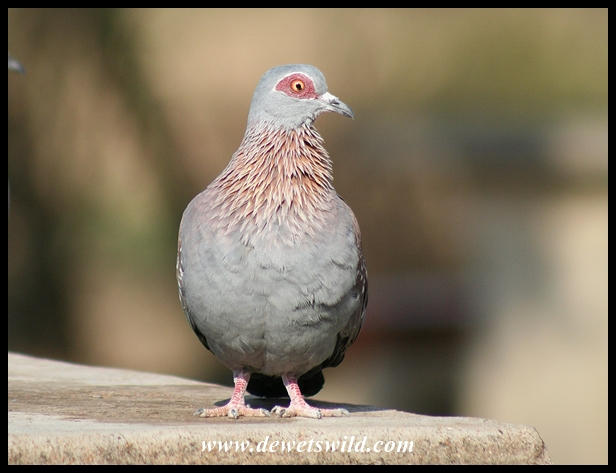
Originally an inhabitant of mountains, gorges, cliffs and rocky outcrops and ridges from which it set out to forage in adjacent flatlands, the Specked Pigeon (or African Rock Pigeon) has now also adapted very well to human habitations and exotic plantations, which aided the species to expand both its range and population. They feed primarily on seeds, and can become a serious pest to grain farmers. These are rather large pigeons, with adults weighing as much as 400g.
Speckled Pigeons breed throughout the year, with a peak in the spring and summer months. Nests are built of sticks and other plant material on inaccessible crags and caves on cliffs or ledges on buildings. Clutches usually consist of 2 (1-3) eggs and are incubated by both parents for 2 weeks. Chicks can stay in the nest for as long as 5 weeks.
Speckled Pigeons occur in two distinct parts of Africa: The first stretches in a wide band from east to west Africa, with the other in southern Africa. They can commonly be found in suitable habitat all over South Africa. It is considered to be of least concern by the IUCN. Unfortunately they do sometimes hybridize with feral populations of the exotic Eurasian Rock Dove (C. livia) in our towns and cities.


 DeWetsWild