Struthio camelus
As the biggest bird on the planet, and the fastest creature on two legs, ostriches are familiar to most people. Males stand up to 2.8m tall and weigh up to 160kg, females are usually a lot lighter in build.

Ostrich close-up

Ostrich female

Ostrich male

Ostrich

Ostrich Male

Ostrich male

Female Ostrich

Ostrich

Ostrich

Ostrich foot

Ostrich head

Ostrich feathers (female)(photo by Joubert)
Ostriches occur in open habitats, and are commonly found in open grasslands, arid savannas, semi-deserts and even true deserts, where they are superbly adapted to cope with the hot and dry conditions. They feed mostly on plant material such as seeds, fruits, leaves, grass and flowers, but will also gobble up any invertebrates and small mammals and reptiles it comes across. They’ll swallow stones to assist in breaking down tough plant material in their gizzards. Ostriches do not need to drink water regularly, but when it is available they will drink readily and will even bathe to cool off.

Ostrich female

Ostrich at home in Bontle, Marakele NP

Ostrich male swallowing something large

Ostrich male

Common Ostrich in northern Kruger

Ostrich male among mopane trees

Ostrich near Tinhongonyeni, Kruger Park

Ostriches in the hills of Mountain Zebra National Park

Ostrich couple in the Karoo

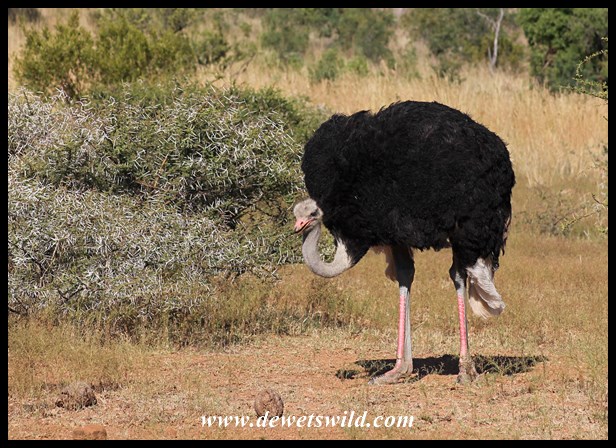
Ostrich male searching for a bite

Ostrich couple

Grazing ostrich

Ostrich male

Ostrich at Bollonoto

Common Ostrich Pair

Ostrich male

Ostrich male

Ostrich female
Ostriches are usually to be found in pairs or small flocks, though larger groups of up to 100 are not uncommon. They also often associate with herds of plains zebra and antelope, who also benefits from the ostriches’ exceptional eyesight. Ostriches are extremely capable runners, covering 3 to 5m in a single stride and reaching speeds of up to 80km/h – they can run the 100m in 5 seconds! Even a month-old chick can outrun a lion. They also have exceptional stamina and can run for half an hour at a speed of 50km/h. Their two-toed kick is legendary and armed by a long claw can easily kill a predator or human through disemboweling when they feel threatened or are protecting their offspring. These flightless birds are diurnal, and most active in the early morning and late afternoon. Like many other birds, ostriches are very fond of a regular dust bath.

Male Ostrich on the run

Female Ostrich on the run

Ostrich female being blown all over the place by the strong wind

Female ostrich

Ostrich at home in Bontle, Marakele NP

Ostrich at home in Bontle, Marakele NP

Ostrich at home in Bontle, Marakele NP

Ostrich female setting off

Ostriches love dustbaths

Ostriches love dustbaths

Ostrich foot

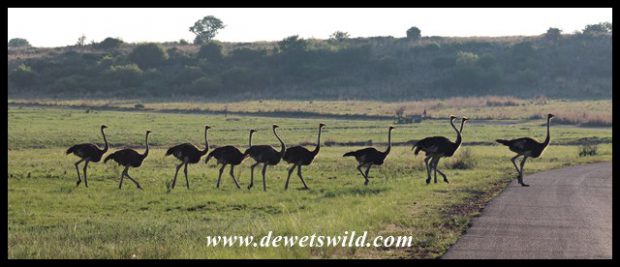
Flock of ostrich on the move

Ostrich

Ostrich and Pied Crows

Ostrich

Ostrich

Ostriches

Ostriches

Female ostrich striding through Bontle camp (photo by Joubert)

Ostrich Chick

Ostrich Chick
Males utter an impressive booming “roar”, mostly at night during the breeding season, and not unlike that of a lion. Males are polygamous, and perform an elaborate dance for their females before mating. Several females will lay their eggs in the same shallowly scraped nest on the ground – eventually there may be up to 40 eggs in the nest. It is well known that ostrich eggs are huge – weighing as much as 1.4kg, one ostrich egg is equivalent to about 20 chicken eggs. Within each flock there is one dominant hen, and her eggs will be laid in the middle of the nest where they are most assured to be incubated, while “minor” hens’ eggs are pushed to the side – eventually only up to about 20 (usually 12 – 16) of the eggs in the nest will be successfully incubated. The differently coloured plumage assists in camouflaging them while incubating, as females mostly incubate the eggs by day, and the males by night. While on the nest, ostriches will often lie with their necks outstretched on the ground so that their characteristic outline does not attract unwanted attention on the open plains they inhabit (but they don’t bury their heads in the sand as is often thought). Eggs hatch after 40 – 48 days and the hatchlings are looked after by both parents. The cryptic colouration and markings of the young chicks are excellent camouflage. Hyenas actively search out ostrich nests to eat the eggs, and almost all Africa’s predatory mammals and larger birds of prey will go after chicks. Adults fall prey to lions, leopards, spotted hyenas, cheetahs and wild dogs. Though only about 15% of hatchlings survive to 1 year of age, ostriches can live up to 40 years in the wild, and even longer in domesticated situations.

Ostrich flock, Kruger Park (H1-4)

Ostrich male in breeding condition

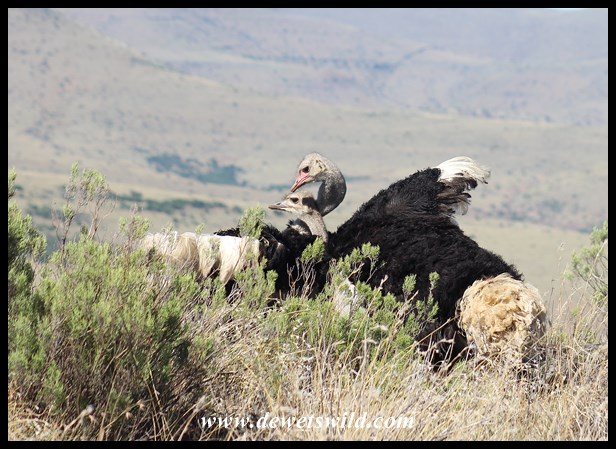
Ostrich mating display

Ostrich mating display

Ostrich mating display

The mating display was successful…

Ostrich female on a nest

Ostrich chicks

Ostrich chicks

Ostrich siblings

Ostrich chicks

Ostrich chicks

Father and son time at Nylsvley

Ostrich family

Ostrich family

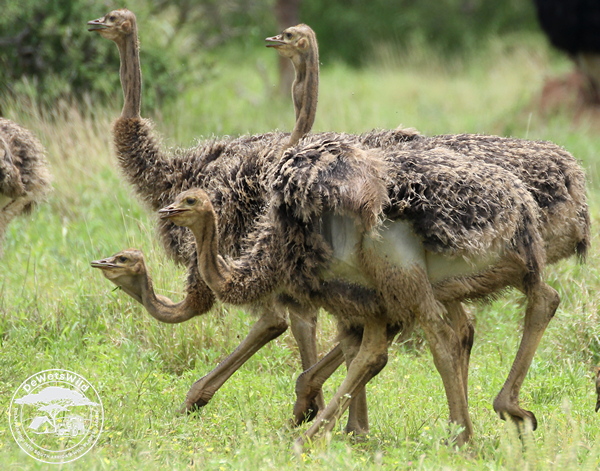
Ostrich juvenile

Ostriches mating at Mountain Zebra National Park

Ostriches mating at Mountain Zebra National Park

Ostriches mating at Mountain Zebra National Park

Ostriches mating at Mountain Zebra National Park

Ostrich family

Ostrich family

Ostrich male with his chicks

Ostrich male with his chicks

Ostrich male on the run

Ostrich male

Ostrich male

Ostrich female

Abandoned ostrich egg

Ostrich nest
Ostriches can be found across most of South Africa, in both state and private conservation areas, although the majority of these populations stem from hybrids bred for the feather trade and only a few flocks, such as those in the Kruger National Park and Kgalagadi Transfrontier Park, are truly wild. Ostriches are also farmed in large numbers for their feathers, leather and lean meat and some of these farms, notably around the town of Oudtshoorn, have become tourist attractions in their own right. Despite the fact that ostrich populations are declining due mostly to loss of habitat, the IUCN considers the species of least concern at the moment.

Male ostrich

Ostrich family

Ostrich

Ostrich close-up

Ostrich close-up

Male Ostrich (photo by Joubert)

Ostrich male

Ostrich

Male ostrich

Mating ostriches

Very satisfied male ostrich (photo by Joubert)

Female Ostrich

Ostrich (photo by Joubert)

Male ostrich eyeing us from above

Male ostrich

Ostrich female

Ostrich pair

Ostriches

Ostrich female

Ostrich pair

Ostrich pair

Ostrich pair

Ostrich male

Male Ostriches

Male Ostrich

Ostrich female

Ostrich female with chicks

Ostrich face

Ostriches

Male Ostrich (photo by Joubert)

Female ostrich (photo by Joubert)

Male ostrich (photo by Joubert)

Ostriches at sunset

Ostrich at sunrise

Ostrich

Ostrich male “dancing” for the female

Ostrich male “dancing” for the female

Ostrich male “dancing” for the female

Mating ostriches

Mating ostriches

Ostrich face

Ostrich

Ostrich

Ostrich

Ostriches on the beach at the Cape of Good Hope

Ostrich on the beach at the Cape of Good Hope

Female Ostrich

Male Ostrich

Ostrich male chasing female

Ostrich family with newly hatched chicks

Ostrich Toe & Nail

Ostrich Male

Baby Ostrich

Ostrich (photo by Joubert)

Ostrich chick

Male Ostrich

Male Ostrich sunbathing

Ostriches females in a tiff

Ostriches in the long grass

Ostriches

Ostriches dustbathing

Smiling Ostrich

Ostrich family gathering (photo by Joubert)

Ostriches

Ostrich






 DeWetsWild