Tag Archives: nature

Southern Tchagra

Tchagra tchagra

The Southern Tchagra is a secretive bird that rarely ventures into the open and is difficult to see and even more so to photograph, even though they may be quite plentiful in at least parts of their range. They’re found from the Western Cape to the escarpment in Mpumalanga, occupying thickets in fynbos, thorny riverine vegetation, and woodland as well as the margins of evergreen forests. It feeds primarily on insects and other invertebrates, occasionally supplementing their diet with seeds and berries.

Southern Tchagras are monogamous and territorial. They build their cup-shaped nests well hidden inside a densely leafed shrub. The clutch of 2 or 3 eggs take a day or two over 2 weeks to hatch. The chicks grow quickly and leave the nest by the time they’re 2-3 weeks old. Fully grown Southern Tchagras measure around 21cm in length and weigh approximately 47g.

According to the IUCN there’s evidence that the Southern Tchagra is increasing in numbers and expanding its range and therefore lists it as being of least concern.

Karoo Girdled Lizard

Karusasaurus (Cordylus) polyzonus

The Karoo Girdled Lizard inhabits a large swathe of arid central and western South Africa, extending into southern Namibia, where it prefers rocky habitats and feeds on insects, being especially fond of beetles and grasshoppers. They’re often observed basking on exposed rocks, even in the heat of the day, and some populations hibernate through winter in tunnels dug beneath boulders. Females give birth to usually 2 babies during the height of summer. They grow to about 10cm in length, tail excluded. The IUCN considers the Karoo Girdled Lizard to be of least concern.

Orange-breasted Waxbill

Amandava subflava

A beautiful little seed-eating bird that is very patchily distributed across Sub-Saharan Africa, the Orange-breasted Waxbill, or Zebra Waxbill, inhabits moist grasslands and reedbeds. In South Africa it is therefore found mainly in the higher rainfall areas of the northern Free State, eastern North West Province, Gauteng, Limpopo, Mpumalanga and Kwazulu-Natal.

These waxbills take over the disused nests of other birds, converting it to their liking at the onset of the breeding season at the end of summer. The parents incubate the clutch of 3-7 eggs in turns, with the chicks hatching after about two weeks. The chicks grow quickly, fledging before they’re 3 weeks old and becoming independent about a fortnight later.

According to the IUCN the Orange-breasted Waxbill is in no danger of extinction.

Spike-heeled Lark

Chersomanes albofasciata

Spike-heeled Larks are nondescript little birds that inhabit open grasslands and scrublands, feeding on a wide variety of insects and other invertebrates. They move around in groups of up to 10 individuals and prefer areas with natural vegetation and seldom venture into cultivated or otherwise disturbed land.

Spike-heeled Larks nest in a scrape on the ground, usually made at the base of a grass tussock or shrub but in more arid areas even a pile of stones or sticks will do, as long as it provides some shade during the hottest hours of the day. It appears that they breed in response to rainfall and clutches may number up to 5 eggs, though 2 or 3 is the norm. The female incubates the eggs which hatch within 2 weeks, but both parents take responsibility for feeding the chicks until they leave the nest – sometimes even before they can fly. The chicks become independent at less than a month old.

Despite noting that their populations are probably declining due to expanding agriculture, the IUCN lists the Spike-heeled Lark as being of least concern. The species is found in parts of every South African province with its core distribution extending into neighbouring Botswana, Namibia and beyond into Angola, with isolated populations in the DRC and Tanzania.

Mid-week Bird Photography outing to Marievale

Wednesday last week, in conjunction with Hannes Rossouw Photography, we headed to the Marievale Bird Sanctuary for a wonderful morning of bird watching and photography in one of Gauteng Province’s prime locations for these pursuits. If you’d like to join Hannes and me on our next trip to Marievale, please don’t hesitate to reach out!


Tasman’s Girdled Lizard

Cordylus tasmani

Tasman’s Girdled Lizard occurs only in a limited area of the Eastern Cape, around (and on islands in) Algoa Bay. Here it lives in dead aloes and trees and on rocky outcrops and subsists on a diet of insects and other invertebrates. These are small lizards, growing to only about 7cm (tail excluded). Tasman’s Girdled Lizard is considered by some authorities, including the IUCN, to be a form of the more widely spread Cape Girdled Lizard.

World Wildlife Day 2025

In celebration of World Wildlife Day we take a look back at the 53 species of Southern African wildlife we featured in detail here at DeWetsWild through the past twelve months.

February ’25 update from Rietvlei Nature Reserve

We’ve been having loads of rain in Pretoria since mid-December and our local Rietvlei Nature Reserve has turned into a lush green paradise where even rhinos and buffalo can disappear among the tall grass, in striking contrast to the fire-ravaged veld in early spring. The reserve was even closed due to flooding for a few days in February! Nature’s resilience is remarkable! The month of February marks a year since I started guiding guests on drives and walks through this special reserve on a freelance basis, and in conjunction with Hannes Rossouw Photography we presented another “introduction to wildlife photography” workshop for aspirant wildlife photographers from Gauteng at the reserve in February as well.

The young Black-chested Snake Eagle is venturing further afield of the nest in which it was raised, though still returning to it regularly. I haven’t seen its parents at the nest at all during January and February, and suspect they’re probably coaxing the youngster to roam more widely by feeding it at other places.

Aside from the Black-chested Snake Eagles, Rietvlei’s grasslands, thorny thickets and wetlands are positively bursting at the seams with a wide-variety of other birds, several of them in enormous numbers.

List of birds seen at Rietvlei in January and February 2025:

Scientific Afrikaans English
Coturnix coturnix Afrikaanse Kwartel Common Quail
Gallinago nigripennis Afrikaanse Snip African Snipe
Fulica cristata Bleshoender Red-knobbed Coot
Elanus caeruleus Blouvalk Black-winged Kite
Telophorus zeylonus Bokmakierie Bokmakierie
Tricholaema leucomelas Bonthoutkapper Acacia Pied Barbet
Vanellus armatus Bontkiewiet Blacksmith Lapwing
Pternistis swainsonii Bosveldfisant Swainson’s Spurfowl
Buteo buteo Bruinjakkalsvoel Common Buzzard
Prinia subflava Bruinsylangstertjie Tawny-flanked Prinia
Chrysococcyx caprius Diederikkie Diederik Cuckoo
Jynx ruficollis Draaihals Red-throated Wryneck
Merops apiaster Europese Byvreter European Bee-eater
Hirundo rustica Europese Swael Barn Swallow
Muscicapa striata Europese Vlieevanger Spotted Flycatcher
Apus apus Europese Windswael Common Swift
Lanius collaris Fiskaallaksman Common Fiscal
Sigelus silens Fiskaalvlieevanger Fiscal Flycatcher
Neophedina cincta Gebande Oewerswael Banded Martin
Anas undulata Geelbekeend Yellow-billed Duck
Turdus smithi Geelbeklyster Karoo Thrush
Crithagra mozambica Geeloogkanarie Yellow-fronted Canary
Colius striatus Gevlekte Muisvoel Speckled Mousebird
Saxicola torquatus Gewone Bontrokkie African Stonechat
Burhinus capensis Gewone Dikkop Spotted Thick-knee
Dessonornis caffer Gewone Janfrederik Cape Robin-Chat
Anthus cinnamomeus Gewone Koester African Pipit
Ortygospiza atricollis Gewone Kwartelvinkie African Quail Finch
Motacilla capensis Gewone Kwikkie Cape Wagtail
Passer melanurus Gewone Mossie Cape Sparrow
Tringa hypoleucos Gewone Ruiter Common Sandpiper
Numida meleagris Gewone Tarentaal Helmeted Guineafowl
Streptopelia capicola Gewone Tortelduif Cape Turtle Dove
Centropus burchellii Gewone Vleiloerie Burchell’s Coucal
Plegadis falcinellus Glansibis Glossy Ibis
Sphenoeacus afer Grasvoel Cape Grassbird
Streptopelia semitorquata Grootringduif Red-eyed Dove
Cecropis cucullata Grootstreepswael Greater Striped Swallow
Gallinula chloropus Grootwaterhoender Common Moorhen
Passer diffusus Gryskopmossie Southern Grey-headed Sparrow
Lophoceros nasutus Grysneushoringvoel African Grey Hornbill
Bostrychia hagedash Hadeda Hadeda Ibis
Scopus umbretta Hamerkop Hamerkop
Upupa africana Hoephoep African Hoopoe
Phylloscopus trochilus Hofsanger Willow Warbler
Acridotheres tristis Indiese Spreeu Common Myna
Zosterops virens Kaapse Glasogie Cape White-eye
Acrocephalus gracilirostris Kaapse Rietsanger Lesser Swamp Warbler
Ploceus capensis Kaapse Wewer Cape Weaver
Scleroptila gutturalis Kalaharipatrys Orange River Francolin
Tachybaptus ruficollis Kleindobbertjie Little Grebe
Lamprotornis nitens Kleinglansspreeu Cape Glossy Starling
Alopochen aegyptiaca Kolgans Egyptian Goose
Vidua macroura Koningrooibekkie Pin-tailed Whydah
Euplectes axillaris Kortstertflap Fan-tailed Whydah
Vanellus coronatus Kroonkiewiet Crowned Lapwing
Trachyphonus vaillantii Kuifkophoutkapper Crested Barbet
Corythornis cristatus Kuifkopvisvanger Malachite Kingfisher
Crinifer concolor Kwevoel Grey Go-Away Bird
Cisticola juncidis Landeryklopkloppie Zitting Cisticola
Euplectes progne Langstertflap Longtailed Widowbird
Vanellus senegallus Lelkiewiet Wattled Lapwing
Dicrurus adsimilis Mikstertbyvanger Fork-tailed Drongo
Falco amurensis Oostelike Rooipootvalk Amur Falcon
Macronyx capensis Oranjekeel Kalkoentjie Cape Longclaw
Cypsiurus parvus Palmwindswael African Palm Swift
Turdoides jardineii Pylvlekkatlagter Arrow-marked Babbler
Microcarbo africanus Rietduiker Reed Cormorant
Amandava subflava Rooiassie Orange-breasted Waxbill
Anas erythrorhyncha Rooibekeend Red-billed Teal
Phoeniculus purpureus Rooibekkakelaar Green Wood-hoopoe
Quelea quelea Rooibekkwelea Red-billed Quelea
Estrilda astrild Rooibeksysie Common Waxbill
Spilopelia senegalensis Rooiborsduifie Laughing Dove
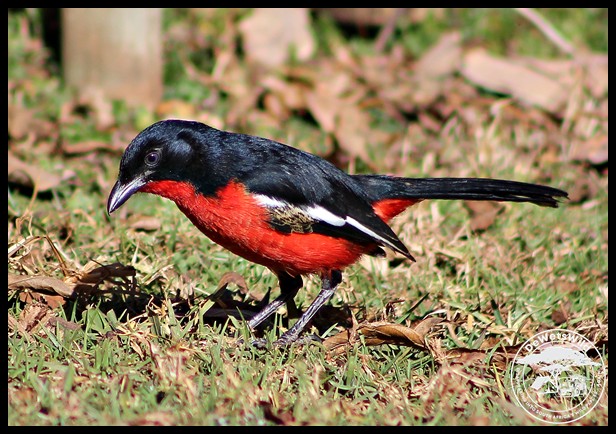
Laniarius atrococcineus Rooiborslaksman Crimson-breasted Shrike
Euplectes ardens Rooikeelflap Red-collared Widowbird
Amadina erythrocephala Rooikopvink Red-headed Finch
Mirafra africana Rooineklewerik Rufous-naped Lark
Euplectes orix Rooivink Southern Red Bishop
Urocolius indicus Rooiwangmuisvoel Red-faced Mousebird
Threskiornis aethiopicus Skoorsteenveer African Sacred Ibis
Anhinga rufa Slanghalsvoel African Darter
Laniarius ferrugineus Suidelike Waterfiskaal Southern Boubou
Prinia flavicans Swartbandlangstertjie Black-chested Prinia
Circaetus pectoralis Swartborsslangarend Black-chested Snake Eagle
Anas sparsa Swarteend African Black Duck
Ploceus velatus Swartkeelgeelvink Southern Masked Weaver
Ardea melanocephala Swartkopreier Black-headed Heron
Pycnonotus tricolor Swartoogtiptol Dark-capped Bulbul
Chalcomitra amethystina Swartsuikerbekkie Amethyst Sunbird
Apus barbatus Swartwindswael African Black Swift
Bubulcus ibis Veereier Western Cattle Egret
Icthyophaga vocifer Visarend Fish Eagle
Cisticola tinniens Vleitinktinkie Levaillant’s Cisticola
Asio capensis Vlei-uil Marsh Owl
Struthio camelus Volstruis Common Ostrich
Phalacrocorax lucidus Witborsduiker White-breasted Cormorant
Corvus albus Witborskraai Pied Cow
Lamprotornis bicolor Witgatspreeu Pied Starling
Hirundo albigularis Witkeelswael White-throated Swallow
Apus caffer Witkruiswindswael White-rumped Swift
Euplectes albonotatus Witvlerkflap White-winged Widowbird
Afrotis afraoides Witvlerkkorhaan Northern Black Korhaan

The tall grass and lush vegetation is making it very difficult to see most of the mammals and especially the smaller kinds. One exception is the zebras, seeming to now prefer the reserve’s roads for walking from one grazing area to the next and giving me and my guests wonderful up-close encounters with these beautiful animals.

List of mammals seen at Rietvlei in January and February 2025:

Scientific Afrikaans English
Damaliscus pygargus Blesbok Blesbuck
Equus quagga Bontsebra Plains Zebra
Syncerus caffer Buffel Cape Buffalo
Taurotragus oryx Eland Eland
Sylvicapra grimmia Grysduiker Common Duiker
Suricata suricatta Meerkat Suricate
Alcelaphus buselaphus Rooihartbees Red Hartebeest
Canis mesomelas Rooijakkals Black-backed Jackal
Hippopotamus amphibius Seekoei Hippopotamus
Antidorcas marsupialis Springbok Springbuck
Connochaetes gnou Swartwildebees Black Wildebeest
Leptailurus serval Tierboskat Serval
Kobus ellipsyprymnus Waterbok Waterbuck
Cynictis penicillata Witkwasmuishond Yellow Mongoose
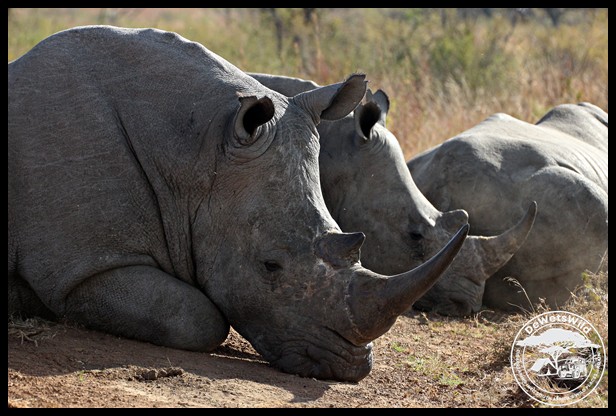
Ceratotherium simum Witrenoster White Rhinoceros

If you’d like to join me on a guided tour of Rietvlei – on a hike or on an open vehicle drive – you can book through melanie@rietvleicoffee.co.za / +27(0)74-820-9926.


Barn Owl

Tyto alba

The species of owl with the widest distribution, being found on every continent except Antarctica, the Barn Owl is also found throughout South Africa and often in close association with human habitation. While it may roost in mine shafts and on buildings in towns and cities, in natural environments Barn Owls roost in trees and caves in any habitat with suitable numbers of prey. Barn Owls are almost completely nocturnal and feed on an extremely wide variety of creatures, ranging from insects and other invertebrates, small reptiles and birds to mammals the size of hares and rabbits.

Barn Owls nest at any time of year, using roost sites in building, hollows in trees or caves in which the female incubate clutches of about 6 eggs for approximately a month while the male provides her with food. When food is scarce chicks that hatch earlier may sometimes cannibalise their younger siblings. The chicks may stay in the nest for up to 2 months before taking their first flight, and usually start hunting for themselves at about 3 months of age.

With a worldwide population estimated at as many as 10 million, the IUCN considers the Barn Owl to be of least concern.

Common Milkweed Locust

Phymateus morbillosus

The vibrant colours of the Common Milkweed Locust, both in the adults and in the nymphs, serves as a warning to any would-be predators that these insects are not only foul-tasting but also potentially lethally toxic. They feed on poisonous plants, incorporating the toxins into their own tissues. The females lay their eggs in late summer with the nymphs then appearing the following spring and maturing slowly over the next 2 years. They’re found in open habitats over most of South Africa and usually in groups congregating on their favourite food plants.