In celebration of World Wildlife Day we take a look back at the 75 species of South African wildlife we featured in detail here at DeWetsWild through the past twelve months.
The Red-billed Firefinch is fairly well distributed through South Africa and can be found in parts of all our provinces. Furthermore they occur widely over Africa, including pockets of the Sahara Desert. The IUCN considers it to be of least concern.
Red-billed Firefinches prefer thickets of rank grass and thorny shrubs in woodlands and savannas, extending their occurrence into more open areas where such micro-habitats are found, often along water courses and in gardens, where they can become quite tame. It feeds mainly on grass seeds, augmenting its diet with occasional insect fare like termites.
Breeding almost right through the year (peaking in summer and autumn when grasses are seeding), it is the male Red-billed Firefinch that takes responsibility for building the nest – a ball-shaped structure made of dry grass and feathers, usually placed in thick vegetation, and incorporating a side-entrance. The female lays a clutch of 2-6 eggs which are incubated by both parents for less than 2 weeks before the chicks hatch. Red-billed Firefinch nests are often parasitized by the Village Indigobird. The chicks leave the nest by the time they’re 3 weeks old and then become independent of their parents 2-4 weeks later. These small birds weigh only about 9g when fully grown! They’re most often seen in small flocks of up to 30 individuals, within which there are apparently strong pair-bonds, and often mingle with other small seed-eating birds.
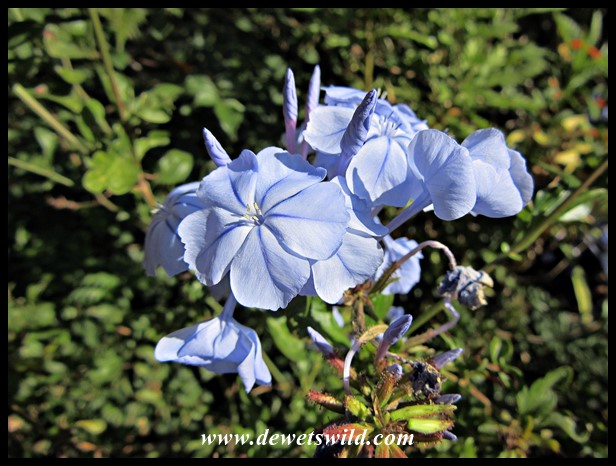
One of South Africa’s most popular indigenous garden plants – exported in fact the world over – the Plumbago, aka Cape Leadwort, is a shrub and scrambling climbing plant that grows rapidly and is exceptionally hardy and, while it carries the most impressive blooms during the summer months it often flowers year-round under suitable conditions. It is a food plant for the larvae of several kinds of butterflies and moths as well as many other kinds of insects, ensuring these are attracted to gardens anywhere this eye-catching plant is propagated, and shier kinds of birds appreciate the dense cover provided by its foliage.
In traditional medicine the Plumbago is considered a cure for headaches, warts and open wounds, and superstitiously believed to ward off lightning if a stick of it is thatched into the roof of a hut.
The Plumbago occurs naturally in the Western and Eastern Cape and Kwazulu-Natal, extending marginally into adjacent provinces and countries.
The Pearl-spotted Emperor is a common butterfly living in various savanna-type habitats, occurring in this country from the Little Karoo and Albany thicket through much of the Eastern Cape and Kwazulu-Natal and into the northern provinces of North West, Gauteng, Mpumalanga and Limpopo. In the southern parts of their local range adults are seen only in spring and summer, but they’re on the wing year round further north. Beyond our borders this butterfly occurs as far north as Sudan.
Male Pearl-spotted Emperors are territorial and perch on open twigs from which they attack interloping males and try to woo the females for mating. They’re fast flyers and adults of both sexes frequent seeping tree sap and rotting fruit rich in sugars. Caterpillars of the Pearl-spotted Emperor Butterfly feed on the leaves of the Jacket Plum and Zebra Wood. Wingspan in adults measure up to 6cm, making this one of the smaller Emperor Butterfly species.
DeWetsWild and Hannes Rossouw Photography invite you to Manyeleti Magic, 27 June to 1 July 2024. A one-of-a-kind photographic safari in the Manyeleti Nature Reserve, an integral part of the Greater Kruger National Park.
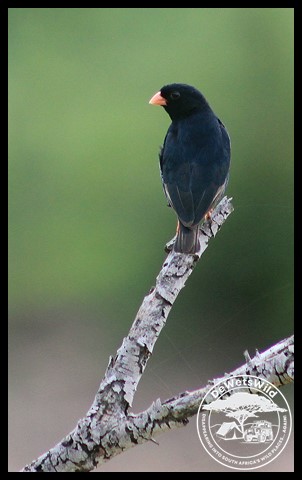
The Village Indigobird, also known as the Steelblue Widowfinch, occurs in a band from Senegal in West Africa to Sudan, Eritrea and Ethiopia, and then southwards to our country, where it is found in parts of all provinces except the Western Cape. They’re most commonly found in acacia savanna, mopane woodland and riverine thickets, feed mainly on seeds and termites, and occur singly, in pairs or flocks numbering as many as 60 birds. According to the IUCN it is not in any danger of extinction.
The Village Indigobird is a brood parasite, in which males mate with as many females as they can and the females in turn lay their eggs in the nests of other small finches – especially firefinches – even if the nest owner is in the nest! In this way each female Indigobird may produce up to 26 eggs in a breeding season, which spans December to June. The chicks are reared by their adoptive parents until they rejoin the Indigobird flock at about 4-5 weeks of age. These small birds weigh around 13g when they’re fully grown.
The Grey-headed Bush-shrike is distributed through most of Africa’s savanna regions, stretching from the Sahel in West Africa to Eritrea and Somalia in the east, and then southwards to South Africa, where they’re found in the north and east of our country. They’re found in denser habitat-types and are very shy, seldom venturing into the open. These Bush-shrikes are adept hunters, catching any prey from insects to lizards, chameleons and snakes and even other birds.
Grey-headed Bush-shrikes live in monogamous pairs, each pair controlling a sizable territory. The female constructs the cup-shaped nest in the fork of a tree, using materials that the male brings to her. They nest during spring and summer, when the female incubates a clutch of 2-4 eggs over a week period. While the female is on the eggs or brooding the chicks the male is entirely responsible for bringing back food to her and the growing chicks. The chicks leave the nest when they’re about 3 weeks old but may remain in their parents’ territory until they’re a year old. Fully grown, this is the largest species of the Bush-shrike family occurring in our country, measuring about 26cm in length and weighing around 77g.
According to the IUCN the Grey-headed Bush-Shrike is of least concern.
DeWetsWild, Hannes Rossouw Photography and Irving Knight Safaris invite you to a one-of-a-kind photographic safari in the Kruger National Park. Serene Sirheni, 1 to 5 May 2024.
Over the past couple of weeks we’ve been showing you some of what we experienced during a holiday visit to the Kruger National Park in early January. There was the excitement of a wild dog hunt, endearing hyena pups, smiles thanks to dung beetles and baboons, the royal presence of lions and leopards and even a concert by the Skukuza frog choir. The Kruger National Park is an amazing place, and well deserving of its position among the great wild places on the planet. We just cannot stay away.
The Kruger National Park is one of South Africa’s premiere bird-watching destinations, and even more so in summer when the park’s prolific birdlife is boosted by summer migrants from as far away as Eurasia. This gallery is but a tiny morsel of the amazing diversity of birds we encountered while exploring the southern reaches of the Park in January.
The Kruger National Park is even better known for its astounding variety of mammals, which at almost 150 recorded species is among the highest of any conservation areas on the planet! The animals are so used to the gawking people driving around them all day that it makes for wonderful photographic opportunities.
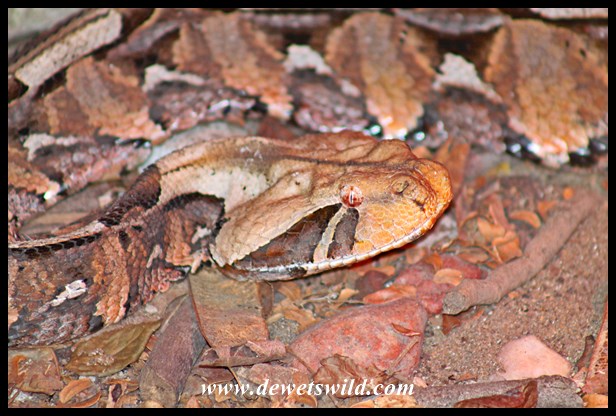
Far less glamorous – some may even call them creepy-crawlies! – but equally as important in the natural cycles that drums the beat in the Kruger National Park is the extraordinary variety of insects, fish, amphibians and reptiles that you may encounter if you keep your eyes peeled.
We’d love for you to join DeWetsWild on a guided tour of the Kruger National Park or to help you arrange a self-guided visit. Don’t hesitate to reach out!
DeWetsWild, Hannes Rossouw Photography and Irving Knight Safaris invite you to a one-of-a-kind photographic safari in the Kruger National Park. Picture Balule, 26 April to 1 May 2024.