Tag Archives: nature

What’s in a name?

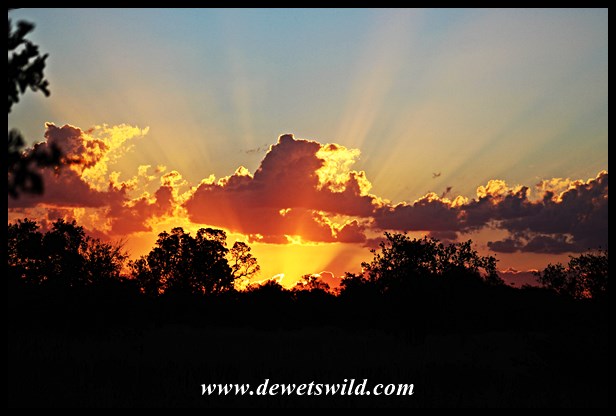
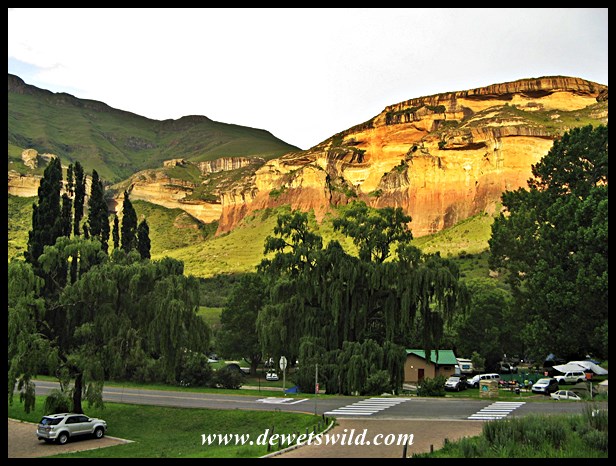
At long last our end-of-year holidays have started, and we find ourselves back at Glen Reenen Rest Camp in the Golden Gate Highlands National Park – a place that certainly deserved its name this evening thanks to a beautiful sunset setting the sandstone formations aglow!

golden-gate-17dec16


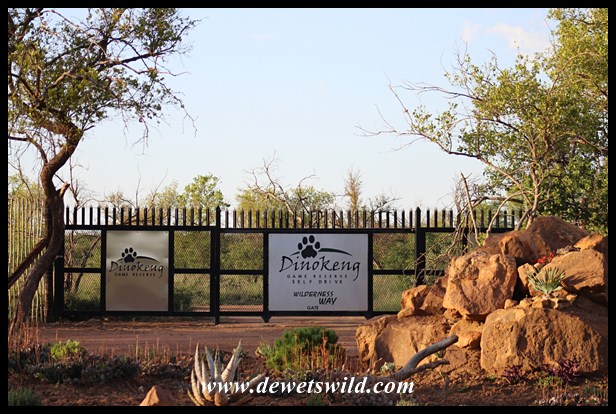
Dinokeng Game Reserve

When I was planning a quick weekend getaway for our milestone tenth wedding anniversary, I was looking for a destination we’ve not visited before, within easy driving distance of Pretoria in case Joubert still had to attend classes in the morning, and that Marilize would never guess as I wanted it to be a surprise. Dinokeng Game Reserve fitted the bill perfectly, but even now I still can’t believe just how much this place exceeded my every expectation!

As promised, we’ll give a bit of an overview of the reserve and share some of what we saw and experienced during our first visit to Dinokeng. Having been used as farmlands for so long before the reserve’s founding, I expected there to be little left of the pristine natural vegetation that would have occurred here centuries ago, but I couldn’t have been further off the mark. The reserve’s vegetation is typical varied bushveld (savanna) on a flat to gently undulating landscape, drained by three large streams and their tributaries. The Tswana name “Dinokeng” translates to “a place of rivers” in English, and obviously the name is well deserved.

For a relatively newly established reserve, the list of recorded bird species found at Dinokeng, already over 350 species strong, is phenomenal! We managed to connect with 74 kinds of birds during our weekend visit and have no doubt that more proficient birders would have had an even longer list at the end of theirs.

Dinokeng’s mammalian inhabitants are obviously flourishing. Of the “Big 5” we only managed to see White Rhinos, though we found ample evidence of the reserve’s three Lion prides in the remains of their kills. The Lions, Elephants, Buffaloes and Leopards will have to wait for our next visit then. Sightings of Impala, Kudu, Warthog, Plains Zebra, Blesbok and Blue Wildebeest were numerous, with rarer glimpses of Cheetah, Tsessebe, Eland, WaterbuckNyala, SpringbokGrey Duiker, Giraffe, Banded Moongoose, Black-backed Jackal and Vervet Monkey adding variety to our game drives.

Dinokeng Game Reserve boasts more than 30 different accommodation providers, ranging from rustic camping areas to luxury, full-service lodges. For our first visit to the reserve we had the pleasure of staying at OuKlip Game Lodge, deep inside the reserve, where eight fully self-contained safari tents (rated 4-stars) provide very comfortably for two to four guests each. We were immediately taken in by the great facilities in the tents and camp as a whole, not forgetting the warm hospitality of the owners and staff, and have already decided that OuKlip will be our preferred base for future visits to Dinokeng as well. I think what I will most remember about our tent, number one, was the two magnificent sunsets we enjoyed from the veranda! Contact Marilize if you’d like to make reservations at OuKlip; it is sure to be one of Dinokeng’s most popular retreats.

The Dinokeng Game Reserve was officially opened in September 2011, following the amalgamation of 200 private properties, and is managed co-operatively with the provincial government. Visitors to Dinokeng should remember that this is still a developing reserve and that there remains a lot of work to do to remove old farming infrastructure, derelict buildings and fences, and that a few public roads, with associated traffic, crosses through the reserve. It is the only game reserve with free-roaming populations of the “Big 5” in Gauteng Province, South Africa’s economic hub. Today it covers 185km², with plans for further expansion. The Self-Drive Route covers large areas of the reserve, and most of the over 100km of track is good enough to traverse in a sedan. Along the way visitors will find picnic sites (with toilets), hides and viewpoints, and several restaurants (we can honestly recommend the Kingfisher Restaurant at Mongena). Overnight guests and day visitors can also join guided drives and walks from many of the reserve’s private lodges. Other exhilarating activities available inside the reserve includes cultural tours, hot air ballooning and microlight flights, fishing, clay-pigeon shooting, boat cruises and spas. The “Safari Mall” stocks basic groceries and baked goods and also offers a fuel station and bottle store.

Dinokeng Game Reserve is easily accessed from the Hammanskraal offramp from the N1-highway heading north, around half-an-hour from Pretoria.
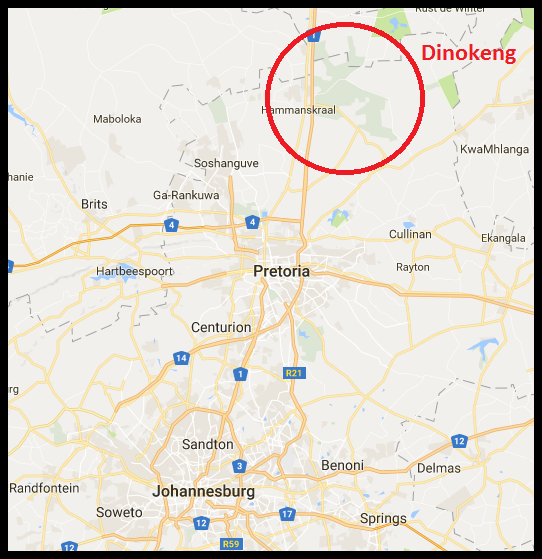
Dinokeng is located just north of Pretoria and easily accessible.

Dinokeng is located just north of Pretoria and easily accessible.


Already missing Dinokeng!

Our weekend away, to celebrate our tenth wedding anniversary, has flown past in the blink of an eye, and the little taste we had of the Dinokeng Game Reserve has us thoroughly addicted now. We’ll be sharing some more from this wonderful destination, and the very special Ouklip Game Lodge where we stayed, soon!

dinokeng-signoff


Day Two at Dinokeng

Good evening from Dinokeng Game Reserve, where we spent most of the day (except for a short siesta at noon) exploring this beautiful treasure almost right on Pretoria’s doorstep. Thank you as well for all the kind comments on our anniversary yesterday – we’ll get to them all when we return to “civilisation” tomorrow…

dinokeng-03-12-2016


Anniversary in the bush

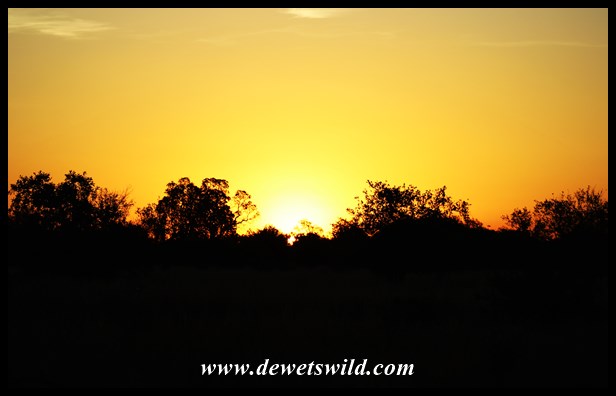
The sun has set on our tenth wedding anniversary, and of course we’re going to spend such an auspicious day in one of South Africa’s wild places. We’re exploring the new Dinokeng Game Reserve for the weekend, and we will tell you all about it in upcoming editions of de Wets Wild!

dinokeng-02-12-2016


African Sacred Ibis

Threskiornis aethiopicus

These easily recognisable, medium-sized birds (1-2kg) are extremely gregarious, flying and roosting in large flocks, and can be found near inland and coastal wetlands of all description, including sewerage works. Their natural diet consists of insects, worms, crustaceans, molluscs, fish, frogs, eggs, nestlings and carrion, and they are often to be found on the outskirts of towns scavenging at rubbish dumps and abattoirs. African Sacred Ibisses start breeding at the onset of the rainy season, in mixed-species colonies of up to 2000 pairs. Nests, in which 2 to 3 eggs are laid, consist of sticks and branches and are built in reeds or trees or on the ground on rocky islands.

Thanks to a wide distribution across most of Sub-Saharan Africa, and a large though probably declining population (200,000 to 450,000), the IUCN considers the African Sacred Ibis to be of Least Concern. The species is a common resident in most parts of South Africa, local numbers often swollen in summer by individuals migrating southwards from the equator, and have been introduced to Europe, the USA (Florida) and Taiwan. They are now extinct in Egypt, where they were once considered a sacred symbol of one of the Egyptian deities, and often mummified.

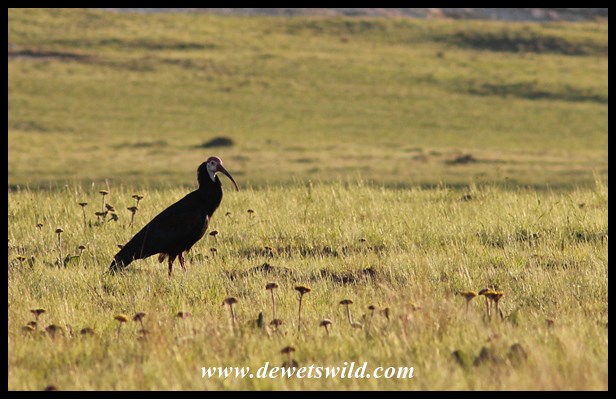
Southern Bald Ibis

Geronticus calvus

The Southern Bald Ibis is an endemic Southern African bird that occurs in high rainfall, high altitude, short grasslands, and has a special preference for areas where recent burns occurred. It will also forage in recently ploughed fields and cultivated pastures. These birds feed on insects and other invertebrates, usually foraging in small flocks though at times up to 100 can congregate together. Bald ibisses breed in colonies on ledges on high cliffs, laying 2 or 3 eggs that are incubated for four weeks in nests built of sticks and grass. They weigh about a kilogram and are about 80cm long from head to tail.

The IUCN considers the Southern Bald Ibis conservation status “vulnerable”, owing to its limited distribution and ongoing destruction of its habitat for agriculture and forestry. They occur only on the central highlands of South Africa, Lesotho and Swaziland, with an overall population of perhaps 8,000 to 10,000 birds, with around 2,000 breeding pairs occurring in 200 or so colonies. In our experience, good places to go looking for the Southern bald Ibis would be Golden Gate Highlands National Park, the reserves of the uKhahlamba Drakensberg Park, Ithala Game Reserve, and Chelmsford Nature Reserve.


Hamerkop

Scopus umbretta

The Hamerkop is a unique bird that is found only in Africa and Madagascar. Their name is Afrikaans for “Hammer Head”, in reference to their oddly shaped heads. These medium-sized birds weigh about 500g and reach a length of 50cm. Hamerkops are diurnal birds, mostly seen in mated, territorial pairs or family groups. Their diet consists of amphibians, small fish, crabs and other water-inhabiting invertebrates, and thus they are to be found at aquatic habitats such as lakes, dams, marshes, estuaries, seasonal pans, streams and rivers.

Hamerkop nests are enormous structures, often over 1.5m wide and able to support a man’s weight, built of sticks and twigs over the course of many months, in big trees or on cliffs, with a small side entrance to a tunnel leading to the nesting chamber deep inside. Although the Hamerkop pair may use the same nest for many seasons their nests are often take over by small mammals and other birds, mostly owls. They breed throughout the year, laying between 3 and 7 eggs that are incubated by both parents for around 4 weeks, with the chicks then leaving the nest about two months after hatching.

There are many traditional beliefs about the Hamerkop in Africa, such as that it heralds the death of a family member or that it can attract lightning. The Hamerkop has a wide distribution in Madagascar and sub-Saharan Africa, with a large, stable population, and is therefore considered of least conservation concern by the IUCN. They occur all over South Africa where suitable habitat is to be found, and are thus more common on the wetter eastern sides of the country than in the arid west.

African Woolly-necked Stork

Ciconia microscelis (episcopus)

Woolly-necked Storks (weight ∼ 1.8kg) inhabit a wide range of wetland habitats, ranging from the banks of rivers, streams, lakes, dams and ponds to estuaries and mangrove swamps, where they subsist on a diet of frogs, fish, crabs, insects, molluscs and worms. They are normally seen singly or in pairs, although they will at times congregate in large flocks when migrating or at favourite roosting sites. Woolly-necked Storks breed in solitary pairs, mostly at the end of the dry season, in nests built of sticks in tall trees, often over water and regularly used by the same pair year after year.

The Woolly-necked Stork has a wide distribution across Africa and with a stable population is considered of least conservation concern by the IUCN. In South Africa they are considered near-threatened, being found only in the Lowveld of Limpopo and Mpumalanga (where around 80 occur in the Kruger National Park) and the north of Kwazulu-Natal (where Umlalazi Nature Reserve is an excellent location to go looking for them)

Yellow-billed Stork

Mycteria ibis

The Yellow-billed Stork is a medium sized (up to 2kg), gregarious species that is usually seen in pairs or small flocks of up to 50 birds. They frequent shallow wetlands, estuaries and the banks of rivers and lakes, where they feed mainly on frogs, fish and aquatic invertebrates by moving their opened bills through the water, feeling for prey. They also roost and breed communally, in groups of up to 50 pairs, often together with other kinds of waterbirds. Breeding takes place when food is easiest to come by, usually when fish are concentrated in shrinking pools during the dry season. Nests are stick-platforms built in trees, often over water, in which 2 to 4 eggs are incubated by both parents for around 30 days.

According to the IUCN, the Yellow-billed Stork is of least conservation concern, although their population is apparently slowly decreasing . They’re a common sight over most of Sub-Saharan Africa and Madagascar, and in South Africa they can be encountered in all provinces except the Northern and Western Cape.