In October 2024 I had the immense pleasure of hosting long-time blogging friend John Steiner (of Journeys with Johnbo), his wife Lynn, John’s niece Patricia Broesder and her husband Gary on a tour of Cape Town and the Kruger National Park. In Kruger we were joined by colleagues Hannes Rossouw and Irving Knight, both experts in their respective fields.
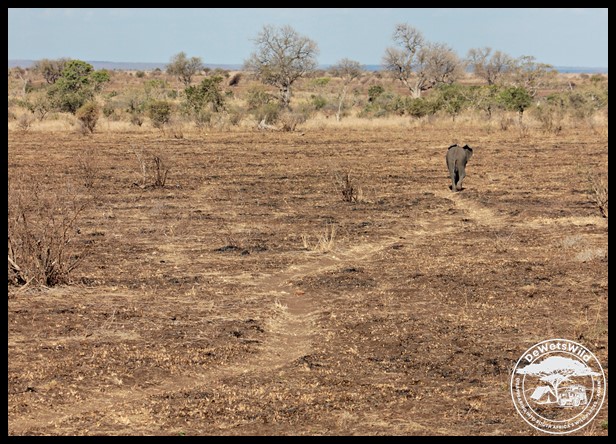
Still on the subject of elephants. Travelling between Letaba and Satara one early afternoon we came across a most harrowing sight of a lone young elephant, emaciated and totally oblivious to his surroundings and most certainly too small to have been expelled from the herd, walking along an elephant footpath towards – well, what? There was no elephant herd anywhere nearby and we could only guess as to why he was so terribly alone, and obviously has been for quite a while, and where he might be headed. Nature can be cruel at times and watching her take her course is not always easy, but in national parks like the Kruger that is exactly what has to happen. There can only be human intervention if the problem was caused by human interference to begin with and in this case there was no reason to suspect that this was the case.
Young elephant totally alone in the wilderness
Young elephant totally alone in the wilderness
Luckily we had many other wonderful encounters with elephants during our visit where we could watch their endearing familiar relations and interactions within the herd.
African Elephant
Young elephant
African Elephant
African Elephant
African Elephant
Baby Elephant
Baby Elephant
African Elephant
African Elephant
African Elephant
Baby elephant
Baby elephant
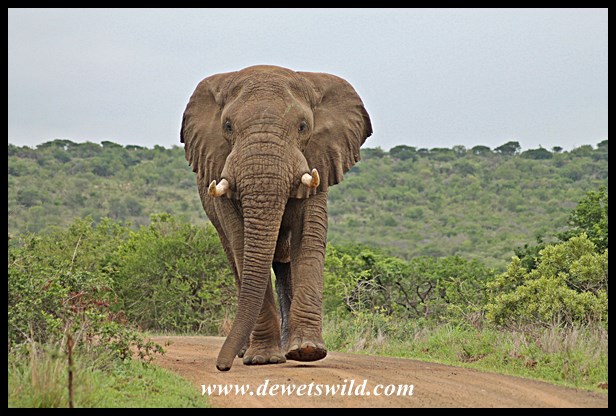
Big old elephant bull between Satara and Olifants in the Kruger National Park
Big old elephant bull between Satara and Olifants in the Kruger National Park
African Elephant
African Elephant
Baby elephant
Elephant
Elephant calf
Elephant Tusker
Tiny baby elephant
Elephant cow walking past Shingwedzi Camp’s entrance
I am a fully accredited and legally registered tour guide (with all the necessary insurance, professional drivers license and first aid certification) – don’t hesitate to reach out if you’d like me to arrange a guided tour of beautiful South Africa and all her natural wonders, like the Kruger National Park, for you as well, or even just to assist with your holiday reservations for our national parks and nature reserves throughout the country.
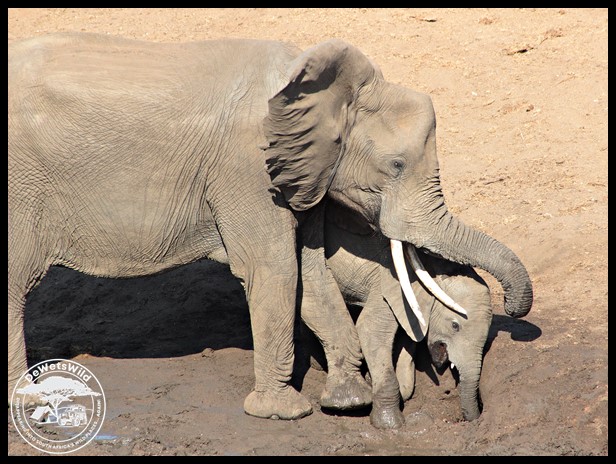
Last month, while following the course of the Mphongolo River north of Shingwedzi in the Kruger National Park on our morning drive, we came across this amusing scene at the Mavatsani waterhole, just south of the turnoff to Sirheni Bushveld Camp. The day was already quite hot and a herd of elephants, a couple of buffaloes, some baboons, nyalas and warthogs were milling around the muddy water. An elephant cow claimed a hole from which clear water was seeping but had her hands – or is that head, trunk and front leg? – full with a youngster trying to muscle his way in on her treasure. The calf protested with loud screams when she tried to shove him away but he did not give an inch and, her gentle nature obviously winning over her frustration, the cow eventually let him through to quench his thirst from her well.
Mavatsani Waterhole between Sirheni and Shingwedzi in the Kruger National Park
Elephant cow bullying a youngster at the waterhole
Elephant cow bullying a youngster at the waterhole
Elephant cow bullying a youngster at the waterhole
Elephant cow bullying a youngster at the waterhole
Elephant cow bullying a youngster at the waterhole
Elephant cow bullying a youngster at the waterhole
Elephant cow bullying a youngster at the waterhole
Elephant cow bullying a youngster at the waterhole
Elephant cow bullying a youngster at the waterhole
Elephant cow bullying a youngster at the waterhole
Elephant cow bullying a youngster at the waterhole
I am a fully accredited and legally registered tour guide (with all the necessary insurance, professional drivers license and first aid certification) – don’t hesitate to reach out if you’d like me to arrange a guided tour of beautiful South Africa and all her natural wonders, like the Kruger National Park, for you as well, or even just to assist with your holiday reservations for our national parks and nature reserves throughout the country.
The African elephant is one of our favourite animals, and every encounter we have with them is special and memorable. There’s just something so majestic in the confident swagger of the big bulls, so tender in the loving care of the cows and so playful in the antics of the calves.
Mature bulls weigh up to 6000kg and stand as high as 4m at the shoulder, while cows measure up to 3.4m high and weigh up to 4000kg. The forest elephant of Central Africa, a different race to those occuring here in South Africa, are much smaller.
Such a soulful eye…
Ivory up close
Elephant whiskers
Mature elephant bull
Elephant cow and calf
Elephant breakfast
Big bull standing tall at Lismore waterhole
Tiny calf staying close to mom at Spekboom
Elephant bull on the Gomondwane Loop
Addo’s Tusker Derek (2017/12/26)
Elephant’s Tail
Elephant’s tail
Elephant bull
Elephants drinking from a temporary stream
Elephants drinking from a temporary stream
Elephant Cow (photo by Joubert)
Elephant tusk
The trunk of African Elephants have two “fingers”
The herd is the core of elephant society, and comprises an older, experienced, dominant female or matriarch, her sisters and daughters, and their calves of varying ages. Sometimes these smaller family units join up with others to create massive congregations of 200 or more animals. Elephants are active throughout the day and night, resting in the shade only during the hottest hours of the day, usually near water. Their intelligence is legendary and the close bonds between herd members, who look after their sick and dying kin as much as they can, has always been an inspiration to humans.
Herd rushing to water
Playtime!
Elephant cows in Addo are mostly tuskless
Elephant herd crossing a road in Kruger Park
On the road in Pilanesberg National Park
Crossing the wide, sandy Letaba River
A tusk can be a useful resting place for a tired trunk
Elephants love playing in water, even big bulls like this
Elephants drinking at De La Porte waterhole
Crossing the Sabie
Elephants claiming the right of way
Wary elephant trio
Big elephant herd feeding in a reedbed
Another herd of elephants arriving at Hapoor
Elephants everywhere you look (Hapoor)
The next day, as we passed Hapoor, the elephants were getting together again
Elephant family
Herd of elephants on the dry plains south of Olifants
Protective elephant herd
Thirsty herd of elephants rushing to the water
Elephant crossing
Elephant mock-charge
Elephant youngster
Addo Elephants
Addo Elephants
Addo Elephants
Addo Elephants
Addo Elephants
Elephant cresting a hill
Elephant herd on the move
Elephant at Rathlogo Pan
Young elephant
Young elephant with a spring in his step (photo by Joubert)
Elephant Family
Tiny, tiny elephant baby
Tiny, tiny elephant baby (photo by Joubert)
Big Elephant bull at Pilanesberg Centre (photo by Joubert)
Elephant Bull walking away near Cape Vidal
Small herd of Elephants at iZindondo Pan
Elephant from Senyati’s underground hide
Elephant Silhouettes
Elephant from ground level
Elephant drinking from the pool at Elephant Sands’ Eco Lodge
Elephants abound in northern Botswana
Sandgrouse, doves and elephant sharing a waterhole
Elephants abound in northern Botswana
Elephants abound in northern Botswana
Elephants abound in northern Botswana
Elephants abound in northern Botswana
Elephants abound in northern Botswana
Elephants abound in northern Botswana
Mature bulls are mostly solitary, or accompanied by younger bulls known as “askaris”, and maintain a dominance hierarchy through threat displays and fights that would sometimes lead to the death of one of the combatants. After being forced from their maternal herds at the onset of puberty, around 15 years of age, bulls will only join up with the breeding herds again temporarily to mate.
Impressive bull
Mature elephant bull
Elephant bull
Scratching an itchy ear
Mature bull exuding confidence
Play fighting
Drinking at Tembe
Splish-splash
Three big bulls walking in single file along a road in the Pilanesberg
Elephant in a downpour
Dominant bull striding up to welcome a newly arrived family group at Hapoor
Elephant bull on the way to Orpen
Here elephants have right of way!
Elephant bull
Tired old elephant bull crossing the road
Elephant
Addo Elephants
Addo’s Tusker Derek (2017/12/26)
Addo Elephants
Addo Elephants
Elephant bull enjoying a puddle near Mopani
Elephants on the way to Phalaborwa Gate
Unknown Kruger Tusker (2018/03/21)
Elephant near Mopani
Elephant bull owning the road in Kruger National Park
Big old elephant bull
Elephant drinking from a reservoir
Elephant along the stream
Elephant drinking at Bhejane
Big elephant bull in musth
Old Elephant bull on the S145 near Talamati
Elephant bulls after enjoying a muddy portion of the waterhole
Elephant bull after enjoying a muddy portion of the waterhole
Elephant bulls in procession
Elephant bulls in procession
Elephant bulls in procession
Elephant bulls in procession
Elephant bulls in procession
Elephant bulls in procession
Elephant bull drinking
Elephant Silhouette
lephant from ground level
Elephants are able to inhabit any habitat that has sufficient food, water and shade – they occur from the Namib Desert to Africa’s equatorial forests. They are big ecological drivers and a crucial component of the ecosystems in which they occur, having an immense impact on their environment. Their seemingly destructive feeding habits serves to prevent bush encroachment and provides niche habitats for a wide variety of smaller fauna. Consuming up to 300kg of plant material per day, the copious amounts of dung (about 100kg of dung per animal per day!) they produce provide an important source of food for a myriad of small animals, birds and insects. Elephants are not particularly fussy about what they eat and include herbs, grass, reeds, leaves, seeds, pods, bark, roots and branches in their diet, but they are rather fond of mopane trees and mlala palms.
In the hot African sun any shade will do!
Big Elephant Bull in contemplative mood
Baby Ellie
Elephant bull at Mestel Dam
Elephant herd quenching their thirst at Shitlhave Dam
Elephant youngster enjoying a snack while crossing the road
Elephant calf (Photo by Joubert)
Thirsty Tusker (Photo by Joubert)
Two Elephant bulls marching into the distance (Photo by Joubert)
Elephant warning (Photo by Joubert)
Elephant herd on the run to Red Rocks (Photo by Joubert)
Elephant Calf (Photo by Joubert)
Elephant Bull (Photo by Joubert)
Sunset elephants in the Shingwedzi (Photo by Joubert)
Elephants gathering in their numbers along the dwindling waterholes in the drying Mphongolo River
Elephant roadblock
Elephant bulls sharing a waterhole
Elephant cow with interestingly shaped ivory
Elephant cow with interestingly shaped ivory
Beautiful elephant bull
Beautiful elephant bull
Beautiful elephant bull
Elephant bull destroying a small tree
Cute elephant calf
Beautiful elephant bull
Elephant calf fast asleep
Tiny ellie baby
Big old elephant bull
Classically shaped ivory
Elephant calf
Elephant herd moving along a dry river
Elephant herd running to the water
Elephant tussle
Elephant cow drinking at Red Rocks
Big elephant bull in musth
Elephants arriving at Tlopi’s dam
Elephant
Elephant cow that’s had enough to drink now
Matriarch of her herd
Taking that first step across the stream
Big Bull (photo by Joubert)
Big Bull
Elephants drinking from the Chobe River
Elephants drinking from the Chobe River
Elephants making their way to the Chobe River
Elephants making their way to the Chobe River
Elephants on the banks of the Chobe River
During times of drought, elephants will dig wells in apparently dry river beds, thus providing water not only for themselves but also for all other wildlife in the vicinity. An adult elephant requires between 150 and 300 liters of drinking water daily. After years of continuous use, elephant mudbaths are enlarged and transformed into pans and waterholes that hold water for extended periods into the dry season. Several of South Africa’s passes were built along tracks used by countless generations of elephants to cross our mountains.
A well dug by elephants in a dry streambed
Thanks to their trunk elephants have excellent reach when browsing
Marula tree damaged by a foraging elephant
Digging for roots
The trunk is so versatile!
The trunk is so versatile!
Elephant breakfast
A lone bull drinking from the trough at Peasland
Elephant calf
Elephant
Elephant
Elephant digging for roots using its foot and trunk
Addo Elephants
Addo Elephants
Addo Elephants
Addo Elephants
Elephant at Rathlogo
This elephant cow didn’t appreciate our presence one bit, even though we gave her plenty of space!
Elephant teenager showing off!
Elephant visiting us at Thutong one night (caught on our camera-trap)
Baby elephant
Elephant youngster
Close-up detail of an elephant’s tail
Baby Elephant walking away with mom
Elephant Bull
Elephant Bull
Elephant Bulls
Elephant Cows begging for a chance at the waterhole
Elephants enjoying the water and mud
Elephant youngster
Elephant rough-and-tumble
Elephant herd in a rush to water
Elephant Bull at Hapoor Dam
Three little warthogs and an Elephant
Elephants playing in the water
Elephant calf
Tiny Elephant calf
Elephant bull taking a drink of water
Two elephant bulls greeting each other
Elephant cows in Addo seldom have well developed tusks
Elephant cow and calf
Elephant herd in a rush to the waterhole
Elephant feeding on a Plumbago
Baby elephant
African Elephant
Elephant Bull
Elephant tusk close-up
Elephant bull in musth
Elephant Bull in Manyeleti
Some elephants came so close to us that we noticed the hair around their ear openings!
Elephant bull
Elephant bull
Elephants at sunrise
Elephant family
Elephant family
Baby elephant
Baby elephant
Baby elephant
Baby elephant
Baby elephant
Elephant bulls
Elephant bull
Elephants at the waterhole
Elephants at the waterhole
Elephants at the waterhole
Elephants at the waterhole
Elephants at the waterhole
Elephant bull
Elephant cows give birth to single calves (twins are extremely rare) at any time of year, after a 22-month gestation period. The calves weigh about 120kg at birth an can stand within an hour of being born. They are weaned at the age of two years, by which time they’ve become quite adept at using their trunks to feed and drink water.
Tiny elephant calf
Tiny elephant calf
Baby elephant threat display
Fits neatly under mom’s belly.
So small and cute
Didn’t realize mom has moved on 😉
Only a few days old
So small and cute
Playful elephant youngsters
Elephant Cow and Calf
Elephant friends
More cows and calves at Hapoor
More cows and calves at Hapoor
Very thirsty calf running for the water
Tiny calf staying close to mom at Spekboom
Tiny calf staying close to mom at Spekboom
Calf suckling at Marion Baree waterhole
Protective cow at Lismore waterhole
Elephant calf
Elephant calf
Elephant calf
Elephant calf
This little elephant was probably less than a day old and very unsteady on his feet
Tiny new herd member
Old matriarch
Baby elephant show-off
Seymore Butts
Baby Elephant Naptime at Addo
Addo Elephants
Addo Elephants
Addo Elephants
Addo Elephants
Addo Elephants
Addo Elephants
Addo Elephants
Testing the wind
Tiny baby next to mom
Young elephant interactions
Elephant cow
Baby elephants fast asleep in the heat while the rest of the herd stand guard
Big Elephant herd at Makorwane
Baby elephant friends
Baby elephant
Laughing Elephant calf
Elephant cow and calf
Playful Baby Elephants
Baby elephants playing in the mud
Baby elephants playing in the mud
Cute little elephant testing the air
Helping a reluctant friend cross the stream
Helping a reluctant friend cross the stream
Learning by imitating the grown-ups
Shaking off the dust from his ears (photo by Joubert)
This grass is so soft to lie on!
Young elephant trying to chase away the birds at the water’s edge
Practicing her balance! (photo by Joubert)
Practicing her balance! (photo by Joubert)
Making a splash
Arriving at the water’s edge
Ears peaked in irritation (photo by Joubert)
Ears peaked in irritation
Ears peaked in irritation (photo by Joubert)
Tiny youngster crossing next to mom
Tiny youngster crossing next to mom
Tiny youngster crossing next to mom (photo by Joubert)
Tiny youngster crossing next to mom (photo by Joubert)
Tiny youngster crossing next to mom
Tiny youngster crossing next to mom
Tiny youngster crossing next to mom
Tiny youngster crossing next to mom
South Africa’s wild places is home to several “Big Tuskers“; elephant bulls carrying exceptionally long and heavy ivory. Many of them are named, and become tourist attractions in their own right; living monuments to South Africa’s proud conservation history. The longest tusks recorded in South Africa, 3.05m and 3.17m, belonged to Shawu, a tusker from the Kruger National Park that became famous as one of the “Magnificent Seven” in the 1970’s and ’80’s. The heaviest belonged to Mandleve, who died in 1993 and was also from Kruger, with a combined weight of over 142kg.
Isilo of Tembe
Masbambela (of Kruger)
Tusker Masthulele, Kruger National Park
Unknown Kruger Tusker (2018/04/02)
Hahlwa (2018/04/01)
Xidudla (2018/03/29)
Nambu (24/09/2019)
Elephant Bull
Being one of Africa’s famed “Big 5“, elephants are a sought-after species for anyone visiting wildlife reserves where they occur. However, elephants are extremely dangerous and should be treated with the utmost respect. They can charge at speeds of between 40 and 50km/h, much faster than any human can run. Bulls in musth, a heightened state of aggressiveness fueled by elevated testosterone levels that drives their urge to mate and fight for dominance, are very irritable and will charge without much provocation. Mothers are extremely protective of their calves and you should never find yourself between a cow and her offspring. It is always best when viewing elephants to give them plenty of space and pay attention to any warning signs they may give: a head held high, ears held wide open, trunk tucked under the body, shaking the head and ears are all signs that you are too close and need to move away fast.
Mock charge!
Lucky escape!
In playful mood
Better get a move on!
Showing off
Stretching
Agitated due to invisible lions
Showing off
If he chose to, this bull in the Pilanesberg could easily reach someone in the viewing hide.
Just a little irritated
Testing their strength
Elephant Bull (photo by Joubert)
Elephant youngsters testing their mettle
Elephant youngster
Big old elephant bull
Elephant tussle
Elephants at Welverdiend waterhole
Elephant drinking at Spekboom waterhole
Another cute elephant calf
Elephant cow and calf
Sleepy elephants
One of the elephants that Addo is famous for
One of the elephants that Addo is famous for
The future is secure for Addo’s elephants
Big elephant bull being very protective of a youngster at the Marion Baree waterhole
Elephant walking side-by-side with us
Elephant antics at Leeupan (photo by Joubert)
Mom and baby elephant at Leeupan (photo by Joubert)
Elephants congregating at Leeupan
Elephant antics at Leeupan (photo by Joubert)
Elephant antics at Leeupan (photo by Joubert)
Elephant wiping dust from its eye (photo by Joubert)
Elephant stretching to reach ripe Sycomore figs (photo by Joubert)
Elephant conductor (photo by Joubert)
Elephant coming to drink from Mlondozi Dam
Elephant matriarch with impressive tusks
Elephant munching on a thorny branch
Elephants congregating in a dry river bed
Elephants congregating in a dry river bed (photo by Joubert)
Adult elephants have little to fear from other animals, and lions and spotted hyenas are the only predators that realistically pose a threat to calves and juveniles. Most elephants succumb to fights, sickness, drought or old age. Old elephants spend most of their time feeding on green, soft vegetation along watercourses, due to them having worn our their last set of molars at about the age of 55 years, finding it increasingly difficult to feed on harder plant material. They then eventually die in these areas, possibly giving rise to the myth of an elephant graveyard.
Today, elephants in Africa and Asia are faced with the threats of escalating poaching, habitat loss and various other conflicts with humans. With an estimated 100 African elephants killed daily for the illegal ivory trade in Asian markets, their population is in rapid decline. World Elephant Day was launched on August 12th, 2012, to bring attention to the plight of these iconic animals, and has been observed annually since.
Elephant along Tshepe Drive
Elephant along Tshepe Drive
Elephants crossing the Black Umfolozi
Elephant cow
Elephant bull walking along the main road
Elephants (photo by Joubert)
Elephant
Elephant visiting at Tlopi
Elephant roadblock at sunset (photo by Joubert)
The very noticeable “grass notch” shows that this elephant is left-handed!
Elephant bulls walking away from Tihongonyeni Waterhole
Elephants on the banks of the Letaba River
Elephants, plains zebras and a giraffe around one of the springs in the Nshawu Marsh
Elephant feeding on mopane leaves near Tihongonyeni
Elephants at Mooiplaas Waterhole
Elephant bull drinking from Grootvlei Dam
Elephant herd walking away from Mooiplaas Waterhole











 DeWetsWild