Terathopius ecaudatus
Considered an ill omen in the traditional folklore of many African societies, the Bateleur is our most colourful eagle and easily identified in flight by its short tail. They get their name from their acrobatic aerial courtship displays, “bateleur” being French for acrobat. Adults have a wingspan of just under 2 meters and weigh around 2.5kg.
Bateleurs inhabit open habitats, ranging from semi-desert shrublands and grasslands to savannas and open woodlands. They prey on a variety of smaller mammals, birds, reptiles (including venomous snakes), insects and even fish and amphibians, caught from drying pools. They also include a large percentage of carrion in their diet – in fact, they are usually one of the first species to arrive at a carcass. They spend many hours daily on the wing, gliding fast and low over the ground in search of food and covering as much of 400km a day in this way!
In southern Africa, Bateleurs breed in the summer rainy season. Pairs are monogamous, staying together for life, and territorial. Nests are stick-platforms built in the canopies of tall trees, usually along water courses, and lined with leaves. The single egg is incubated for almost two months. Both parents play their part in feeding the chick, which takes its first flight when it is 3 to 4 months old and becomes independent about 7 months after hatching. Young Bateleurs are highly nomadic until they establish their own pairbonds and territories.
The Bateleur’s natural distribution extends over most of sub-Saharan Africa, with the exception of the driest deserts and equatorial forests, with a small population on the Arabian Peninsula. Habitat loss, poaching and poisoning is causing Bateleur populations to decline all over their range and they are becoming increasingly restricted to the large game reserves and national parks. It is now listed as “Near Threatened” by the IUCN, and considered vulnerable in South Africa. South Africa’s biggest population occurs in and around the Kruger National Park, estimated at around 600 breeding pairs, while elsewhere in the country they are now only to be found in the reserves of northern Kwazulu-Natal, the Lowveld of Mpumalanga and Limpopo, along the Limpopo valley, and in the Kgalagadi Transfrontier Park while they were previously much more widespread.

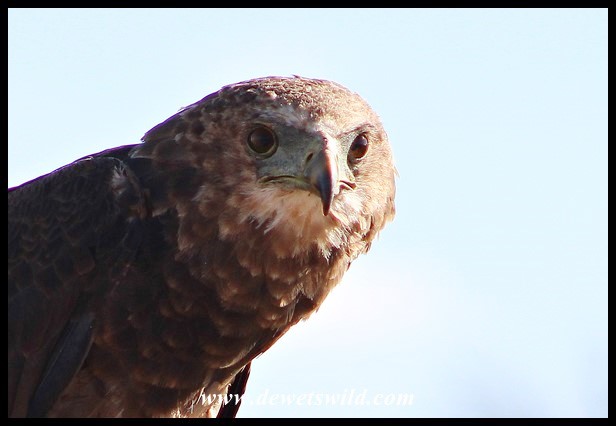
Juvenlie Bateleur

Bateleurs

Bateleur (female)

Bateleur

Bateleur

Bateleur

Bateleur

Juvenile Bateleur flying overhead

Bateleur

Immature Bateleur

Immature Bateleur

Bateleur

Immature Bateleur

Bateleur

Immature Bateleur

Adult Bateleur

Immature Bateleur

Immature Bateleur

Immature Bateleur

Very wet Bateleur

Bateleur in flight

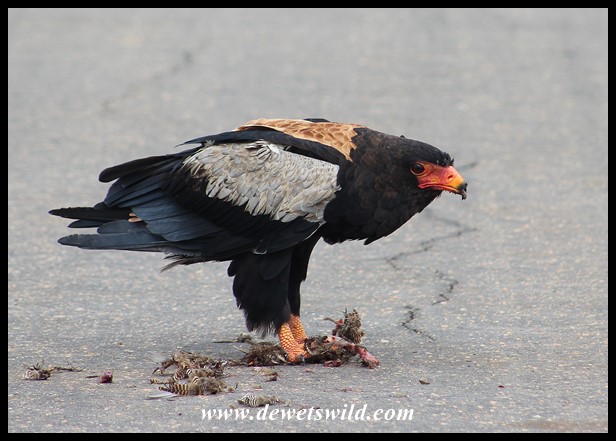
Bateleur cleaning up roadkill

Bateleur

Bateleur

Immature Bateleur (photo by Joubert)

Bateleur

Bateleur pair

Bateleur pair

Bateleur

Bateleur





 DeWetsWild