Category Archives: Western Cape Province

Summertide Rambles 20 December 2020

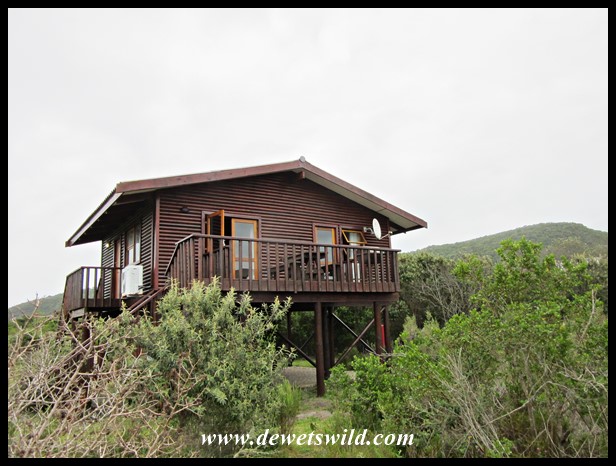
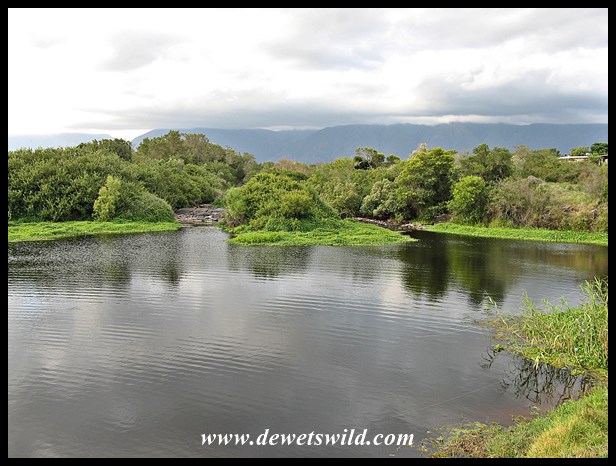
It’s the fifth day of our 2020 Summertide Ramble, and we’ve moved again – this time about 200km due east to the Wilderness section of the Garden Route National Park, where our cosy log cottage in the Ebb-and-Flow Rest Camp has a lovely (if overcast and rather chilly at the moment) view over the wetlands of the Serpentine River just before its confluence with the Touw River.

Summertide Rambles 19 December 2020

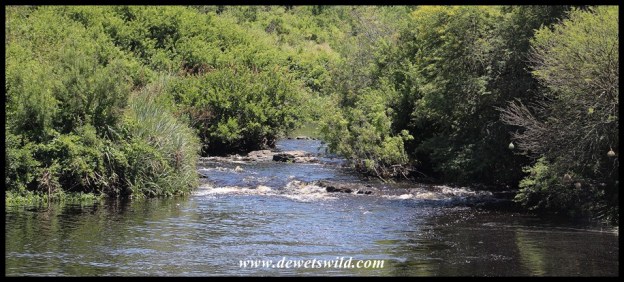
A focal point of the Bontebok National Park is the Breede River, serenely flowing along the park’s southern border. Visitors can kayak, fish and swim in the river or picnic and camp on its banks.


Summertide Rambles 18 December 2020

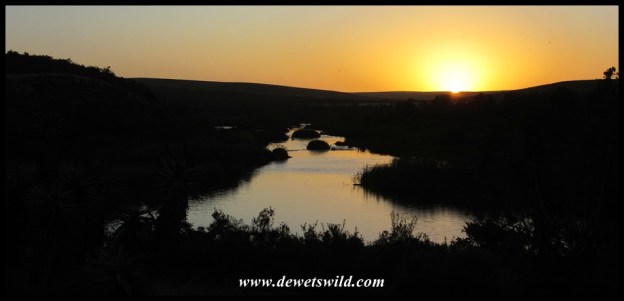
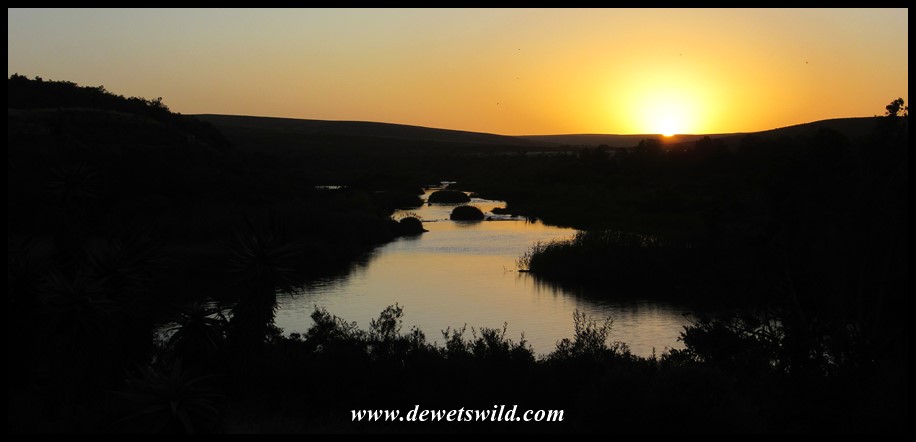
After spending two nights in the Great Karoo, today we traversed four scenic mountain passes to move to the next destination on our 2020 summertide ramble. This is the view we enjoyed at sunset this evening from the verandah of our cosy little chalet in the Bontebok National Park.

Summertide Rambles 17 December 2020

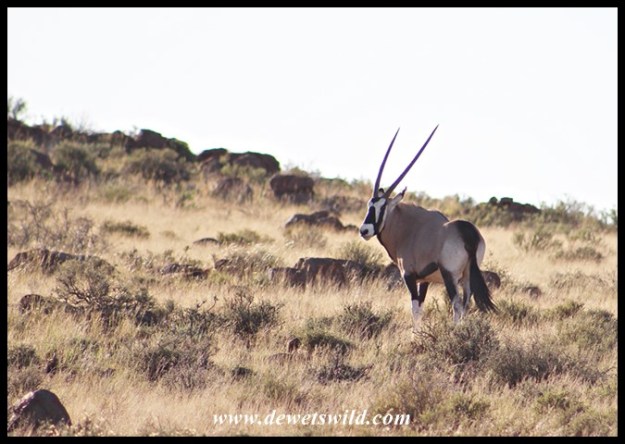
The open landscapes of the Karoo National Park really shows off the wildlife that inhabit this arid environment to great effect – in this case a beautiful gemsbok that we saw this morning just after sunrise.

Summertide Rambles 16 December 2020

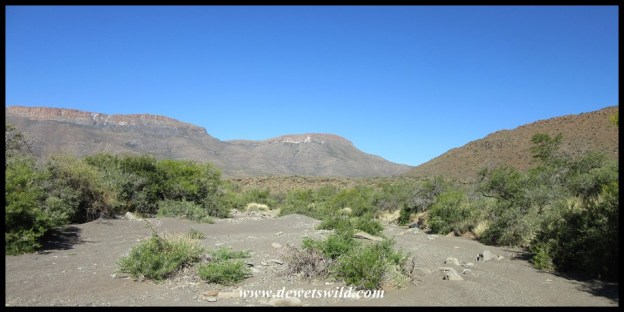
Our long awaited summer holidays have finally arrived, and we kick it off in the wide open spaces of the beautiful Karoo National Park – a little over 1,000km southwest of home.


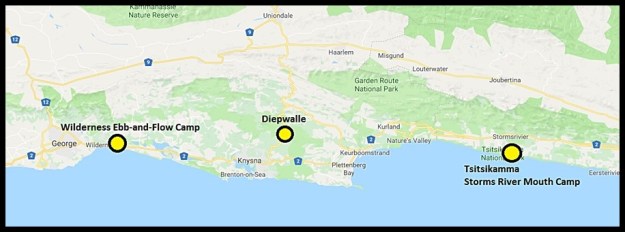
Diepwalle (Garden Route National Park)

Originally, most of South Africa’s Garden Route between the mountains and the sea was covered by dense forests. Unfortunately these forests have been exploited on an industrial scale for wood and ivory since the 1760’s and the town of Knysna owns its existence to the lucrative trade that required access to a harbour for exporting. At various times attempts were made to protect pockets of forest from harvesting, but it is not until the 1880s, when a professional forester was appointed as superintendent by the colonial government, that any real effort went into the protection and sustainable use of what remained. Today only about a third of the indigenous forests remain, with a large proportion of it being protected in the Garden Route National Park, proclaimed in 2009 when several state forests were amalgamated with the Wilderness and Tsitsikamma National Parks and the Knysna National Lake Area.

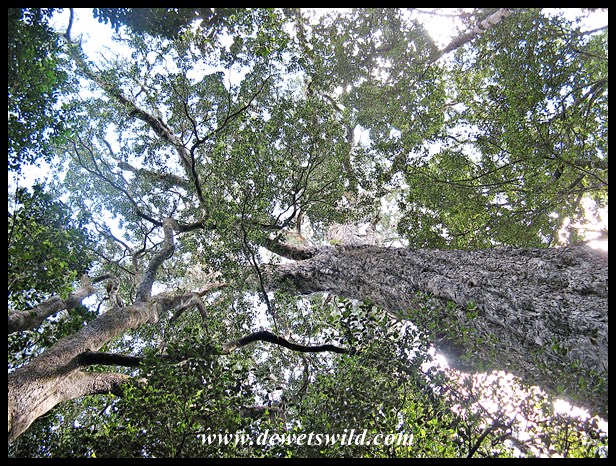
North of Knysna, the Diepwalle State Forest was one of those pockets of forest afforded protection. One of the main attractions here is the enormous King Edward VII-tree, an Outeniqua Yellowwood tree estimated to be over 600 years old, towering almost 40m above the forest floor and so named by a group of British officials who were entertained to a picnic here in 1924. Diepwalle is also known to be part of the range of the last few remaining Knysna Elephants. In the 1880s it was estimated that between 400 and 600 elephants still roamed the Garden Route, yet today, a little over 100 years later, there may be only one lone cow remaining (even elephant researchers and park staff differ on exactly how many are left). Unless they are exceptionally lucky, the only contact visitors are likely to have with a Knysna Elephant is not along the Elephant Walk trail through the forest, but rather with the skeleton of one that is on display at the Forest Legends Museum at Diepwalle.

Diepwalle is easily accessible from Knysna, a short drive along the gravel R339 (Prince Albert’s Pass) leading to Uniondale. We spent a morning in the area while on our December holidays visiting eight of South Africa’s national parks. Guests can stay a night or two here on the unique camping decks set among the trees in the deep forest shade. Apart from the fascinating museum, there’s also picnic sites and a community-run tea garden serving delicious treats.


Wilderness (Garden Route National Park)

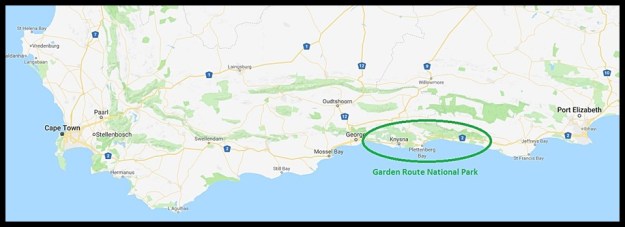
South Africa’s Garden Route is a 300km stretch of diverse and exceptionally scenic coastline between Mossel Bay in the west and the Storms River in the east, sandwiched between the Outeniqua and Tsitsikamma mountains and the Indian Ocean. The process of protecting the Garden Route from exploitation and human encroachment has been a long one, and is still ongoing. From the 1960’s various small pieces of the area east of the small holiday town of Wilderness received formal protection, culminating in these being amalgamated into the newly proclaimed Wilderness National Park in 1987 and the years thereafter. In March 2009, the erstwhile Wilderness National Park became an integral part of the expanded Garden Route National Park (covering a total of over 1,500km²), when it was joined with the Knysna National Lake Area and Tsitsikamma National Park through the proclamation of enormous tracts of state-owned land joining them.

The Wilderness section of the Garden Route National Park is centered on South Africa’s very own “Lakes District”. The original area encompassed by the Park straddles six lakes (Groenvlei, Bo-Langvlei, Langvlei, Rondevlei, Swartvlei and Island Lake), the Wilderness Lagoon, Serpentine and Touw Rivers, indigenous forests, and both rocky and sandy beaches along the coastline.

Before the Wilderness National Park was proclaimed, the area where the Garden Route National Park’s Ebb-and-Flow Rest Camp is situated today was the Ebb-and-Flow Nature Reserve (administered by the George municipality and today Ebb-and-Flow North) and the private Siesta Caravan Park (today Ebb-and-Flow South).

Birdwatchers and photographers are in for a treat when visiting any of the three hides next to the lakes in the Wilderness section of the Garden Route National Parks. We had time to visit two of them in December – Malachite (on Langvlei) and Rondevlei, and could easily have spent all day at either.

Given the amazing diversity of habitats in the park, it is no surprise that the Wilderness section of the Garden Route National Park abounds with a wide variety of birdspecies, and while the area doesn’t support much in the way of large mammals apart from shy bushbuck, bushpigs and very seldomly seen leopards, it does give visitors the opportunity to walk around unhindered looking for the smaller fry.

Ebb-and-Flow Rest Camp is the Wilderness section’s main visitor node. Here there are accommodation and two expansive camping areas for overnight guests, a newly opened picnic area for day visitors, and canoes for hire to explore the Touw and Serpentine Rivers. A network of walking trails of varying length traverse the area, many of them starting at or near Ebb-and-Flow. The Park also has several beaches for sun-seekers and bathers. Privately-run accommodation establishments and camping sites, shops, restaurants, fuel stations and more are available in the nearby towns of Wilderness and Sedgefield.

The Wilderness section of the Garden Route National Park is easily accessible along the N2 highway running from Cape Town to Port Elizabeth, and is just a few minutes’ drive from the airport at George. We recently spent three nights camping in the lovely Ebb-and-Flow North camp, the fifth stop on our 2017 summer holidays in eight of South Africa’s national parks.

Bontebok National Park

The Bontebok, a colourful antelope endemic to the Western Cape of South Africa, roamed the area between the present towns of Caledon and Mossel Bay in their thousands at the time the Dutch first established their trading post at Table Bay in 1652. Uncontrolled hunting however quickly led to the population crashing, and despite conservation minded farmers’ best efforts only 121 Bontebok remained by 1927. In 1931, the precarious situation of the Bontebok moved the National Parks Board to establish the Bontebok National Park on an area of 722 hectares outside Bredasdorp, with a founding population of just 17 animals. This area however was poorly chosen, and the animals suffered from disease and poor grazing. It was decided to find an alternative location for the Park, and in 1960 the present site on the outskirts of Swellendam was proclaimed as the Bontebok National Park with a population of 61 of its most precious charges that survived the translocation. Covering 3,900 hectares with little prospect of further expansion due to it being surrounded by the town and croplands, the Bontebok National Park is South Africa’s smallest National Park. Here the Bontebok thrived, and when the Park reached its carrying capacity of about 250 Bontebok, animals could be donated and sold for reintroduction to other parts of their historic range. More about the Bontebok in our next post.

The recorded history of the area that today encompasses the Bontebok National Park dates back much further than that though. By the time the Dutch settled in the Cape, this area was already inhabited by the Hessequa, a Khoekhoen tribe, that moved into the area about 2000 years earlier and was very successful farmers with healthy herds of especially cattle and sheep. The Hessequa clans lived in settlements known as “kraals”, under the leadership of “captains” controlled by a powerful chief. Lang Elsie, who lived between 1734 and 1800, was notable for being a female captain and her kraal was located on the banks of the Breede River, near the site now occupied by the Park’s tourist accommodation. Today, the remains of Lang Elsie’s small stone house can be seen a short walk away from the rest camp that carries her name, while efforts are being made to restore the open site where her followers lived in traditional huts made of sedge thatch. The Dutch started trading with the Hessequa in the 1660’s, and as the years progressed more and more European settlers moved into the area, leading to the establishment of Swellendam in 1746. By the end of the 18th century, Western “civilisation” had brought an end to the traditional lifestyle of the Hessequa Khoekhoen. Those that survived waves of disease epidemics were forced into life on farms or on mission stations.

The Bontebok National Park is largely flat, ranging in altitude between 60 and 200m above sea level. In the south, the broad and slow Breede River is a permanent feature. To the north, the Langeberg mountain range lies outside the Park. Most of the Park’s vegetation is classified as fynbos, mostly low growing, with thickets of various tree species lining the river. About 470 indigenous plant species have been recorded in the Park; with most of the surrounding areas being intensively farmed this pocket of natural vegetation is extremely valuable. Unfortunately the alien invasive water hyacinth is proving difficult to eradicate from the river.

While the Bontebok remains the Park’s star attraction among the 36 kinds of mammals that find refuge here, there’s several other kinds of non-threatening large game animals that may be encountered, and over 200 bird species have been recorded. There’s also 28 kinds of reptiles, but apart from the ubiquitous Angulate Tortoises most are rarely seen. Ten species of amphibians and twelve species of fish (6 of which is exotic) also occur at Bontebok National Park.

Overnight visitors to Bontebok National Park’s Lang Elsie’s Kraal Rest Camp have the option of camping or staying in one of the 14 comfortable chalets with either 1 or 2 bedrooms. Day visitors are well taken care of at the picnic area at Die Stroom next to the Breede River. Visitors are welcome to walk and cycle through the Park, with several well-marked trails at their disposal, or swim, canoe and fish in the river. There is also a limited network of gravel game-viewing roads, for the most part easily negotiable in a sedan. Shops, restaurants, fuel and other services are available in Swelledam, just a few minutes from the Park’s entrance gate on the N2 highway.

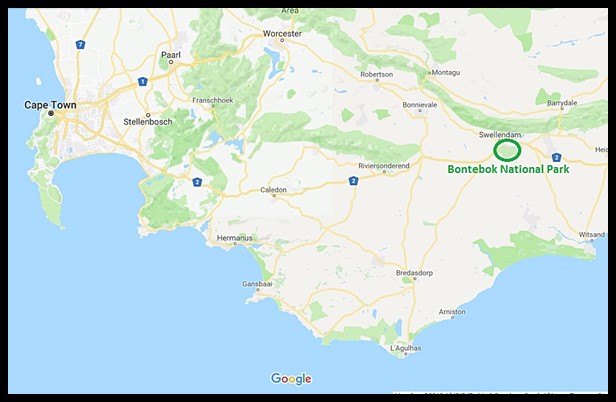
Bontebok National Park is located just outside the town of Swellendam, with the entrance gate less than a kilometre from the N2 highway leading to Cape Town, about 240km away. Bontebok was the fourth destination on our December holiday tour of eight of South Africa’s national parks. Unseasonably wet weather severely curtailed our explorations of this Park during the two days we had available there, so we will just have to return for more!
 

Agulhas National Park

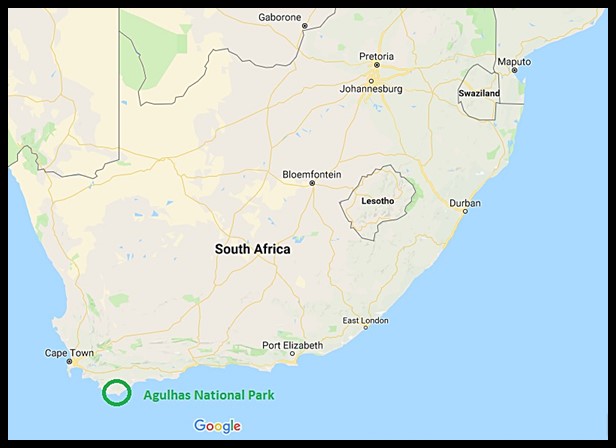
Fifteenth century Portuguese seafarers named Cape Agulhas when they found that magnetic compass needles pointed precisely true north here (“agulhas” being Portuguese for “needles”). It is also the southern-most point of the African mainland, where the Atlantic and Indian Oceans meet, and has been inhabited by humans for over a million years with several sites of archaeological interest. The Agulhas Plain also has an incredible biodiversity and it was realised that what remained of it was worthy of protection, leading to the proclamation of the Agulhas National Park in 1999. Today the park covers almost 230km².

This is one of the world’s most treacherous coastlines. Since 1552, at least 125 ships met their fate around Cape Agulhas. For this reason the lighthouse at Cape Agulhas was commissioned in 1849, and is the second oldest of the 56 working lighthouses along our coast. It was designed as a replica of the Pharos of Alexandria, one of the seven wonders of the ancient world, and at night its beam can be seen up to 60km offshore. One of the most easily seen wrecks is that of the Meishu Maru, a Japanese fishing vessel with a cargo of 240t of tuna, that ran aground in 1982, happily without any loss among the 17 crew members. Today, a fascinating museum and information centre is housed inside the lighthouse.

The vegetation of the Agulhas National Park consists mainly of fynbos, with an estimated 2,000 plant species finding protection within its borders, many of which are rare and occur nowhere else on earth. The vegetation doesn’t grow very tall here due to the extremely windy conditions that prevail throughout the year. The area is rather flat and featureless, with rocky and sandy beaches alternating and stretching for many kilometers. And the sunsets from the main camp, as the sun dips into the Atlantic Ocean (the camp lies west of the southernmost tip of Africa) is a sight to behold!

The Park is still being developed, and as such does not yet contain large terrestrial mammals in any significant numbers. Most of the mammal species that occur here are either marine or small and rarely seen. The Agulhas National Park is however a prime birding spot, both for land and sea birds.

Guests can overnight in the main rest camp, which consists of one or two bedroom cottages and the luxury Lagoon House, built right on the rocks at the ocean’s edge. A few historic farm houses spread throughout the inland portions of the Park has also been renovated to accommodate guests. An extensive network of walking trails have been laid on around the main camp. All modern services and amenities associated with small holiday towns can be found in nearby L’Agulhas and Struisbaai. The nearest big town is Bredasdorp, 35km to the north.

The Agulhas National Park is located about 250km southeast of Cape Town, with the main rest camp a short drive from the small holiday town of L’Agulhas. It was the third destination on our December holiday tour of eight of our country’s national parks.


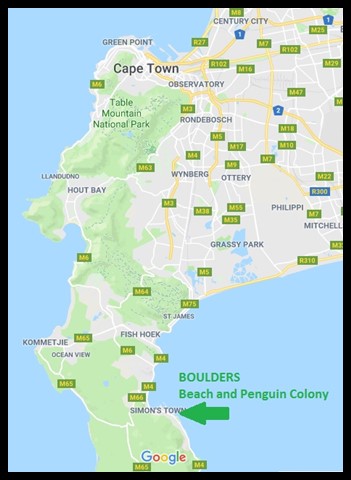
Boulders Beach and Penguin Colony (Table Mountain National Park)

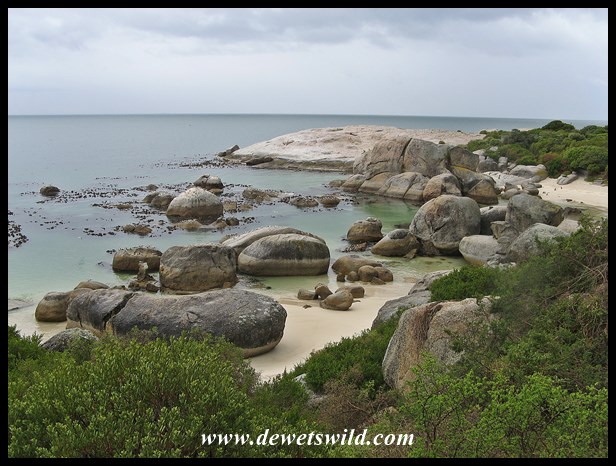
Boulders, a sheltered cove in the naval town of Simon’s Town, comprises a few small bays and beaches protected by enormous granite rocks, 540-million years old, from the pounding surf of the Atlantic Ocean in False Bay. It is one of the most popular attractions in the Table Mountain National Park.

In 1982, two pairs of African Penguins took the unusual step of settling and breeding on the mainland here at Boulders. Today, the colony has grown to number over 2,000 birds and offers probably the most accessible views of penguins to be had anywhere in the world. Visitors are urged not to get too close to the penguins and not to try and touch them, as they’ll not hesitate to nip a finger or nose with their razor sharp beaks if they feel threatened.

While pride of place obviously goes the the penguins, there’s a multitude of other wildlife – birds and mammals especially – that find a safe refuge at Boulders.

Wheelchair-friendly boardwalks erected at Foxy Beach allows visitors to get up close to the penguins, while swimming and sunbathing is popular at Boulders Beach. The two beaches are connected by a lovely walkway through indigenous bush known as Willis’ Walk. There is a curio shop at the visitor centre, and several restaurants, cafes and coffee shops nearby in Simon’s Town.

Boulders Beach and Penguin Colony is located in Simon’s Town, base of the South African navy south of Cape Town. Parking is available in Seaforth Road and Bellevue Road, both of which turn off the main Milner’s Point Road (M4) leading through town.