Category Archives: South African Wildlife

The inhabitants of South Africa’s wild places

Giraffe

Giraffa camelopardalis

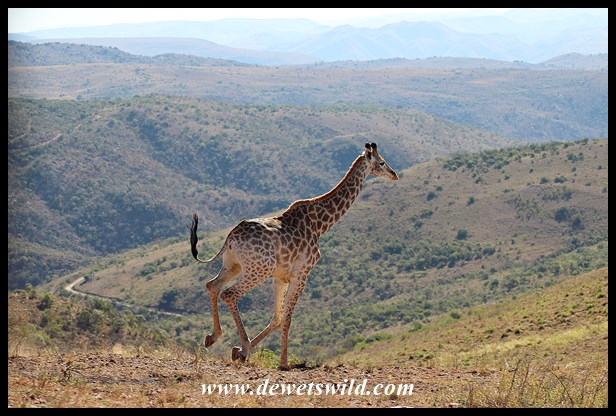
Out and about in South Africa’s wild places, the Giraffe is probably the closest thing you can get to a “gentle giant”, although I still wouldn’t venture too close to those powerful legs and heavy hooves if I were you! Towering up to 5 meters high, Giraffe are by far the tallest animal alive on earth today. Bulls can weigh up to 1,500kg, while cows are more delicately built and seldom reach a ton in weight.

Giraffes prefer open semi-desert and savanna habitats, especially where thorn trees proliferate. They feed on leaves, shoots, pods, flowers, thorns and fruit, consuming more than 50kg of browse daily. They also have a curious habit of chewing on old bones to supplement the calcium in their diet. When surface water is available, Giraffes will drink regularly, but in drier areas, like the Namib desert, they can survive without water for extended periods.

Giraffe society is a very fluid one. Adult cows and their calves congregate in herds numbering up to 30, but these are not very stable and individuals move between herds as they please. Adult bulls live mostly solitary lives, while younger bulls often associate in bachelor groups after leaving their maternal herds. Adult bulls establish their dominance through ritualised displays and fighting by using their long necks and heads as clubs, often knocking one another unconscious and sometimes even causing the death of one of the combatants through a broken neck or limb when they crash to the ground after a well placed blow. Although they seem ungainly, Giraffes can attain speeds of up to 60km/h, run for distances of up to 7km, and jump over fences 1.5m high! Giraffes have acute senses and other herbivore species often accompany them, as Giraffes are usually the first to detect the presence of predators. They are mostly diurnal, preferring to rest in the shade during the heat of the day.

Cows give birth standing up to single calves, although twins have been recorded, after a 15 month gestation. Giraffe calves are about 1.8m high and weigh up to 100kg at birth, and can stand within an hour of being born. Cows are very determined about protecting their calves, and many a lion has been kicked to death when attempting to catch a calf. Calves also fall prey to hyenas and leopards, while adults only really need to fear lions, of which they are a favourite prey. Giraffe can live to an age of up to 30 years in the wild.

Despite being classified as “Least Concern” by the IUCN, giraffe populations are declining across much of their range due to habitat loss and poaching, and the total African population now probably numbers less than 80,000 animals. Over 30,000 animals, representing the two southern subspecies, occur in Angola, Namibia, Zambia, Botswana, Zimbabwe, Mozambique and South Africa (where they have been extensively introduced outside their natural distribution range) and likely represent the only stable or increasing populations of giraffe on the continent. South Africa’s biggest population of giraffe occur in the Kruger National Park, but they are also regularly encountered in several other parks and reserves, including the uMkhuze section of the iSimangaliso Wetland ParkHluhluwe-Imfolozi Park, Mapungubwe, Marakele, Mokala and Pilanesberg National Parks, and Ithala Game Reserve, of which they are the emblem.

Recent genetic studies suggest that there may actually be four distinct species of giraffe, but it remains to be seen whether this becomes a widely accepted scientific view.

World Rhino Day 2016

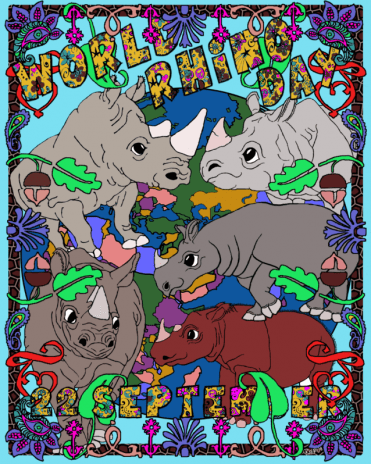
The 22nd of September is World Rhino Day, a day to reflect on the large-scale slaughter these enigmatic animals are facing due to human greed and superstitious culture.

For the first time in years there is a reason for cautious optimism, with the South African Ministry of Environmental Affairs announcing on the 11th of September that, despite an enormous increase in the number of poaching incursions into the Kruger National Park, there has been an almost 18% decline in the number of rhinos killed by poachers in the period January to August in South Africa’s flagship Park, rightly attributed to the never-ending efforts of dedicated rangers and other people in law enforcement. Still, the 458 carcasses found in Kruger so far this year (compared to 557 for the same 8 month period last year) is a terrifying number, and it is even worse when considering that in our country as a whole at least 702 rhinos have been killed this year, bringing the total lost since the scourge started escalating in 2007 within sight of the 6,000 mark.

Today is also another chance to express our deep gratitude to those brave men and women out in the bush, fighting a war against the decimation of our wildlife, putting their lives on the line so that black and white rhinos remain a feature of Africa’s natural heritage for generations to come.

wrd16

A couple of de-horned White Rhinoceros in the Rietvlei Nature Reserve. De-horning is a drastic and costly measure to protect the animals, and sadly only a practical option in smaller populations.

wrd2016posterlores-638x798


Common Ostrich

Struthio camelus

As the biggest bird on the planet, and the fastest creature on two legs, ostriches are familiar to most people. Males stand up to 2.8m tall and weigh up to 160kg, females are usually a lot lighter in build.

Ostriches occur in open habitats, and are commonly found in open grasslands, arid savannas, semi-deserts and even true deserts, where they are superbly adapted to cope with the hot and dry conditions. They feed mostly on plant material such as seeds, fruits, leaves, grass and flowers, but will also gobble up any invertebrates and small mammals and reptiles it comes across. They’ll swallow stones to assist in breaking down tough plant material in their gizzards. Ostriches do not need to drink water regularly, but when it is available they will drink readily and will even bathe to cool off.

Ostriches are usually to be found in pairs or small flocks, though larger groups of up to 100 are not uncommon. They also often associate with herds of plains zebra and antelope, who also benefits from the ostriches’ exceptional eyesight. Ostriches are extremely capable runners, covering 3 to 5m in a single stride and reaching speeds of up to 80km/h – they can run the 100m in 5 seconds! Even a month-old chick can outrun a lion. They also have exceptional stamina and can run for half an hour at a speed of 50km/h. Their two-toed kick is legendary and armed by a long claw can easily kill a predator or human through disemboweling when they feel threatened or are protecting their offspring. These flightless birds are diurnal, and most active in the early morning and late afternoon. Like many other birds, ostriches are very fond of a regular dust bath.

Males utter an impressive booming “roar”, mostly at night during the breeding season, and not unlike that of a lion. Males are polygamous, and perform an elaborate dance for their females before mating. Several females will lay their eggs in the same shallowly scraped nest on the ground – eventually there may be up to 40 eggs in the nest. It is well known that ostrich eggs are huge – weighing as much as 1.4kg, one ostrich egg is equivalent to about 20 chicken eggs. Within each flock there is one dominant hen, and her eggs will be laid in the middle of the nest where they are most assured to be incubated, while “minor” hens’ eggs are pushed to the side – eventually only up to about 20 (usually 12 – 16) of the eggs in the nest will be successfully incubated. The differently coloured plumage assists in camouflaging them while incubating, as females mostly incubate the eggs by day, and the males by night. While on the nest, ostriches will often lie with their necks outstretched on the ground so that their characteristic outline does not attract unwanted attention on the open plains they inhabit (but they don’t bury their heads in the sand as is often thought). Eggs hatch after 40 – 48 days and the hatchlings are looked after by both parents. The cryptic colouration and markings of the young chicks are excellent camouflage. Hyenas actively search out ostrich nests to eat the eggs, and almost all Africa’s predatory mammals and larger birds of prey will go after chicks. Adults fall prey to lions, leopards, spotted hyenas, cheetahs and wild dogs. Though only about 15% of hatchlings survive to 1 year of age, ostriches can live up to 40 years in the wild, and even longer in domesticated situations.

Ostriches can be found across most of South Africa, in both state and private conservation areas, although the majority of these populations stem from hybrids bred for the feather trade and only a few flocks, such as those in the Kruger National Park and Kgalagadi Transfrontier Park, are truly wild. Ostriches are also farmed in large numbers for their feathers, leather and lean meat and some of these farms, notably around the town of Oudtshoorn, have become tourist attractions in their own right. Despite the fact that ostrich populations are declining due mostly to loss of habitat, the IUCN considers the species of least concern at the moment.

ostrich-20


Roan Antelope

Hippotragus equinus

Standing 1.5m high and weighing up to 300kg, the Roan Antelope is one of the biggest antelope occurring in South Africa. Their black-and-white face masks and curiously long ears make them easily recognisable.

Roan Antelope are grazers, occurring in lightly wooded savannas and preferring areas with long grass and easy access to drinking water.

Breeding herds, usually numbering between 2 and 15 animals, consist of a dominant bull, cows and calves that occupy a specific home range of up to 200km² (the size of which depends on the availability of quality grazing and water sources) for generations. While they are not strictly territorial, the lead bull will not tolerate other bulls coming closer than 300 – 500m from his harem.

Single calves are born at any time of the year, though mostly in spring and summer, and remain hidden for the first 2 – 6 weeks after birth with the mother returning to it twice daily for nursing. Calves form “creches” once they are introduced to the herd, rather than constantly sticking to their mothers’ side. The curved horns of the adults are formidable weapons, and even lions are wary of attacking them, though calves are easy prey as they’ll try to remain hidden and will seldom attempt to flee when threatened by a predator, explaining in part why up to 40% of calves die before reaching 5 months of age. Roan Antelope have a natural life expectancy of up to 19 years in the wild.

In Africa as a whole, the roan population is estimated at around 76,000 by the IUCN, with an overall decreasing trend due to poaching and habitat loss. In South Africa they are a rare species, numbering perhaps 1,500 in total, with small populations to be found in the Kruger, Marakele and Mokala National Parks, a few provincial nature reserves and on some private properties.

Gemsbok

Oryx gazella

The large and beautiful Gemsbok (also known as the Southern Oryx) is synonymous with South Africa’s arid Karoo and Kalahari regions. They occur under the harshest imaginable conditions in the Namib desert, but also in a wide range of more hospitable environments, such as open thornveld, mopane shrub and open grasslands, and are often encountered on rocky hillsides in these areas. Gemsbok are mixed feeders, consuming mostly short grass, leaves and shoots, roots and tubers, fruits and seedpods, showing specific preferences in each season. They are entirely independent of drinking water, but will drink up to 9 liters a day when it is available.

Gemsbok (6)

Gemsbok bulls can weigh up to 240kg and stand up to 1.3m high at the shoulder. Cows are slightly smaller in build, but usually have longer (and thinner) horns. For such large animals they are superbly adapted to a life in harsh, arid environments, being able to concentrate their urine and reabsorbing the maximum possible moisture from their dung. Gemsbok can even allow their body temperature to rise from a normal 36°C to 45°C before having to sweat and pant to cool down!

Gemsbok occur in herds consisting of cows, calves and non-breeding bulls that move over the territories of several dominant territorial breeding males. The mixed herds are normally quite small, numbering between 5 and 40 animals, but can at times form temporary aggregations of up to 300 strong in response to favourable localised conditions. Breeding herds can cover enormous home ranges, especially during times of drought. They are normally active in the early morning and late afternoon, and often throughout the night, resting up during the heat of the day in any available shade.

Gemsbok are brave and aggressive, and thus very dangerous, especially when wounded or cornered or when protecting their calves. Single calves are born away from the herd at the end of the dry season, and remain hidden for the first few weeks after birth. Mothers return to the calves twice daily for nursing until she introduces the calf to the herd at between 3 and 6 weeks of age. Adult Gemsbok are only attacked by lions and spotted hyenas, who are often killed in the process, but unattended calves are easy prey for most of Africa’s predators. Gemsbok have a natural life expectancy of up to 20 years.

Gemsbok (3)

Gemsbok occur in South Africa, Zimbabwe, Botswana and Namibia, with the IUCN estimating a total population of between 326,000 and 373,000 and recognising no major threats to their continued survival. South Africa’s biggest single population of Gemsbok occur in the Kgalagadi Transfrontier Park, but they can also be seen at Karoo, Mapungubwe, Marakele, Mokala and Mountain Zebra National Parks, several other game and nature reserves, and on many private farms, where they are a popular game ranching species. The Beisa Oryx (Oryx beisa) from East Africa is now considered a seperate species.

Red Hartebeest

Alcelaphus buselaphus caama

The Red Hartebeest was one of the first animals encountered by Dutch settlers when they arrived at the Cape of Good Hope in the mid 1600’s, the “hart” in their name coming from the Dutch word for deer. On average, at 160kg, Red Hartebeest bulls weigh around 30kg more than the cows and grow to a shoulder height of about 1.3m.

Red Hartebeest occupy a wide range of habitats, from the edge of the Namib desert through the entire spectrum of semi-deserts, fynbos, grasslands and bushveld to mountainous highlands and floodplains. They are grazers, preferring medium to long grass, but in some areas they also include a substantial amount of browse in their diet. These hartebeests are independent of drinking water, though they will drink where it is available.

Red Hartebeest are social animals, at times congregating in enormous herds, especially when migrating. Breeding herds consist of cows and their calves, while mature bulls maintain territories, in some areas throughout the year, into which they try to herd harems of breeding cows. Bulls too young or old to compete for territories keep to bachelor herds. Bulls get involved in serious fights to protect their territories (which are demarcated with dung piles and scent glands and advertised through ritual displays), sometimes leading to the death of both combatants when their horns become inextricably locked. Like the tsessebe, the Red Hartebeest is a very athletic antelope, capable of running continuously over distances of up to 15km and reaching speeds of up to 75km/h. They are most active in the morning and evening, and at times throughout the night.

Red Hartebeest cows give birth to single calves at the the onset of the rainy season. The calves remain hidden in dense cover for the first few days of life, before joining “creches” in their maternal herds. Red Hartebeest are not easily preyed on, though they do feature in the menu of all Africa’s big predators on occasion, and have a life expectancy of up to 19 years in the wild.

The Red Hartebeest is one of seven subspecies of the Common Hartebeest occurring in Africa – six if you count the closely related Lichtenstein’s Hartebeest as a seperate species, although the Red Hartebeest is also considered a separate species in its own right by some authorities. The IUCN indicates that the Red Hartebeest’s population is increasing, estimating the current population at more than 130,000 and without any concern of threats to their continued survival. They can be found in state reserves and private game farms almost all over South Africa, with the exception of the Lowveld of Limpopo and Mpumalanga and the north-east of Kwazulu Natal (areas where historically the Lichtenstein’s Hartebeest were more likely to have occurred). In our experience good places to find and photograph Red Hartbeest would be Addo Elephant, Golden Gate, Karoo, Mountain Zebra and Pilanesberg National Parks, Ithala Game Reserve and Rietvlei Nature Reserve.

Red Hartebeest (10)

Lichtenstein’s Hartebeest

Alcelaphus buselaphus lichtensteinii

Lichtenstein’s Hartebeest is a large antelope occurring in marshland and floodplains and the adjacent grasslands and woodlands of East-Central Africa, where they subsist almost exclusively on a grazing diet and requires daily access to drinking water. Bulls can weigh up to 200kg with a shoulder height of up to 1.36m, with cows being slightly smaller. These hartebeests often have a dirty patch on their flanks, due to their habit of wiping their faces and horns clean against their sides.

Lichtenstein's Hartebeest (1)

Lichtenstein’s Hartebeest are diurnal animals, being most active in the early morning and evening. They keep in small family groups consisting of a territorial bull, several adult cows (who apparently has a hierarchy linked to their age) and their calves. Bigger groups are just temporary and form in response to localised favourable grazing. Solitary bulls and bachelor groups also occur and move on the fringes of the territories held by the breeding bulls in the areas with the best grazing. Territories are demarcated through scent marking and dung piles and bulls will get involved in serious fights to prevent their harems being stolen by neighbours or interlopers. Lichtenstein’s Hartebeests often associate in mixed herds with wildebeest, impala and other herbivorous creatures, and are as curious as they are athletic. They fall prey to all Africa’s larger predators. Single calves are normally born at the end of the dry season.

Lichtenstein's Hartebeest (3)

A Lichtenstein’s Hartebeest mixing with tsessebe and ostrich at Tinhongonyeni waterhole in the Kruger National Park.

South Africa has only one very small population of about 50 Lichtenstein’s Hartebeest occurring in the Kruger National Park, to where they were reintroduced from Malawi in the 1980’s after being hunted to local extinction at the end of the 19th century. We’ve been lucky to have a handful of sightings of them in Kruger near Punda Maria, Mopani and Pretoriuskop. Lichtenstein’s Hartebeest are still numerous enough, especially in Tanzania and Zambia, for the IUCN to consider their populations stable and their conservation status as “Least Concern“, with an estimated population of around 82,000, though they also do highlight that the subspecies is vulnerable to poaching and reliant on continued protection in formal conservation areas.

Some authorities consider Lichtenstein’s Hartebeest to be a seperate species from other races of the Common Hartebeest (A. buselaphus), also represented in South Africa by the Red Hartbeest (A. buselaphus caama).

Tsessebe

Damaliscus lunatus lunatus

The Tsessebe is considered to be Africa’s most athletic antelope, though you would probably not immediately guess that when looking upon their ungainly physiques for the first time. Not only are they the fastest antelope (up to 80km/h), but they have tremendous stamina, being able to maintain a speed of 60km/h over distances of up to 5km.

Tsessebes are large antelopes, much larger than their close cousin the Blesbok, weighing in at an average of 140kg and standing up to 1.3m high at the shoulder. Bulls have thicker horns than cows.

These fleet-footed antelope live in open woodlands, lightly wooded and open grasslands and flood plains, where they require easy access to drinking water and shade. They subsist almost exclusively on grass and are especially attracted to new growth sprouting after veld fires.

Tsessebes are territorial animals. In areas with low population density they live in stable herds consisting of a single territorial bull, 2 to 6 cows and their dependent calves with large home ranges, while in more densely populated areas, specifically during the rutting season, bulls establish small territories into which they try to herd traversing cows for mating. Solitary bulls and bachelor groups also occur, and move along the edges of the territories. Territories are maintained through ritual displays (including horning the ground) and fighting, and demarcated with scent glands and dung heaps by both sexes. They are normally found in small herds of up to eleven animals, but can at times congregate in huge numbers when conditions are favourable. Herds are lead by the most dominant cow. Tsessebes often associate with other herbivorous animals, regularly occurring in mixed herds with waterbuckwildebeest, zebras and ostriches. They are very curious and will even approach something unknown for a closer look, or when fleeing run away for only a short distance before turning around to check up on what frightened them, often with deadly consequences for the tsessebe.

Single calves are born at the onset of the rainy season after a gestation of around 240 days, and are able to keep up with the herd shortly after birth. Females can stay in the same group their entire lives, but young bulls are driven from their maternal herd at about a year of age. Tsessebe and their calves feature on the menu of all Africa’s medium to large predators, and have a natural life expectancy of about 12 years.

Africa is home to five different races of Tsessebe, also called Topi, Korrigum and Tiang according to the subspecies they belong to, numbering an estimated 300,000. The IUCN estimates the total population of the southern race of Tsessebe (D.l. lunatus) at around 30,000, with the overall population increasing steadily despite pressures from habitat loss. They are rare in South Africa, though numbers are increasing, with small populations being protected in the KrugerMarakele, Mokala and Pilanesberg National Parks, iSimangaliso Wetland Park and Ithala Game Reserve.

Tsessebe (6)

Blesbok

Damaliscus pygargus phillipsi

The Blesbok is a medium-sized antelope endemic to South Africa’s central plains. They have a shoulder height just short of 1m and weigh around 70kg. The “bles” in their name refers to the striking white blaze on their faces. White Blesbok have a leucistic coat and are mainly selectively bred on game ranches.

The Blesbok naturally occurs only on the open grasslands of South Africa’s Highveld, where they are well adapted to the cold winters, though they have been introduced to farmland in the more densely wooded Bushveld and drier Karoo regions as well with varying success. Their diet consists almost exclusively of short grasses and require daily access to a supply of fresh drinking water.

Blesbok form large mixed herds during winter, but at the onset of the summer the rams will start establishing small territories, demarcated with scent glands and dung heaps, advertised through ritualised displays and maintained through some serious fighting, in which they attempt to herd and keep groups of ewes with which to mate. Blesbok are diurnal animals, resting during the heat of the day by positioning themselves with lowered heads facing the sun. Blesbok are fast runners with great stamina. When moving, herd members follow each other in a straight line, even when fleeing from predators.

Ewes give birth to single lambs, usually in the summer months, and will nurse only their own lambs. Lambs are capable of running with the herd within 20 minutes of birth, and are preyed upon by jackals, caracals and feral dogs. Most of Africa’s large predators have been exterminated from the Blesbok’s range. They have a life expectancy of up to 17 years in the wild.

The Blesbok once occurred in enormous numbers on the Highveld of South Africa, but excessive hunting led to the population plummeting to a low of about 2,000 at the end of the 19th century. Their numbers have since been built back up, but not nearly to erstwhile levels, with the IUCN estimating a population of approximately 240,000, most of which occur on private land where they are a popular game ranching animal as they can be contained by standard stock fencing. Golden Gate Highlands National Park, Rietvlei Nature Reserve and Willem Pretorius Game Reserve are good places to go searching for Blesbok.

Blesbok (13)

Black Wildebeest

Connochaetes gnou

With their long white tails, stiff mane, whiskery muzzles, and curved, forward facing horns the Black Wildebeest looks quite menacing and is easily recognisable. Bulls have a shoulder height of only 1.2m and weigh in at around 160kg, considerably smaller than their closely related cousins, the Blue Wildebeest.

Black Wildebeest (10)

An inhabitant of open grasslands and semi-desert plains, Black Wildebeest subsists on a diet of grass, low shrubs and succulents, and need to drink daily. They have a preference for highlands and mountain plateaus, and are quite resistant to the extreme cold experienced in such habitats, especially during winter.

Black Wildebeest are gregarious animals, coming together in herds of 6 to 60 made up mostly of cows and calves traversing the territories of bulls in their prime. Bulls unable to hold territories of their own join together in bachelor groups. During the hot summer they are mostly active from early evening to early morning, while they are active for most of the daylight hours in winter. As their open habitat usually offers very little in the form of shade, they spend the hottest hours of the day standing still and facing away from the sun. Black Wildebeest are extremely nervous, taking flight at high speed at the scantest sign of danger, and can be aggressive and unpredictable, especially when cornered, which is why you’ll seldom see them in captivity – as recently as 2013 a farmer and his son were killed when the family was attacked by two black wildebeest.

Cows give birth in the herd to single calves between November and January. The calves can keep up with the herd within minutes of being born. Most of the larger predators have been wiped out in the black wildebeest’s range and as such black-backed jackals preying on calves were the biggest predatory threat to them, though recently lion and cheetah have been reintroduced to some reserves where they occur and should re-establish a natural predator-prey balance. Their natural life expectancy is about 16 years.

Black Wildebeest (6)

The Black Wildebeest occurs naturally only in South Africa, Lesotho and Swaziland. In times past the Black Wildebeest was a migrating species, moving seasonally between the moist highveld grasslands and dry Karoo in incredible numbers, but modern farming practices have made such large scale movements impossible and the species is now confined to fenced farms and reserves. Some of the best places to see them include Chelmsford Nature Reserve, Golden Gate Highlands National Park, Mountain Zebra National Park and Willem Pretorius Game Reserve. By the end of the 19th century indiscriminate hunting had almost driven the species to extinction, but since then concerted conservation efforts have ensured that numbers have been built up to an estimated 18,000 on private land and in state conservation areas, and the IUCN now considers their populations to be safe and increasing. That being said, hybridisation with the closely related Blue Wildebeest is an increasing threat to the genetic purity of the Black Wildebeest.

Black Wildebeest (1)