Category Archives: South African Wildlife

The inhabitants of South Africa’s wild places

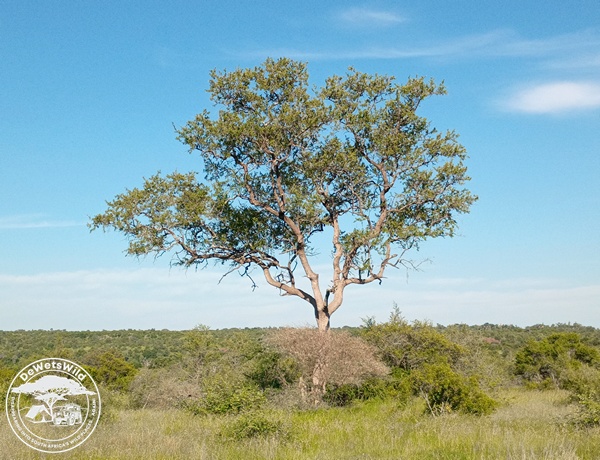
Leadwood

Combretum imberbe

The Leadwood is an iconic tree of South Africa’s savanna regions, occurring from northern Kwazulu-Natal through the Lowveld and bushveld regions of Mpumalanga and Limpopo to northern Gauteng and the North West Province. These trees favour alluvial soils in lower-lying areas near rivers and streams.

Leadwoods are slow growing, may reach to over 20m in height with an equally wide-spread canopy and have exceptionally hard, heavy wood – a 1m³ block of dry wood from the Leadwood weighs more than 1,200kg! These trees are long-lived and mature Leadwoods may exceed 1,000 years in age. Even dead trunks may stand for another century, the hard wood being so resistant to rot and termites.


African Skimmer

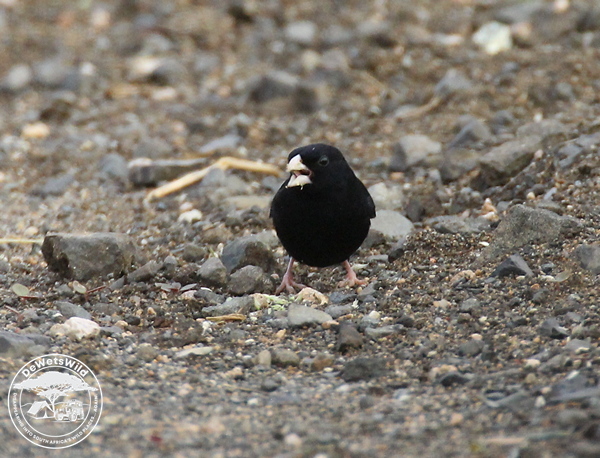
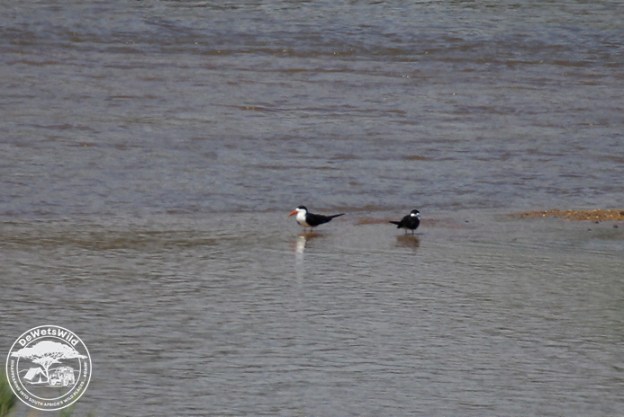
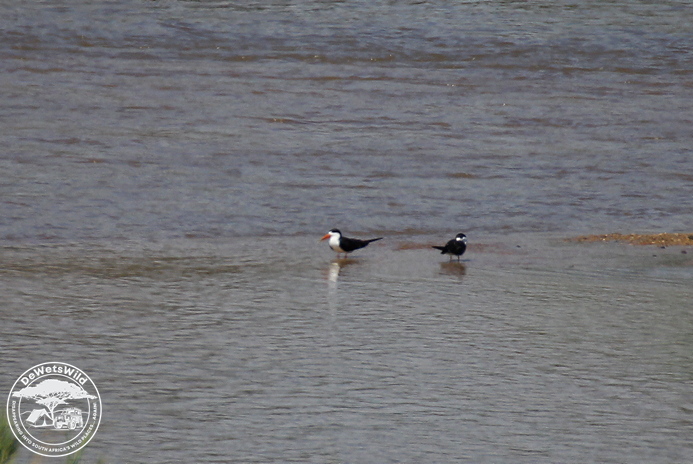
I know this is a horrid picture, but to me it means very much. It represents the 620th species of bird I’ve seen in South Africa, and it is of a bird that was absent from the country for very many years. The sighting occurred along the Sabie River during a photographic safari and workshop I hosted along with Hannes Rossouw Photography and Kruger Park Game Drives in the Kruger National Park early in February ’26.

A pair of African Skimmers on a sandbank in the Sabie River

Rynchops flavirostris

Skimmers are unique among birds in that their lower mandible is longer than the upper, allowing them to “skim” over the water and snatch up small fish while in flight. They’re found along large rivers and other open water bodies with open banks and sandy islands where they rest, roost and breed. African Skimmers are usually seen in pairs or small flocks.

The IUCN considers the African Skimmer to be of least concern. While they’re found over a large swathe of tropical Africa, stretching from Senegal to Mozambique they disappeared from South Africa as a breeding species in 1944. Only in the last couple of years have they made a return to our country, and specifically to a few spots in the Lowveld of Limpopo and Mpumalanga, and at Lake St. Lucia in Kwazulu Natal – the same places where they used to occur until their local extinction – with a pair successfully hatching a chick at the bridge over the Crocodile River at the Kruger Park’s Malelane Gate late in 2025. This bodes well for the species’ rebound in this part of the world.

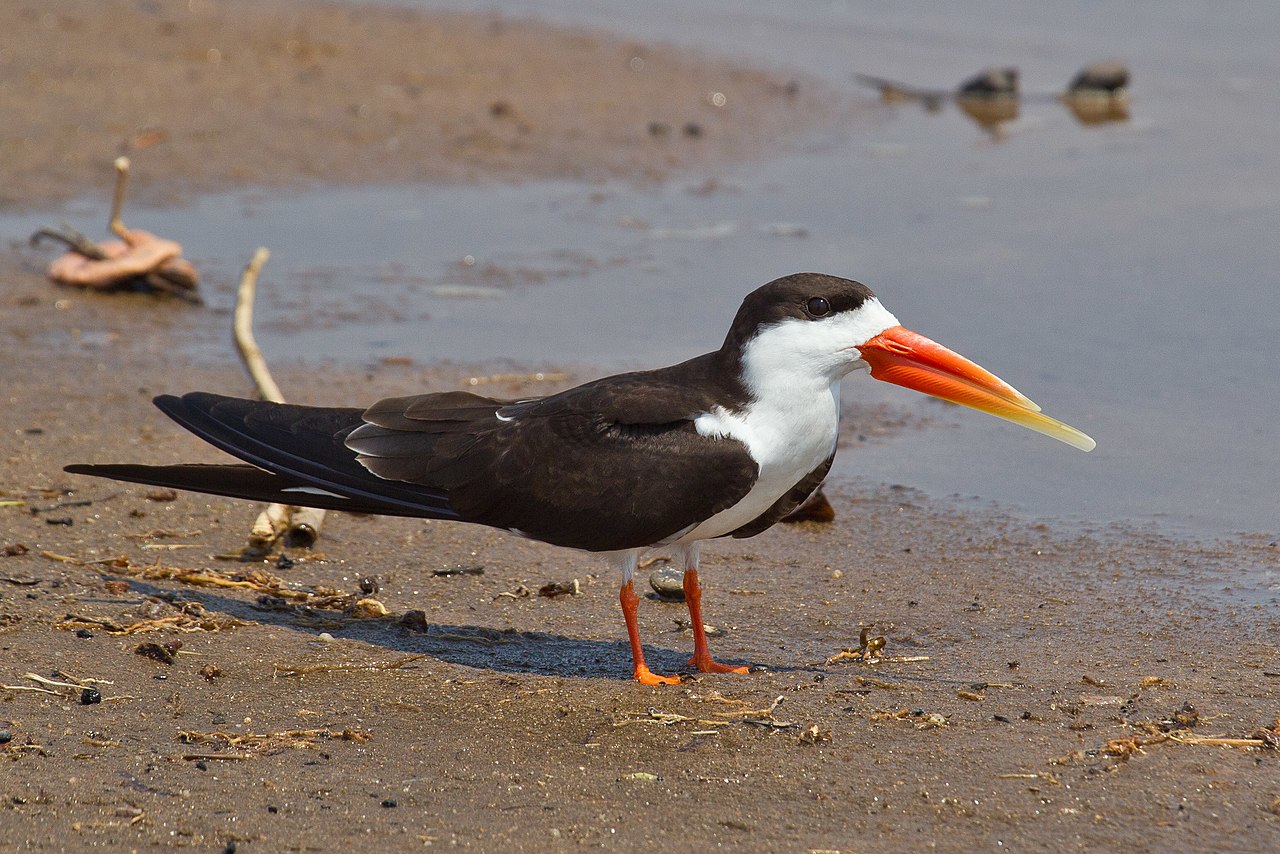
Here is a much better image from Wikipedia that shows the African Skimmer beautifully:

Our next nature photography workshops in the Kruger National Park take place early in May 2026 – one at Satara and one at Skukuza. We still have a few spots open, so don’t hesitate to reach out to us if you’d like to take part!


World Wildlife Day 2026

In celebration of World Wildlife Day we take a look back at the 42 species of Southern African wildlife we featured in detail here at DeWetsWild through the past twelve months.

Summer Snapshots from Kruger: Bountiful Birds

DeWetsWild conducted a two-week tour of the Kruger National Park with altogether nine people to see out 2025 and ring in 2026 and every day for the month of February I’ll be sharing just a few of the many memories our group collected.

While the Kruger National Park boasts an exceptional number of bird species on its official list even during winter, the summer brings with it an enormous number of migrants, and even more so in a season as wet as the current one. During our tour of two weeks we managed to tick off 187 bird species in the area between the Letaba and Sabie Rivers. These are just a few of them.

If you’d like to join me on a guided tour of South Africa’s wild places, of even if you’d just like a bit of help putting your reservations together, don’t hesitate to reach out!

Summer Snapshots from Kruger: An influx of Harlequin Quails

DeWetsWild conducted a two-week tour of the Kruger National Park with altogether nine people to see out 2025 and ring in 2026 and every day for the month of February I’ll be sharing just a few of the many memories our group collected.

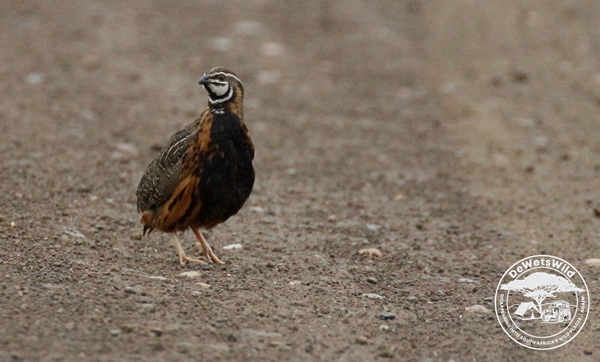
The exceptionally wet weather in the Kruger National Park this summer is behind an immense influx of Harlequin Quails into the Park. While sightings of the tiny birds were limited to fleeting glimpses when they ventured into the road from the long grass their distinctive calls could be heard literally everywhere we drove!

Coturnix delegorguei

The Harlequin Quail is an intra-African migrant bird, arriving in our part of the continent in response to good rains. During such periods they may be found in the savanna habitats stretching from northern Kwazulu-Natal to the North West Province. They also occur through most of the woodland and savanna regions of sub-Saharan Africa, parts of the Arabian peninsula and on Madagascar. According to the IUCN the Harlequin Quail is of least concern. Harlequin Quails feed on seeds, green shoots and a wide variety of small insects.

Outside of the breeding season Harlequin Quails may be seen foraging in groups of up to 20 individuals. They nest in hollows scratched in the ground, usually hidden among grass tussocks, soon after the rains start. The female incubates the clutch of up to 8 eggs for a little less than 3 weeks. The precocial chicks grow exceptionally quickly and can even fly short distances by the time they’re only 5 days old!

————————————————————————————————————————————-

If you’d like to join me on a guided tour of South Africa’s wild places, of even if you’d just like a bit of help putting your reservations together, don’t hesitate to reach out!

Summer Snapshots from Kruger: Our one sighting of Painted Wolves

DeWetsWild conducted a two-week tour of the Kruger National Park with altogether nine people to see out 2025 and ring in 2026 and every day for the month of February I’ll be sharing just a few of the many memories our group collected.

Cresting a rise between Satara and Orpen one morning we came across a group of at least twelve African Wild Dogs (I much prefer to call them Painted Wolves!) crisscrossing the road and running into and out of the veld. They were clearly excited and were probably out on a hunt, as they didn’t stick around for long before heading into the veld again and out of sight. Wild Dogs are among the most endangered of Africa’s large predators and this brief sighting, our only one of the trip, was a definite highlight.

If you’d like to join me on a guided tour of South Africa’s wild places, of even if you’d just like a bit of help putting your reservations together, don’t hesitate to reach out!
Common Arum Lily

Zantedeschia aethiopica

The Common Arum Lily, also known as the Calla Lily, is a plant grown for over three centuries in many gardens the world over that originally comes from South Africa, where it is indigenous to moist areas from the Western Cape’s mountains to the montane forests on the escarpment of Mpumalanga and Limpopo. They’re well adapted to growing in constantly wet areas as they are capable of getting rid of excess water through their leaves.

Arum Lily plants grow between 60cm and 1m tall. Insects like bees and beetles are responsible for pollinating the flowers, which are mainly borne in spring and early summer, while birds are the major agents of seed distribution as they’re especially fond of the berries that remain after the flowers have died back. The rootstock is occasionally eaten by wild pigs and porcupines.

Grey Climbing Mouse

Dendromus melanotis

As its name would suggest the Grey Climbing Mouse is wonderfully adept at climbing up grass stalks, being well adapted for the job by having semi-prehensile tails and toes capable of a firm grip. Grass seeds and insects make up most of their diet. They inhabit thickets of bush and grass and are nocturnal. The Grey Climbing Mouse is found over most of sub-Saharan Africa and in South Africa is found in all the provinces, being absent only from the very dry interior and western coastline.

Grey Climbing Mice are small and fully grown adults weighs only about 7g. They may build their own ball-shaped nests using fine grasses or adapt another creature’s burrow for the purpose. Females give birth to about four babies in a litter during the summer months and probably has more than one brood to raise in a season. It is unlikely that they live longer than 18 months in the wild.

Little Stint

Calidris minuta

The Little Stint is a migrating shorebird that visits our country in the summer months, arriving from about August and departing back to their breeding grounds in Scandinavia and Siberia by March. While here they’re found at both inland and coastal wetlands with muddy shorelines all across the country, and are highly nomadic, moving around in response to the explosion of populations of invertebrates that follow localised rainfall filling seasonal water bodies.

The IUCN estimates that there’s at least a million Little Stints in the world today and lists the species as being of least concern.

African Marsh-Harrier

Circus ranivorus

The African Marsh-Harrier is an agile raptor that favours wetlands and feeds mainly on rodents, being particularly fond of the diurnal Four-striped Grass Mouse. They’re constantly on the wing, flying low over their wetland patch in search of prey, and it is estimated that they may cover as much as 200km on a single day!

Like many other birds of prey African Marsh-Harriers form monogamous pairs with a very strong bond and defend their territories year round. They may breed at any time of year, though nesting activity peaks through the spring season. They build their nest of sticks, reeds and grass in reed beds in their marshy habitat, often over the water. The female is solely responsible for incubating the clutch of up to 5 eggs for around a month, while the male will bring food to her at the nest during this time. He diligently continues providing food to the family for about the first 3 weeks after the chicks hatched while the female looks after the young at the nest but after that their ever expanding need for food requires that the mother starts helping in the process of hunting. The chicks leave the nest at about 6 weeks of age and become independent of their parents at about 10 to 12 weeks old.

In South Africa the African Marsh-Harrier is found mainly in the wetter parts of the Western and Eastern Cape, Kwazulu-Natal, the Free State, Gauteng and Highveld of Mpumalanga, with occasional sightings from other parts of the country. In the rest of the continent they’re found in a broad band stretching north to Kenya, Uganda and parts of the DRC. Despite a declining population attributed mainly to loss of habitat, which is the reason they’re listed as endangered in this country, overall the IUCN considers the African Marsh-Harrier to be of least concern.