Join us for a look back at the wonderfully wild South African destinations we visited during 2023. May 2024 be a blessed year for you and your family, memorable for all the best reasons.
Jakhalsfontein Guest Farm
Our camping setup at Bontle in Marakele National Park, March 2023
Chalet #1 in Lilydale Rest Camp
Hut #107 in Pretoriuskop Rest Camp, Kruger National Park (June 2023)
Hut #46 in Lower Sabie Rest Camp, Kruger National Park (June 2023)
Tent #10 in Tamboti Tented Camp, Kruger National Park (June 2023)
Guest House, Shingwedzi Research Camp, Kruger National Park, June 2023
Buffelshoek Camp, Manyeleti Nature Reserve, September 2023
Ndzhaka Camp, Manyeleti Nature Reserve, September 2023
Twanana Research Camp, Kruger National Park, September 2023
House #32, Kudu Private Nature Reserve, October 2023
The beach at the estuary of Lake Saint Lucia
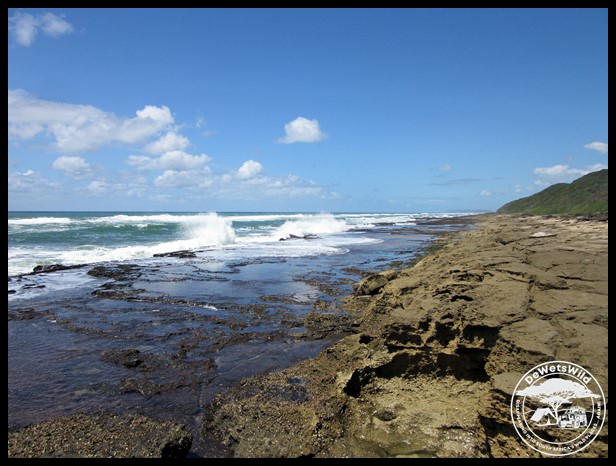
Cape Vidal at low tide
Western Shores section of the iSimangaliso Wetland Park
Rest Hut #3, Mantuma Rest Camp, uMkhuze Game Reserve, November 2023
As befits a conservation area of its stature, the iSimangaliso Wetland Park is extremely rich in fauna of all description. In this final post about our recent tour of the reserve I’ll be sharing some more of the wonderful animal sightings we had.
The tropical environment of northern Kwazulu-Natal is home to some very interesting invertebrate creatures – the Flatface Longhorn Beetle I showed you a few days ago being a fantastic example.
An enormous jellyfish that drifted out of a rough sea on the beach at St. Lucia
Common Bush Brown butterfly
Spotted Buff butterfly
Blue Pansy butterfly
African Piedspot Dragonfly
Mating Common Blue butterflies
Natal Rock Crab
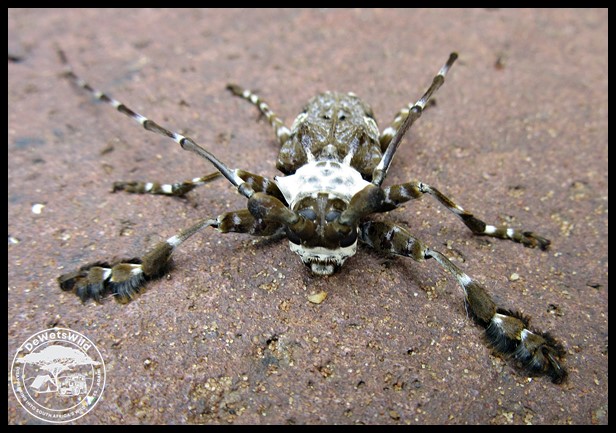
Flatface Longhorn Beetle (Lasiopezus longimanus), identified with the kind assistance of the “Insects only – Southern Africa” facebook page.
Slug close-up
Millipede
Unidentified Moth with wonderful camouflage
Unidentified caterpillar
False Dotted Border butterfly
Sooty Blue
Superb False Tiger Moth
Dung Beetle
Broad-bordered Grass Yellow
African Peach Moth
Giant African Land Snail
Slug and its slimy trail
Brown-veined White Butterfly
Fish and frogs must be finding the wet conditions prevailing now after suffering through a terrible drought not so long ago very much to their liking!
Platanna
Foam Nest Frogs mating
The toes of a Foam Nest Frog
Banded Tilapia. The newly formed ponds have quickly been populated by fish and tadpoles.
Even though most of them are shy and seldomly seen, iSimangaliso is home to an amazing array of reptiles as well – many of them rather dangerous!
Huge Nile Crocodile slipping into the Mfabeni swamp
Marsh Terrapins
Tropical House Gecko
Striped Skink
Serrated Hinged Terrapin
Mozambique Spitting Cobra after swallowing something (likely a frog)
Mammals are well represented at iSimangaliso, and zebras, giraffes, warthogs, various kinds of antelope and primates are regularly encountered along the routes traversing the Park.
Bushbuck ram
Chacma Baboon
Natal Red Duiker
Common Duiker
Large-spotted Genet
Impala
Kudus
Kudu bull
Fighting Kudu bulls
Giraffe cow and calf
Nyala bull
Nyala ewe
This leucistic Samango Monkey is a familiar inhabitant of Cape Vidal
Samango Monkey
Vervet Monkey
Red Bush Squirrel
Common Reedbuck
Common Reedbuck
Common Reedbuck
Suni
Warthog
Waterbuck
Waterbuck
Waterbuck
Waterbuck
Blue Wildebeest
Blue Wildebeest
Blue Wildebeest
Plains Zebra
Sitting outside watching our fire one evening at Mantuma Camp in the uMkhuze Game Reserve we were joined by a large herd of impalas and nyalas.
These Kudu bulls decided to have it out right in the middle of the road between St. Lucia and Cape Vidal.
While traveling along the grassland loop through the Eastern Shores section of the Park we came across a group of hyenas finishing off the remains of a buffalo.
Spotted Hyena
Spotted Hyena
Spotted Hyena
Spotted Hyena
Spotted Hyena
At the other end of the scale are Africa’s grey behemoths, all of which are found at iSimangaliso. Without forgetting to mention the Humpback Whales and dolphins so often seen just offshore, I’ve also already given closer attention to elephants and buffaloes. Hippos were one of the main reasons for the establishment of the St. Lucia Game Reserve 128 years ago, and they are still very much in evidence. We also encountered White and Black Rhinos, but I won’t be sharing photo’s of them as they were in some easily recognisable spots.
Humpbacked Whale tail-slamming off St. Lucia
African Buffalo
African Buffalo
Elephant bull on a walk about
Elephant bull at uMkhuze
Hippopotamus
A pod of Hippos on the shores of Lake St. Lucia at Catalina Bay
Hippopotamus
Pair of Hippopotamus
Pod of Hippopotamus in Nsumo Pan
Remember that DeWetsWild will gladly assist you with reservations and guided tours of the iSimangaliso Wetland Park if you’d like to visit this wonderful place as well.
The iSimangaliso Wetland Park is home to several hundred African Buffaloes, and they’re especially numerous in the Eastern Shores section of the reserve. They’re such powerful beasts with a well deserved reputation for a dangerous disposition, and it is always exciting to see them at close quarters.
African Buffalo
African Buffalo
African Buffalo
African Buffalo
African Buffalo
African Buffaloes
African Buffalo
African Buffaloes
African Buffaloes
Remember that DeWetsWild will gladly assist you with reservations and guided tours of the iSimangaliso Wetland Park if you’d like to visit this wonderful place as well.
More than 500 bird species have been recorded within the borders of the iSimangaliso Wetland Park, making it one of the country’s most rewarding bird-watching destinations – a fact that was once again proven to be undeniable during my latest tour of “The Place of Miracles and Wonders”. Even if I hadn’t ticked the Lesser Moorhen for the first time this would still have been a bumper birding trip! Lets start the birdwatching off with a few videos.
African Pygmy Kingfishers are little winged jewels and in our experience iSimangaliso is one of the best possible places to search for them during summer.
Another bird that you are more likely to see in iSimangaliso than probably anywhere else in South Africa is the Crested Guineafowl.
Grey-headed Gulls are the most commonly observed of their family on the beaches of iSimangaliso. This one found a dead fish but is struggling to gulp it down!
There were so many Hamerkops to be seen all over the Park – they’re obviously enjoying the inundated conditions and the boom in fish and frog numbers associated with it!
Of course, with so much of the Park under water now it’s hardly a surprise that waterfowl are to be seen in exceptional numbers, but what was especially gratifying to me was the plentiful sightings of African Pygmy Geese and White-backed Ducks – elusive species I’ve only rarely seen previously.
At the KwaMalibala-hide this flock of White-faced Whistling Ducks dabbling and diving for food were great entertainment. In the hot weather their splashing seemed quite refreshing!
Cattle Egrets in flight over the sea at the estuary of Lake St. Lucia
Collared Pratincole
Common Buzzard
Common Ringed Plover
Common Sandpiper
Common (left) and Swift (right) Terns
Crested Guineafowls
Dark-backed Weaver
Fan-tailed Widowbird
Giant Kingfisher
Glossy Ibis
Great Egret
Green-backed Heron
Grey Heron
Grey-headed Gull
Hamerkop
Immature Kelp Gull
Laughing Dove
Female Lesser Masked Weaver
Little Bee-eaters
Little Egret
Long-crested Eagle
Little Grebe
Malachite Kingfisher
Narina Trogon
Purple Heron
Rattling Cisticola
Red-billed Teal
Reed Cormorants
Ruddy Turnstone
Saddle-billed Storks
Sanderlings
Secretary Bird
Spectacled Weaver
Squacco Heron
Squacco Heron
Southern Banded Snake Eagle
Swift Tern
Trumpeter Hornbill
Village Weaver
Wahlberg’s Eagle
Water Thick-knee
Whimbrel
White-backed Duck
White-backed Duck diving
White-faced Whistling Ducks
White-fronted Plover
Wood Sandpiper
Woolly-necked Storks
Yellow Weaver
Yellow-billed Egret
Yellow-billed Storks
Eastern Nicator
Yellow-throated Longclaw
Remember that DeWetsWild will gladly assist you with reservations and guided tours of the iSimangaliso Wetland Park if you’d like to visit this wonderful place as well.
There were some adorable babies in this big breeding herd – at least 50 individuals strong – that crossed the road in front of us in a hurry past the eThaleni Picnic Spot.
Remember that DeWetsWild will gladly assist you with reservations and guided tours of the iSimangaliso Wetland Park if you’d like to visit this wonderful place as well.
One of the most memorable sightings of my recent tour of the iSimangaliso Wetland Park was of a small pod of Humpback Whales playing just offshore of the St. Lucia estuary one overcast morning.
Humpbacked Whale tail-slamming off St. Lucia
Humpbacked Whale fin-slapping off St. Lucia
Humpbacked Whale tail-slamming off St. Lucia
Humpbacked Whale fin-slapping off St. Lucia
Megaptera novaeangliae
Humpback Whales occur throughout the world’s oceans at different times of the year. Locally they migrate past our shores from about June to overwinter in the tropical waters off both Africa’s Atlantic and Indian Ocean coastlines, returning to their Antarctic feeding grounds from about November at the start of the austral summer and covering as much as 16,000km on these journeys. Humpback Whales feed mainly on krill, other plankton and schools of fish, gulped down in enormous quantities after being encircled by “curtains” of bubbles released from the blowholes of the circling whales. These whales are well known for their spectacular breaches out of the water as well as their playful tail-slamming and fin-slapping behaviour (as captured in the above video). They may dive up to 150m deep and stay underwater for up to 15 minutes. While usually seen in small groups and even as single cows with their latest calf, Humpback Whales may at times congregate in pods up to 200 strong in good feeding grounds.
While in the more tropical climes the females give birth to single calves after an almost year-long gestation. The calves will suckle for up to a year, though they start eating at about 6 months of age. Females calf every two years and mating also takes place in the tropical latitudes during winter. At birth the calves weigh about a metric ton and measure more than 4 metres in length; fully grown they will weigh approximately 40,000kg and reach up to 18m in length! It is estimated that Humpback Whales live to at least 50 years of age.
Citing an increasing population estimated at approximately 84,000 mature animals (of a total of 135,000) worldwide, the IUCN lists the Humpback Whale as being of least concern. When whaling was banned in 1966 there was probably only 5,000 Humpback Whales left.
Over the years we’ve been fortunate to see these enigmatic creatures a number of times while visiting some of South Africa’s wild places, most notably the Garden Route National Park and, of course, iSimangaliso. DeWetsWild will assist you with reservations and guided tours of these places and even arrange whale watching excursions with experienced skippers if you are interested in seeing Humpback Whales up close.
The iSimangaliso Wetland Park does not only conserve some of the most magnificent terrestrial environments in our country, but it also has a grand marine component extending along the coastline and many nautical miles out into the warm waters of the Indian Ocean. Several pristine beaches are accessible to visitors for sunbathing, fishing (with permits strictly required), snorkeling, scuba-diving, canoeing and boating.
An enormous jellyfish that drifted out of a rough sea on the beach at St. Lucia
Mission Rocks
Natal Rock Crab
Cape Vidal at low tide
Swift Tern
Cattle Egrets in flight over the sea at the estuary of Lake St. Lucia
Humpbacked Whale tail-slamming off St. Lucia
The beach at the estuary of Lake Saint Lucia
The beach at the estuary of Lake Saint Lucia
Large-spot Pompano
Fishermen heading out to sea
Sunrise at the St. Lucia estuary
Cape Vidal beach
Blennies in a rock pool
Marine Crab (species unknown)
Natal Rock Crab
I know that many of DeWetsWild’s readers are very fond of spending time at the beach, so I made a few videos especially for you!
Remember that DeWetsWild will gladly assist you with reservations and guided tours of the iSimangaliso Wetland Park if you’d like to visit this wonderful place as well.
While strolling around the grounds of Mantuma Rest Camp in the uMkhuze Game Reserve section of the iSimangaliso Wetland Park earlier this month I came across this incredible creature, identified as one of the Flatface Longhorn Beetles with the kind assistance of the experts in the “Insects only – Southern Africa” Facebook group.
While it was impressively big (the body was about 4cm long), boasted very long feelers and its colours perfectly imitated a bird dropping, it was the hairy feet I found most intriguing. It is possible that the “hairs” has some sensory function, but from a distance it makes the beetle look as if it is wearing mittens!
Flatface Longhorn Beetle (Lasiopezus longimanus), identified with the kind assistance of the “Insects only – Southern Africa” facebook page.
Flatface Longhorn Beetle (Lasiopezus longimanus), identified with the kind assistance of the “Insects only – Southern Africa” facebook page.
Flatface Longhorn Beetle (Lasiopezus longimanus), identified with the kind assistance of the “Insects only – Southern Africa” facebook page.
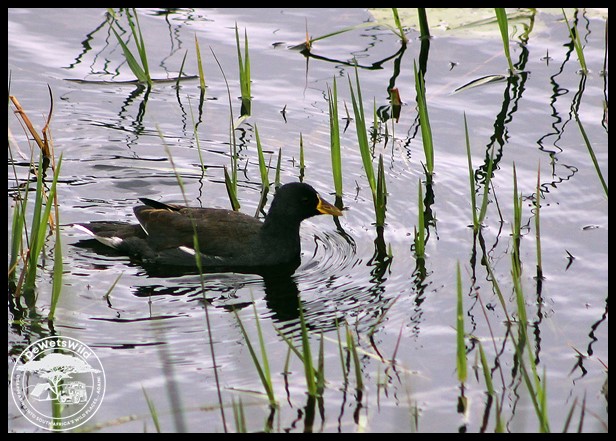
Finding a Lesser Moorhen at a newly formed pan of water in the Eastern Shores section of the iSimangaliso Wetland Park was a real highlight of my most recent visit to the “Place of Miracles and Wonders”, as it brings me to 609 species of birds seen in South Africa.
Lesser Moorhen
Lesser Moorhen
Lesser Moorhen
Lesser Moorhen
Lesser Moorhen
Lesser Moorhen
Lesser Moorhen
Paragallinula (Gallinula) angulata
The Lesser Moorhen inhabits freshwater wetlands ranging from periodically flooded grasslands to permanent swamps and marshes, showing a strong preference for areas densely covered by emergent vegetation and limited open water. They’re omnivores, feeding on water plants and aquatic invertebrates.
Lesser Moorhens start breeding after the first floods, building their cup-shaped grass nests on a platform of flattened living grass, reeds or sedges. The female is responsible for most of the incubation duties, with the clutch of up to nine eggs (though about 6 is more usual) hatching after about 3 weeks. The chicks start flying at about 5 weeks of age, but remain with their parents up to about 2 months old. Fully grown they’ll weigh about 135g and measure approximately 23cm in length. Lesser Moorhens are very shy and seldom venture into the open.
(Remember that DeWetsWild will gladly assist you with reservations and guided tours of the iSimangaliso Wetland Park if you’d like to visit this wonderful place as well.)
A wonderful consequence of the water wonderland that is the iSimangaliso Wetland Park now, is the incredible numbers of amphibians evident throughout the Park. I’m featuring just a few of them here.
Driving around the Park you cannot escape the calls of the Painted Reed Frogs, though they’re almost impossible to see without stepping out of your vehicle and searching for them (which isn’t allowed, due to the presence of dangerous animals). I was therefore very impressed with myself when I saw this Painted Reed Frog as I was driving by. See how small it is!
Can you spot the Painted Reed Frog?
Painted Reed Frog at a temporary pan on the eastern shores of Lake Saint Lucia
Painted Reed Frog at a temporary pan on the eastern shores of Lake Saint Lucia
While using the facilities at one of the stopping points on the Western Shores of Lake Saint Lucia I noticed this Peeping Tom hiding in a corner. It is a Red Toad and I left him there to amuse the next visitor as well…
Red Toad in an ablution block in the Western Shores section of the iSimangaliso Wetland Park
Platannas seem to have quickly colonized all the newly formed stretches of water in the iSimangaliso Wetland Park, but usually quickly dive under water at the slightest disturbance. It was pleasing to find one that wasn’t too shy to pose for a few photo’s.
Platanna
Platanna
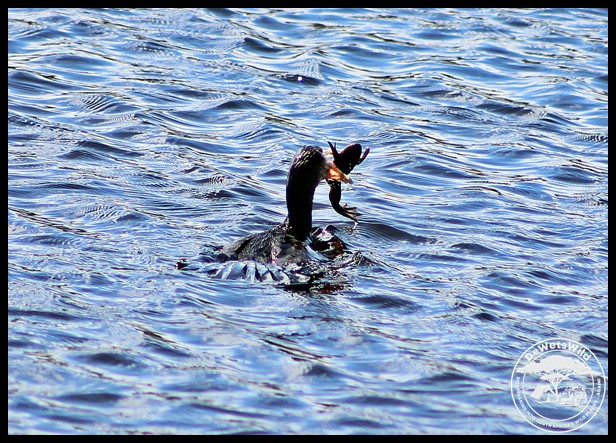
It would be better if it cultivated a more apprehensive disposition though, because Platannas are on the menu of many waterbirds and in the 10 days I spent in iSimangaliso on this latest trip I saw many a Platanna disappearing down a gullet.
Reed Cormorant with a Platanna
After dark, hundreds of immature African Bull Frogs emerged onto the roads, especially following rainy days.
Immature African Bull Frog on a road in the iSimangaliso Wetland Park
Kumasinga Hide at uMkhuze Game Reserve has turned into a paradise for Southern Foam Nest Frogs, with dozens of the cute little creatures clinging to the hide’s framework, with a few foam nests already constructed over the water and a few still in the making (allowing me to make a video of the process).
The toes of a Foam Nest Frog
Foam Nest Frog in Kumasinga Hide
Foam Nest Frog in Kumasinga Hide
Foam Nest Frog in Kumasinga Hide
Foam Nest Frog in Kumasinga Hide
Foam Nest Frog in Kumasinga Hide
Foam Nest Frogs mating
Foam Nest Frog nests
Foam Nest Frogs mating
Foam Nest Frogs mating
Remember that DeWetsWild will gladly assist you with reservations and guided tours of the iSimangaliso Wetland Park if you’d like to visit this wonderful place as well.










 DeWetsWild