Category Archives: Botswana

Our 2024 in Pictures

Join us as we reminisce about the places DeWetsWild visited while exploring Southern Africa’s wild places in 2024!

May 2025 be a year to remember for all the best reasons. Happy New Year, everyone!

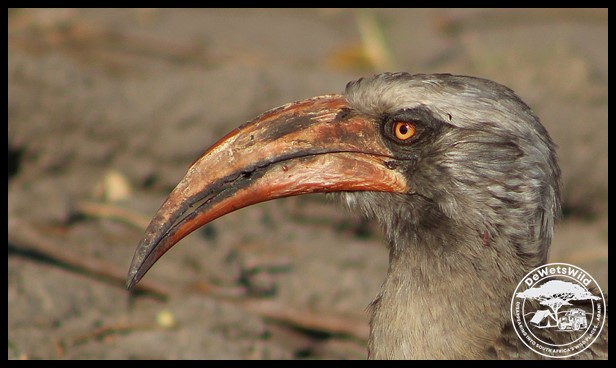
Bradfield’s Hornbill

Today is Birding Big Day in South Africa, so in a clever twist of irony we’re showcasing a bird that none of the participants in the event is at all likely to encounter! 😀

Lophoceros (Tockus) bradfieldi

Bradfield’s Hornbill is found in only five Southern African countries: Botswana, Namibia, Angola, Zambia and Zimbabwe. According to the IUCN it is not in any imminent danger of extinction though it does note that the population is probably in decline due to habitat loss as a result of logging operations. They occur in savanna-woodland and feed mainly on invertebrates, small vertebrates, seeds and berries. They’re usually seen in pairs or small flocks.

Typical of most hornbills, Bradfield’s Hornbill also breeds in holes in trees in which the female is plastered inside with the (usually) three eggs for the 4 week incubation period while the male feeds her through a slit. She leaves the nest a few days after the chicks hatched to help the male feed them until they’re ready to leave the nest at almost 2 months old. The parents take care of the chicks for another month of so thereafter.

DeWetsWild’s Portfolio grows again!

DeWetsWild’s portfolio of destinations for which we render a reservation service has expanded again to 307 points on the map, with the following 24 new properties in South Africa, Botswana, Mozambique and Zambia now included:

In South Africa:

  • 26º South Hotel in Muldersdrift.
  • African Rock Hotel & Spa in Kempton Park, Gauteng – conveniently close to the OR Tambo (Johannesburg) International Airport.
  • Beacon House, Knysna.
  • Impodimo Game Lodge in the Madikwe Game Reserve.
  • Kapama River Lodge, Kapama Buffalo Camp, Kapama Southern Camp, Kapama Karula and Kruger Homestead, all in the Kapama Private Game Reserve.
  • Khaya Ndlovu Safari Manor, in the Rietspruit Game Reserve near Hoedspruit.
  • Kubu Bush Lodge & Kubu Safari Lodge, near Hoedspruit in the Lowveld.
  • Kruger Untamed Tshokwane River Camp in the Kruger National Park.
  • Kruger Untamed Satara Plains Camp in the Kruger National Park.
  • Mjejane River Lodge in Mjejane Game Reserve.
  • Tangala Safari Camp in the Thornybush Game Reserve.

In Botswana:

  • Chobe Marina Lodge in Kasane
  • Elephant Sands Lodge near Nata
  • Elephant Valley Lodge near Kasane
  • Kadizora Camp in the Okavango Delta
  • Saguni Safari Lodge in the Okavango Delta
  • Senyati Safari Camp near Kasane

In Mozambique:

  • Villa Robal at Machangulo Point on Maputo Bay

In Zambia:

  • The David Livingstone Safari Lodge and Spa at the Victoria Falls

Come along on a boat ride on the Chobe River

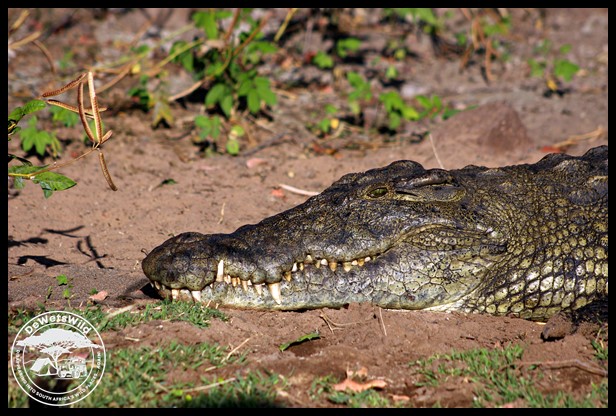
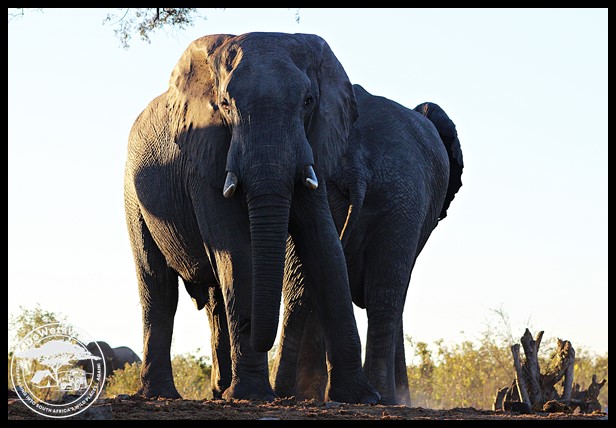
During our tour of Botswana in June we set off on an afternoon boat ride from the launch site in Kasane, following the Chobe River upstream into the Chobe National Park and later returning along the main channel – the border between Botswana and Namibia – around Sedudu Island by sunset. Game-viewing and photographic opportunities from the boat was excellent as we floated low to the water to almost within touching distance of Nile Crocodiles, Hippos, Buffaloes, Elephants and a wide array of other animals and birds which were all surprisingly unworried by our proximity. Certainly an experience to savour and never be forgotten!

Come along on a game drive through Botswana’s Chobe National Park

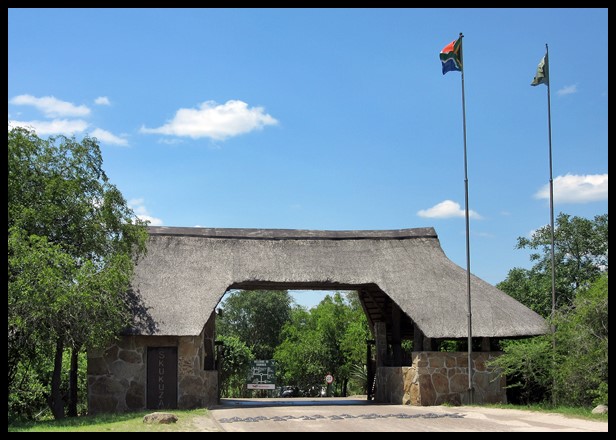
We made an early departure from Senyati in order to be at the entrance gate into Chobe National Park by the time it opened at 6am. One of the first animals we saw was a leopard stalking a herd of impala, a good indication as to the quality of the game-viewing we enjoyed for the morning we spent exploring the park.

The highlight of the day was finding three lions strolling across the Puku Flats. At one point they flushed a roan antelope from a patch of long grass, but it made a safe retreat. Eventually the lions found a shady spot in which to rest and we moved along.

We made it as far west as the Kabulabula Peninsula before we had to turn around and head for the gate again, as we had another exciting excursion booked for the afternoon. More about that in the next post!

Senyati Safari Camp

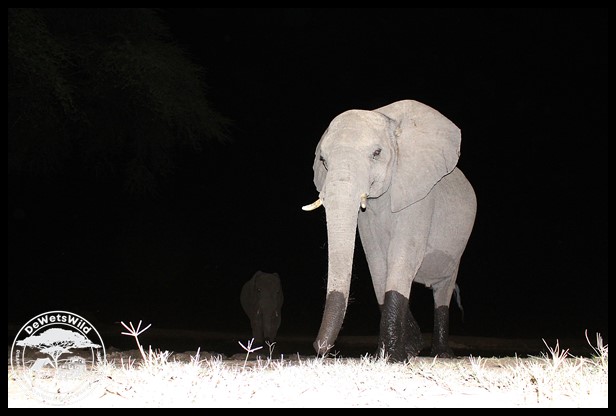
Following our amazing Gospel on Safari experience, colleague and friend Hannes Rossouw and I extended our stay in Botswana a little by heading further north to explore the Chobe National Park and surrounds, basing ourselves at Senyati Safari Camp. Senyati is located in the Lesoma Valley, just 15km from Kasane, gateway into Chobe, and offers accommodation, camping, a restaurant and a fabulous sunken hide from which you can get some terrific images of the animals and birds that come to drink at the camp’s waterhole day and night.

In upcoming posts I’ll share some more pictures taken on a drive through Chobe National Park, a boat ride on the Chobe River, and at Victoria Falls in neighbouring Zimbabwe.

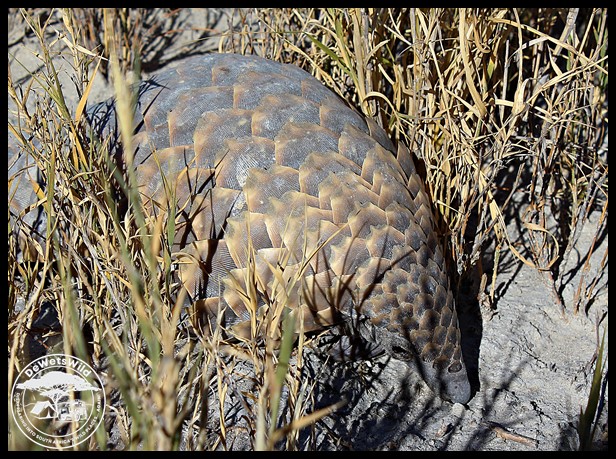
Finally seeing a Pangolin in the wild!

Last month, while travelling between Elephant Sands Lodge and the Sua Pan in Botswana during Gospel on Safari, a life-long dream of mine was realised when I finally had the chance to see a Pangolin in the wild!

Smutsia temminckii – The Ground Pangolin

Sadly, the Ground Pangolin is being threatened with extinction and is currently listed as vulnerable by the IUCN. Like other kinds of pangolin their populations are being driven downward by illegal trade for mainly superstitious medicinal uses and as a high-end delicacy. Farming practices, electric fences and road deaths are further threats to these enigmatic animals. In South Africa today they’re found mainly in the Northern Cape, North West, Limpopo, Mpumalanga and northern KZN, with populations in the Eastern Cape and Free State now feared extinct, while their natural distribution stretches beyond our borders as far north as Chad and Sudan.

Fully grown Ground Pangolins measure between 70 and 110cm in length, stand about 30cm high on all fours and weigh between 5 and 18kg, with males being considerably bigger than females. They feed on ants and termites, breaking open their nests with the powerful claws on their front feet and lapping the insects up with a tongue that is longer than the Pangolin’s body! They inhabit any habitat that has an ample supply of their favoured food items, being found from semi-deserts to the edge of forests. They do not need to drink.

As their name suggests, Ground Pangolins are strictly earthbound. They rest in tunnels that they dig themselves or take over from other animals. They plug the entrance to the tunnel from inside when using it. If caught outside they will roll up into a tight ball, their hard, sharp scales serving as excellent protection. Pangolins have wonderful senses of hearing and smell, but poor eyesight, and are solitary animals except when mating or when a mother is with her offspring. Females give birth to a single baby at a time, which she carries around with her on her tail for much of the first months of its life. They live to about 12 years of age in the wild.

Gospel on Safari: Sua Pan

Early in June I had the enormous privilege of spending 9 days at and around Elephant Sands Lodge, located near Nata in north-eastern Botswana, participating in Gospel on Safari where I and eleven other believers spent time with our Creator and His Word in the most amazingly unspoiled natural surroundings. Without a question it was one of the most impactful experiences of my life and I am immensely grateful for and humbled by all that was revealed to us, both physically and spiritually.

One of our nights was spent sleeping out in the open under the stars on the enormously empty expanse of Sua (sometimes spelt Sowa) Pan. The next day we explored more of the pan and its surroundings, making it as far as Kubu Island, a rocky outcrop covered by baobab trees and surrounded by a sea of salty emptiness.

One of the biggest highlights of the trip was an encounter with an enigmatic animal that I’ve longed to see my whole life. More about that soon!

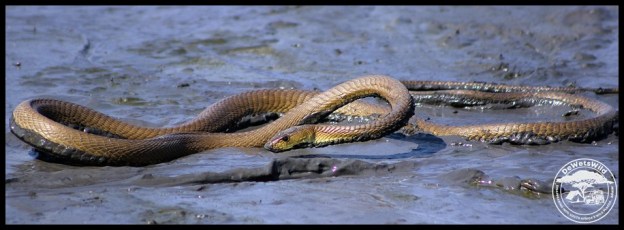
Watching Black Mambas at Domtshetshu Pan in Botswana

While camping near Domtshetshu Pan in Botswana recently, as part of Gospel on Safari, I took a stroll towards a muddy part of the waterhole, where I found two Black Mambas – one of the deadliest species of snake on the planet – wallowing in the mud, drinking from little pools and being very coy with each other. The snakes paid me no notice at all, making me think that they probably have never seen a human before – what an amazing thought! Later, one of my fellow campers joined me at the sighting and still the snakes acted as if we weren’t even there.

Gospel on Safari: Domtshetshu Pan

Early in June I had the enormous privilege of spending 9 days at and around Elephant Sands Lodge, located near Nata in north-eastern Botswana, participating in Gospel on Safari where I and eleven other believers spent time with our Creator and His Word in the most amazingly unspoiled natural surroundings. Without a question it was one of the most impactful experiences of my life and I am immensely grateful for and humbled by all that was revealed to us, both physically and spiritually.

For three nights, with special permission granted by Botswana’s Department of Wildlife and National Parks, our group camped out in the wild at a waterhole called Domtshetshu Pan. The sense of freedom, space and wonderment was amazing!

Domtshetshu Pan was the site of one of my most memorable wildlife encounters ever, and I will tell you more about it in the next installment!