Long-crested Eagle

Lophaetus occipitalis

The Long-created Eagle is easy to identify thanks to the couple of extended feathers on its head that is so conspicuous when it sits prominently on an exposed tree top or utility pole along the road. They’re medium-sized raptors, weighing up to 1.5kg and measuring around 55cm in length – females are heavier than males. Long-crested Eagles inhabit moist woodland and forest adjacent to open patches, often in association with wetlands or along river courses, and seems especially fond of high-lying areas. Rodents make up the largest portion of their diet, though they will also take ground birds, frogs, reptiles and even crabs and fish.

Long-crested Eagles nest in the canopy of tall trees, usually during the summer months though breeding attempts are recorded throughout the year. Pairs are monogamous and territorial and perform acrobatic courtship displays at the start of their breeding cycle. Their nests are platforms built of sticks and lined with softer materials such as green leaves. Females lay clutches of 1 or 2 eggs and incubate them for around 6 weeks. The male provides food to the female at the nest while she incubates the eggs and then broods the chicks after they’ve emerged from the eggs. The chicks fledge at two months old and remain with their parents for 2-3 months more.

The IUCN lists the Long-crested Eagle as a species of least concern. It has a very wide distribution over sub-Saharan Africa, absent only from the most open and arid areas. In South Africa they’re found along the Eastern Cape coast, through most of Kwazulu-Natal and marginally into the eastern Free State, and also in the high-lying parts of Gauteng, Mpumalanga and Limpopo (especially along the escarpment). It seems that this species has benefitted from the establishment of commercial forestry in South Africa and could expand its range as a result.

Blue Pansy Butterfly

Junonia oenone

The outer (under) side of the Blue Pansy’s wings blends in so beautifully with its surroundings that when this butterfly opens its wings and flashes the bright blue, red and white markings on a black background on the inside (topside) of its 5cm wingspan, it often comes as quite a surprise, especially if you didn’t notice it sitting on the bare ground or a rock, as they often do.

Blue Pansies inhabit woodland and savanna, as well as suburban parks and gardens, and occurs over the moister eastern half of South Africa. Adults may be seen throughout the year though they’re much more numerous in spring and autumn. They’re very active during the warmest hours of the day and males, which are territorial, can often be seen chasing each other and other kinds of butterflies around on hilltops.

Osprey

Pandion haliaetus

The Osprey occurs throughout the world, on every continent except Antarctica. In South Africa Ospreys are rare, and any sightings we have of them are always a thrilling surprise whenever and wherever we’re lucky to find them. Feeding almost exclusively on fish snatched from the water, Ospreys are found in close association with natural and man-made lakes, rivers, estuaries and along the coast.

Most Ospreys seen here in South Africa are visiting summer migrants arriving from October and departing again by May, though there are records of birds staying through winter and even a few attempts at breeding. They’re usually seen alone, but have been found in groups numbering up to five on occasion.

The IUCN considers the Osprey to be of least concern.

Olive Grass Snake

Psammophis mossambicus

A common inhabitant of moist savannas and grasslands, often found in marshy areas, the Olive Grass Snake is distributed from Uganda and the Republic of Congo southwards to the northeastern provinces of South Africa (Limpopo, Mpumalanga and Kwazulu-Natal).

These snakes are diurnal, strongly built, very fast, and great climbers. They prey mainly on lizards, frogs, small mammals and birds and even other snakes, including venomous species, that is subdued by its own venom while being held in the mouth. Olive Grass Snakes will easily bite when handled and their venom has a mild effect on humans, leading mainly to nausea and localized pain and swelling.

During the summer months females lay clutches of 10-30 eggs. The eggs hatch about 2 months after laying. Adults may attain a length of 1.8m, with females being larger than males.

The IUCN lists the Olive Grass Snake as being of least concern.

African Pipit

Anthus cinnamomeus

The African Pipit, also sometimes called the Grassland Pipit, is a common but fairly inconspicuous bird of open savanna, short grasslands and dry floodplains, though it is also often encountered on sports fields, airfields, agricultural land, roadsides and recently burnt patches. They feed almost exclusively on insects and other small invertebrates.

African Pipits are monogamous, with the male using aerial displays and song to proclaim his breeding territory while the female builds the neat cup-shaped nest on the ground at the base of a bush or tuft of grass (they also sleep on the ground, often in a favourite location). When not breeding they form loose flocks that may number up to a hundred and often associate with birds of other species. African Pipits may breed at any time of the year, though mostly in spring and summer, with clutches of 1-5 eggs being incubated by both parents over a 2 week period. The chicks leave the nest at between 2 and 3 weeks old, but remain near it – and dependent on their parents – for a while longer. Parents will attempt to lure predators away from the chicks by feigning a broken wing. Adults measure around 16cm in length and weigh about 24g.

The IUCN lists the African Pipit as a species of least concern. It is found over much of sub-Saharan Africa as well as in the south-western corner of the Arabian Peninsula. African Pipits occur all over South Africa.

Wanderer

Bematistes aganice

The Wanderer inhabits montane, coastal and riverine forests. It normally stays high in the canopy of lofty forest trees, moving around with slow, confident wing beats – having a rather disagreeable taste most predators stay well clear of them. The male is territorial and will chase any other butterflies, not only of their own kind, that venture into his patch. Adults have a wingspan of about 7cm and can be seen year-round.

In South Africa it is found in the Eastern Cape, Kwazulu-Natal and the Lowveld of Mpumalanga and Limpopo, and beyond our borders as far afield as East Africa.

Common Waxbill

Estrilda astrild

The Common Waxbill is an adaptable little finch that occurs in a wide-range of habitats, but is especially fond of densely growing vegetation in wetlands and along watercourses, and also enters gardens and parks in towns and cities. They’re social birds, moving around in flocks that usually number up to 50 individuals (though sometimes into the hundreds or even thousands) and feed mainly on grass flowers and seeds and the occasional soft-bodied insect.

Common Waxbills may breed throughout the year but predominantly during the warmer months of spring and summer. The male builds the intricate nest – a horizontal, pear-shaped construction of grass stems and leaves with a nesting chamber and a “dummy” nest cavity to confuse predators – that is usually placed on or near the ground at the base of thick vegetation. Both parents take turns to incubate the clutch of 4-6 (sometimes up to 9) eggs over a two-week period. The chicks fledge about three weeks after hatching, but often returns to the nest for a few days more to roost at night. Fully grown they weigh around 8g and measure up to 12cm long. The Common Waxbill is the main breeding host for the Pin-tailed Whydah, which lays 1-4 of their eggs in the nest of the Waxbill, often removing some or all of the Waxbill’s eggs, for the Waxbill to incubate their eggs and raise their chicks.

Common Waxbills have a patchy distribution over Sub-Saharan Africa; from Guinea in the west and Ethiopia in the northeast to South Africa, where it can be found in every one of our provinces. According to the IUCN, the Common Waxbill is of least concern. It is commonly found in the cage-bird trade and feral populations have become established in other parts of the world.

Doornkop Fish & Wildlife Reserve

Doornkop Fish & Wildlife Reserve is a private 2,000 hectare conservation area nestled in the rolling foothills of the Drakensberg near Carolina on the Mpumalanga Highveld.

The undulating terrain of the reserve is covered by open grasslands and bushveld, with a wide variety of non-threatening indigenous mammals and more than a hundred kinds of birds to be seen.

Aside from several crystal-clear mountain streams the reserve is watered by the Komati and Swartwaterspruit Rivers, both home to healthy populations of indigenous yellowfish, while ten dams situated near the chalets are stocked with exotic trout, a magnet for fly fishermen. At night, the banks of the dams are alive with various kinds of toads and frogs.

The reserve’s game-viewing roads – a 4×4 vehicle is a definite advantage – stretches to almost every corner of it, while the more energetic visitors relish in the network of horse trails, hiking trails, running trails and cycling trails that traverse the valleys and hills.

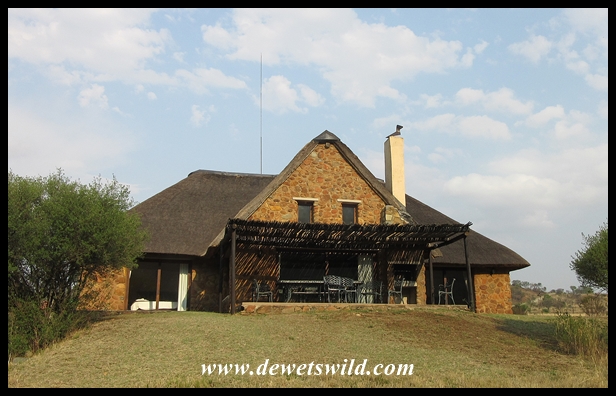
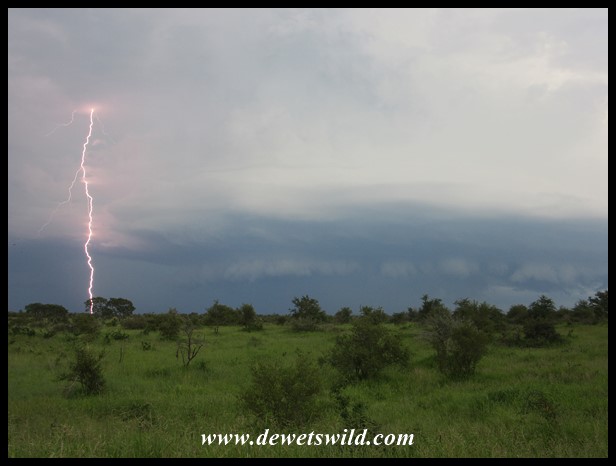
This past weekend we had our first taste of this very beautiful destination and we’re quite certain we’ll be returning before too long. We were allocated one of the spacious chalets along the bank of the Swartwaterspruit for our two night stay and from our shady veranda could have spent hours taking in the vast hillside dotted with herds of grazing animals just beyond the stream or the regular visits from feathered friends – could have if there wasn’t so much else to do on the property, even with some very inclement weather from time to time. The resort offers 6, 8 and 10 sleeper chalets, all fully equipped with everything required for a comfortable self-catered stay. At the main building guests can make use of the swimming pools, games room, indoor and outdoor kids play areas, tennis court and little tuck shop and fly shop.

Doornkop is only about 2½ hours easy driving distance from Johannesburg and Pretoria.

Introduced Bird Species in South Africa

South Africa observes the “National Invasive Species Week” in October annually. Hosted by the Department of Forestry, Fisheries and the Environment, the campaign focuses on creating awareness among the South African public about the threats non-native species pose to our ecosystems. In this edition of de Wets Wild, we’ll be focusing on a handful of the introduced bird species found in our country.

Common Myna – Acridotheres tristis 

The Common Myna was introduced to South Africa from India and Sri Lanka between 1900 (Durban) and 1938 (Johannesburg), and has become one of the most common urban birds in almost all the cities and towns in the north-east half of our country with newly established populations also noted in Cape Town, Port Elizabeth and elsewhere – no wonder it is considered one of the 100 worst invasive species, not only in South Africa but the world over. Very worryingly, they now seem to have thrown off their urban shackles and are increasingly being recorded in several of our national parks as well. Common Myna are highly intelligent and quite aggressive and easily outcompete several indigenous kinds of birds for nests and food, even destroying their eggs and killing their chicks. They carry foreign diseases and parasites that afflict not only other birds but also humans.

Common Starling – Sturnus vulgaris

Another species considered to be among the 100 worst invasive species on the planet is the Common Starling, which first arrived in South Africa (Cape Town) in 1897, having been introduced from England by Cecil John Rhodes, himself a controversial figure. Not only is it responsible for immense damage to crops and orchards, but it too outcompetes native birds for resources like nests and food. While the distantly related Common Myna has taken control of the north-east of our country, it seems this member of the starling family has claimed the south-west of South Africa, especially the Western and Eastern Cape, and is staging its invasion of the rest of the country from there.

Thankfully two other species Rhodes tried to establish at the Cape of Good Hope, the Common Chaffinch and Grey Squirrel, while still resident in and around Cape Town, have not become as entrenched in South Africa as the Common Starling.

House Sparrow – Passer Domesticus

Today, the House Sparrow occurs in virtually every corner of South Africa – if there are people permanently settled anywhere, you can be sure there are House Sparrows too. It would appear that they first arrived in Durban from India around 1880, from whence they rapidly spread throughout South Africa and to our neighbouring countries – it is estimated that there are 8,000 of them in the various rest camps of the Kruger National Park alone!  Thankfully they are not a major threat to any indigenous bird species nor are they a pest to agricultural interests, rarely being found far from human habitation.

Lovebirds – Agapornis species

Africa and Madagascar is home to nine species of Lovebird – a family of small parrots – but only one, the Rosy-faced Lovebird, occurs naturally in South Africa;  in a tiny corner of the Northern Cape along the border with Namibia. Lovebirds are very popular in the pet trade, and it is probably due to escapees that feral populations of Lovebirds have become established in Pretoria and a few other locations in South Africa. Many of the Lovebirds now flying wild around our suburb have features in common with the Rosy-faced, Black-cheeked, Fischer’sLilian’s and Yellow-collared Lovebirds, but they are probably all hybrids of these and other kinds.

Rose-ringed Parakeet – Psittacula krameri

Rose-ringed Parakeets are native to the Indian subcontinent and a band stretching through Africa from Senegal to Ethiopia. Being popular in the pet trade escapees have established feral populations in various parts of the world, including South Africa, where large populations are found in Durban, Johannesburg and Pretoria. Thankfully a population that occurred around Sodwana in what is today the iSimangaliso Wetland Park seems to have died out. In large flocks Rose-ringed Parakeets can be a serious pest in orchards, and they displace native hole-nesting birds from prime habitat.

Rock Dove – Columba livia

The Rock Dove, also known as the Common Pigeon, arrived in South Africa along with the first Dutch settlers in 1652 and soon became feral when they escaped domesticity. While today they are found in virtually every town and city in the country, their reliance on human habitation for food and nesting sites means that they are seldom encountered in our protected areas. Nevertheless they can be a serious nuisance and disease carrier.

Indian Peafowl – Pavo cristatus

The beautiful peacock is another bird that made its way to South Africa as an ornamental many decades ago. While they were purposefully released on Robben Island, some of these birds escaped from farms and zoos and free-ranging populations can now be found widely in South Africa and especially in and around major urban centres.

Carolina Wood Duck – Aix sponsa

While they do occasionally venture from their native North American haunts and have reached parts of Europe on these forays, it is much more likely that the occasional Carolina Wood Ducks seen in the wild in South Africa escaped from captivity. It would seem that no feral populations have yet become settled in the country. 

Mallard – Anas platyrhynchos

The exotic Mallard, and its domesticated descendants, started invading South African wetlands around the 1980’s after escaping from farms and the collections of bird fanciers. They’re now found widely across the country with the biggest populations in and around the larger towns and cities. The Mallard poses a confirmed risk of crossbreeding with our indigenous African Black Duck and Yellow-billed Duck, diluting the genetic purity of these native species.

What is interesting is that these species are not problematic in their natural habitats and ranges, and only get their “bad rap” due to humans introducing them to places they don’t belong. In the same way some species that are native to South Africa have become invasive in other parts of the world – the blue kurper (Mozambique tilapia) for instance also counts among the 100 worst invaders in the world.


Green-backed Camaroptera

Camaroptera brachyura

The Green-backed Camaroptera, also called the Bleating Camaroptera for its easily recognizable call, is found widely over sub-Saharan Africa in dense vegetation ranging from thickets in savannas to forests, where they feed almost exclusively on insects and other invertebrates caught in the undergrowth. In South Africa they’re found in the Lowveld and escarpment of Limpopo and Mpumalanga, through most of Kwazulu-Natal and as far south as the Garden Route along the Indian Ocean coast.

Adult Green-backed Camaropteras are usually encountered in pairs – they’re monogamous and breed in spring and summer. Their nests are ball-shaped formations of leaves held together by spider webs and fibres, built by both members of the pair. Parents take turns to incubate the clutch of 2-4 eggs over a 2 week period and both parents provide food for the hatchlings at the nest until they fledge about 2 weeks after hatching. Fully grown they measure around 13cm in length and weigh only about 11g.

The IUCN lists the Green-backed Camaroptera as being of least concern.