Except for one horrific cold front moving over the country over the Heritage Day long weekend we’ve enjoyed pleasant Spring weather and scenery at the Rietvlei Nature Reserve this September. Many plants are already in bloom and a green tinge is flushing over the moister parts of the reserve.

Sacred Ibises coming to roost

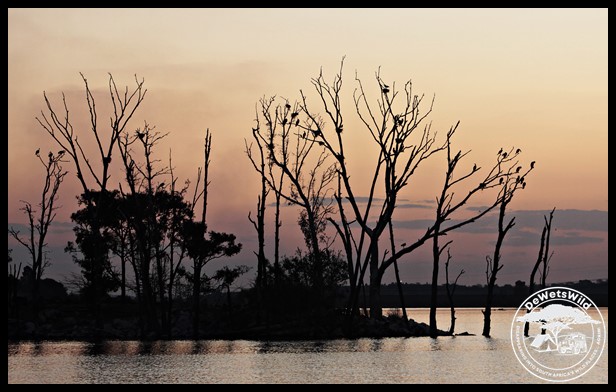
Island View at sunset

Rietvlei Dam at sunset

Black Locust Tree blooms

White Evening Primrose

Rietvlei scenery (photo by Joubert)
I expected that we might see some different birds at Rietvlei following the fires last month, as well as some early summer migrants, and on both scores I was not disappointed. The number of species I’ve now recorded at Rietvlei since February has swollen to 148.

Capped Wheatear

African Stonechat

Cape Longclaw

White-throated Swallow

Southern Pochard

Arrow-marked Babbler

Streaky-headed Seed-eater

White-throated Swallow

Ostrich male chasing female

Hadeda

Fiscal Shrike

African Spoonbill

African Stonechat

Cape Sparrow female (photo by Joubert)

Capped Wheatear (photo by Joubert)

Swainson’s Spurfowl (photo by Joubert)

Swainson’s Spurfowl

Yellow-billed Ducks

Spur-winged Geese

Wattled Lapwing

African Snipe

Male Ostrich

Female Ostrich

Sacred Ibises

Spotted Dikkop

Black Heron

Grey-headed Gull

Blue-billed Teal

Long-tailed Widowbird

Ostrich Toe & Nail
I recorded 19 species of mammals during the month of September, most of any month since I joined the reserve’s guiding staff on a freelance basis. No doubt the denuded state of the vegetation so long after the rainy season and the areas opened up by veld fires have aided this. It was also nice to see some reptiles again, the warm spring weather must have woken them from their slumber.

Black-backed Jackal

Buffalo

Eland

Eland herd on the run

Eland Bull (photo by Joubert)

Eland Bulls

Black Wildebeest

Black Wildebeest (photo by Joubert)

Black Wildebeest (photo by Joubert)

Bushpig (photo by Joubert)

Red Hartebeest

Red Hartebeest

Yellow Mongoose

Plains Zebra

Plains Zebra

Waterbuck cows

Water Monitor

Flap-necked Chameleon
Our inaugural “introduction to wildlife photography” course presented in conjunction with Hannes Rossouw Photography early in the month was another highlight and we hope to offer another session before the year is done. Let me know if you’d be interested in receiving more information!
List of mammals seen at Rietvlei in September 2024:
| Scientific |
Afrikaans |
English |
| Alcelaphus buselaphus |
Rooihartbees |
Red Hartebeest |
| Antidorcas marsupialis |
Springbok |
Springbuck |
| Canis mesomelas |
Rooijakkals |
Black-backed Jackal |
| Ceratotherium simum |
Witrenoster |
White Rhinoceros |
| Connochaetes gnou |
Swartwildebees |
Black Wildebeest |
| Cynictis penicillata |
Witkwasmuishond |
Yellow Mongoose |
| Damaliscus pygargus |
Blesbok |
Blesbuck |
| Equus quagga |
Bontsebra |
Plains Zebra |
| Herpestes sanguineus |
Swartkwasmuishond |
Slender Mongoose |
| Hippopotamus amphibius |
Seekoei |
Hippopotamus |
| Hydrictis maculicollis |
Kleinotter |
Spotted-necked Otter |
| Kobus ellipsyprymnus |
Waterbok |
Waterbuck |
| Microchiroptera |
Insekvretende vlermuis
(spesie onbekend) |
Insect-eating bat
(species unknown) |
| Potamochoerus larvatus |
Bosvark |
Bushpig |
| Raphicerus campestris |
Steenbok |
Steenbok |
| Suricata suricatta |
Meerkat |
Suricate |
| Sylvicapra grimmia |
Grysduiker |
Common Duiker |
| Syncerus caffer |
Buffel |
Cape Buffalo |
| Taurotragus oryx |
Eland |
Eland |
List of birds seen at Rietvlei during September 2024:
| Scientific |
Afrikaans |
English |
| Acridotheres tristis |
Indiese Spreeu |
Common Myna |
| Acrocephalus gracilirostris |
Kaapse Rietsanger |
Lesser Swamp Warbler |
| Afrotis afraoides |
Witvlerkkorhaan |
Northern Black Korhaan |
| Alopochen aegyptiaca |
Kolgans |
Egyptian Goose |
| Amblyospiza albifrons |
Dikbekwewer |
Thick-billed Weaver |
| Anas sparsa |
Swarteend |
African Black Duck |
| Anas undulata |
Geelbekeend |
Yellow-billed Duck |
| Anthus cinnamomeus |
Gewone Koester |
African Pipit |
| Apus barbatus |
Swartwindswael |
African Black Swift |
| Ardea melanocephala |
Swartkopreier |
Black-headed Heron |
| Batis molitor |
Witliesbosbontrokkie |
Chinspot Batis |
| Bostrychia hagedash |
Hadeda |
Hadeda Ibis |
| Bubulcus ibis |
Veereier |
Western Cattle Egret |
| Burhinus capensis |
Gewone Dikkop |
Spotted Thick-knee |
| Butorides striata |
Groenrugreier |
Green-backed Heron |
| Cecropis cucullata |
Grootstreepswael |
Greater Striped Swallow |
| Centropus burchellii |
Gewone Vleiloerie |
Burchell’s Coucal |
| Charadrius tricollaris |
Driebandstrandkiewiet |
Three-banded Plover |
| Chroicocephalus cirrocephalus |
Gryskopmeeu |
Grey-headed Gull |
| Cisticola juncidis |
Landeryklopkloppie |
Zitting Cisticola |
| Cisticola tinniens |
Vleitinktinkie |
Levaillant’s Cisticola |
| Colius striatus |
Gevlekte Muisvoel |
Speckled Mousebird |
| Columba guinea |
Kransduif |
Speckled Pigeon |
| Corvus albus |
Witborskraai |
Pied Cow |
| Crinifer concolor |
Kwevoel |
Grey Go-Away Bird |
| Crithagra gularis |
Streepkopkanarie |
Streaky-headed Seedeater |
| Cypsiurus parvus |
Palmwindswael |
African Palm Swift |
| Dendropicos fuscescens |
Kardinaalspeg |
Cardinal Woodpecker |
| Dessonornis caffer |
Gewone Janfrederik |
Cape Robin-Chat |
| Dicrurus adsimilis |
Mikstertbyvanger |
Fork-tailed Drongo |
| Elanus caeruleus |
Blouvalk |
Black-winged Kite |
| Estrilda astrild |
Rooibeksysie |
Common Waxbill |
| Euplectes ardens |
Rooikeelflap |
Red-collared Widowbird |
| Euplectes orix |
Rooivink |
Southern Red Bishop |
| Euplectes progne |
Langstertflap |
Longtailed Widowbird |
| Fulica cristata |
Bleshoender |
Red-knobbed Coot |
| Gallinago nigripennis |
Afrikaanse Snip |
African Snipe |
| Gallinula chloropus |
Grootwaterhoender |
Common Moorhen |
| Hirundo albigularis |
Witkeelswael |
White-throated Swallow |
| Icthyophaga vocifer |
Visarend |
Fish Eagle |
| Jynx ruficollis |
Draaihals |
Red-throated Wryneck |
| Lamprotornis bicolor |
Witgatspreeu |
Pied Starling |
| Lamprotornis nitens |
Kleinglansspreeu |
Cape Glossy Starling |
| Laniarius atrococcineus |
Rooiborslaksman |
Crimson-breasted Shrike |
| Laniarius ferrugineus |
Suidelike Waterfiskaal |
Southern Boubou |
| Lanius collaris |
Fiskaallaksman |
Common Fiscal |
| Lybius torquatus |
Rooikophoutkapper |
Black-collared Barbet |
| Macronyx capensis |
Oranjekeel Kalkoentjie |
Cape Longclaw |
| Microcarbo africanus |
Rietduiker |
Reed Cormorant |
| Mirafra africana |
Rooineklewerik |
Rufous-naped Lark |
| Motacilla capensis |
Gewone Kwikkie |
Cape Wagtail |
| Netta erythrophthalma |
Bruineend |
Southern Pochard |
| Numida meleagris |
Gewone Tarentaal |
Helmeted Guineafowl |
| Oenanthe pileata |
Hoeveldskaapwagter |
Capped Wheatear |
| Passer diffusus |
Gryskopmossie |
Southern Grey-headed Sparrow |
| Passer melanurus |
Gewone Mossie |
Cape Sparrow |
| Phalacrocorax lucidus |
Witborsduiker |
White-breasted Cormorant |
| Phoeniculus purpureus |
Rooibekkakelaar |
Green Wood-hoopoe |
| Platalea alba |
Lepelaar |
African Spoonbill |
| Plectropterus gambensis |
Wildemakou |
Spur-winged Goose |
| Plegadis falcinellus |
Glansibis |
Glossy Ibis |
| Ploceus velatus |
Swartkeelgeelvink |
Southern Masked Weaver |
| Prinia subflava |
Bruinsylangstertjie |
Tawny-flanked Prinia |
| Psittacula krameri |
Ringnekparkiet |
Rose-ringed Parakeet |
| Pternistis swainsonii |
Bosveldfisant |
Swainson’s Spurfowl |
| Pycnonotus tricolor |
Swartoogtiptol |
Dark-capped Bulbul |
| Quelea quelea |
Rooibekkwelea |
Red-billed Quelea |
| Saxicola torquatus |
Gewone Bontrokkie |
African Stonechat |
| Scleroptila gutturalis |
Kalaharipatrys |
Orange River Francolin |
| Scopus umbretta |
Hamerkop |
Hamerkop |
| Sigelus silens |
Fiskaalvlieevanger |
Fiscal Flycatcher |
| Spatula hottentota |
Gevlekte Eend |
Blue-billed Teal |
| Spilopelia senegalensis |
Rooiborsduifie |
Laughing Dove |
| Streptopelia capicola |
Gewone Tortelduif |
Cape Turtle Dove |
| Streptopelia semitorquata |
Grootringduif |
Red-eyed Dove |
| Struthio camelus |
Volstruis |
Common Ostrich |
| Tachybaptus ruficollis |
Kleindobbertjie |
Little Grebe |
| Tadorna cana |
Kopereend |
South African Shelduck |
| Telophorus zeylonus |
Bokmakierie |
Bokmakierie |
| Threskiornis aethiopicus |
Skoorsteenveer |
African Sacred Ibis |
| Turdoides jardineii |
Pylvlekkatlagter |
Arrow-marked Babbler |
| Turdus smithi |
Geelbeklyster |
Karoo Thrush |
| Upupa africana |
Hoephoep |
African Hoopoe |
| Vanellus armatus |
Bontkiewiet |
Blacksmith Lapwing |
| Vanellus coronatus |
Kroonkiewiet |
Crowned Lapwing |
| Vanellus senegallus |
Lelkiewiet |
Wattled Lapwing |
| Vidua macroura |
Koningrooibekkie |
Pin-tailed Whydah |
| Zosterops virens |
Kaapse Glasogie |
Cape White-eye |
If you’d like to join me on a guided tour of Rietvlei – on a hike or on an open vehicle drive – you can book through melanie@rietvleicoffee.co.za / +27(0)74-820-9926.
















 DeWetsWild