Monday the 1st of November was a declared public holiday in South Africa, to allow for the running of the municipal elections. Of course this little gift of a long weekend was too good to pass up, so the de Wets headed north into the Bushveld for a two night visit to the Nylsvley Nature Reserve – one of our country’s most highly-rated bird watching destinations.


True to its reputation, Nylsvley delivered abundantly on the bird front during our visit, despite the fact that many of the summer regulars haven’t arrived in South Africa yet and despite most of the wetlands being completely dry at the end of the dry season. We managed to tick 82 species of birds without trying very hard.


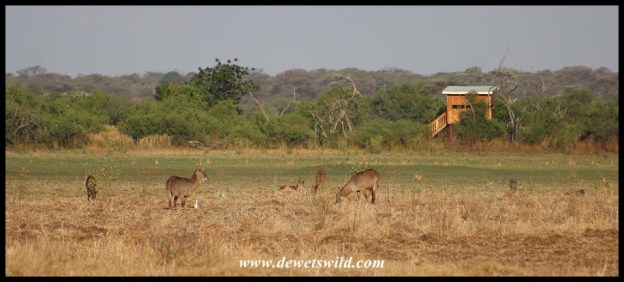
Besides the birds, another reason to visit Nylsvley is the sizable populations of three of South Africa’s rarer antelope species that are found here: Southern Reedbuck, Roan Antelope, and Tsessebe.


These antelope were just some of the 25 kinds of mammals we encountered during the 48 hours or so we spent at Nylsvley, ranging from bats, squirrels and mice to lofty giraffes.


We found a little waterhole that was well frequented by the reserve’s giraffes, and had great fun photographing the giants as they stooped to drink.


Even on a smaller scale, Nylsvley has so much to offer!


If you’d like to learn more about Nylsvley you are welcome to have a read through a previous post we did on the reserve following a visit in 2017.

Entrance Gate at Nylsvley Nature Reserve
And don’t worry – Marilize and I performed our civic duty by casting our votes as soon as we got back to Pretoria on Monday afternoon. 😉
 DeWetsWild
What an incredible variety of birds and such interesting mammals and other critters too. This seems like a wonderful place to stopover for a few days if and when travelling further north. Thanks for alerting us to it.
You’ll not be disappointed if you stop over at Nylsvley. The staff are so welcoming and helpful and you can see they take pride in looking after their charge. A small packet of dynamite this.
Looks like the reserve contains a banquet of birds and beasts!
I’m glad if the photos conveyed a bit of Nylsvley’s magical diversity, Siobhan!
How nice to see an abundance of birds, I’m sure that there must be also am abundance of small creatures and lots of grass seeds, to justify the variety of avians. Loved the pictures very much. Thank you, my friend. 🙂
Thank you very much, H.J. Indeed, Nylsvley appears to be in a very healthy state – even now at the end of the dry season.
Weereens ongelooflik baie diere en voels wat julle gesien het! Beslis die moeite werd vir so wegbreek naweek Dries!
Ons was regtig bly dat ons die geleentheid kon aangryp, Aletta. Die stille rustigheid was net wat ons nodig gehad het vir die laaste strek tot die Desember vakansie.
What immense diversity and beauty, many thanks for this!
Nylsvley is a very special place, Joep – well worth a visit!
Just the kind of rejuvenation one needs! We have heard the Burchell’s Coucal only once in our garden so far [it did not herald rain, so may have moved on in embarrassment :)] I enjoyed seeing birds so familiar to me, yet not seen for far too long.
What a pity that the Coucal couldn’t do its magic!
Sjoe nou verlang ek eers weer n bietjie. Baie bly Nylsvlei net so mooi uitgebrei en ook spesiale diere gekry. Daar is darem ongelooflik baie voels daar. Dink jy die Nyl sal komende somer weer water op oppervlakte kry? Die Nyl loop mos ondergronds( hoop so nog steeds).
Teen middel Januarie hierdie jaar het die Nyl oudergewoonte afgekom, Ineke, en die vleiland was pragtig onder water met derduisende besoekende voels – ongelukkig was ons toe pas terug van verlof af en kon nie gaan kyk nie, maar ons hoop as dit in 2022 weer gebeur om n naweek te kan afknyp.
Dis so ongewoon om die Nyl so op die oppervlakte te kan sien en beleef. Die rivier het ‘n vreeslike wye vloei bedding. Ons het altyd gaan kyk omdat dit baie ongewoon is. Al die opdammings maak dit ook nie makliker om te vloei nie.
So many beautiful birds, but the Blue Waxbill is a favorite of mine. The waterbuck….something happened to one of its horns?
Thank you, Lois – we also have a soft spot for the Blue Waxbills!
Yep, that waterbuck bull’s horns have definitely been through the ringer keeping their owner in charge of his harem!