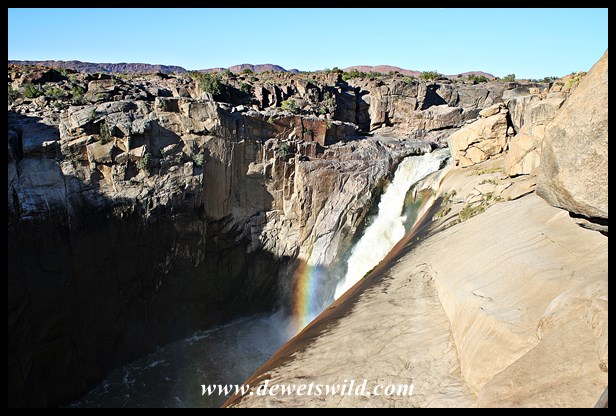
The Orange River, South Africa’s biggest and longest (running 2,200km from its source in Lesotho to its mouth at the Atlantic Ocean) is, for the most part, a lazy, slow-flowing waterway. That changes however when it is forced through a narrow granitic channel in the arid Northern Cape, plunges 56m over the impressive Augrabies Falls and continues through a dramatic gorge for another 18km before again returning to its more placid ways.
After years of political wrangling, a small 5,400 hectare area around the Falls was proclaimed the Augrabies Falls National Park in August 1966. Subsequently surrounding areas have been incorporated, and today the Park covers over 51,000 hectares.
Visitors can enjoy the best views of the Falls from several vantage points connected by easily negotiated boardwalks.
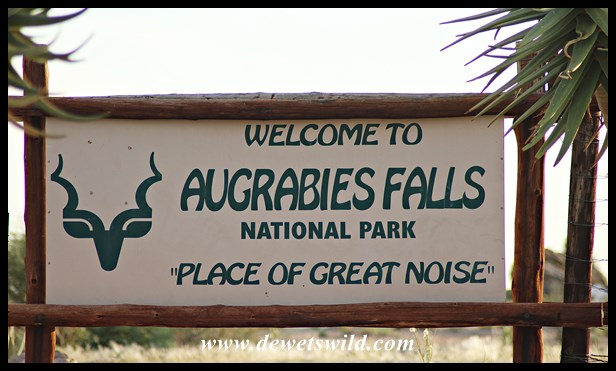
Consider that these photos taken during our visit in June 2018 saw the river flowing at a below average 38 cubic meters per second, and then imagine what it must look like when a flood of approximately 7,800 cumec, as happened in 1988, thunders down the Falls, to understand exactly why the Khoi named this place “Aukoerebis“, meaning “the place of great noise“!

Sunrise over Augrabies Falls

Augrabies Falls

Rainbow at Augrabies Falls

Augrabies Falls

Augrabies Falls

Augrabies Falls

Augrabies Falls

Augrabies Falls

Orange River above the Augrabies Falls

The Augrabies falls are illuminated for a few hours at night

Boardwalks allow easy access to the best viewpoints

Boardwalks allow easy access to the best viewpoints

Boardwalks allow easy access to the best viewpoints

Boardwalks allow easy access to the best viewpoints

Boardwalks allow easy access to the best viewpoints

Balancing rock above the boardwalk to the falls
Although the Falls is a worthy focal point of the National Park, there’s still lots more to see further afield when exploring this arid rocky desert landscape (the Park receives only about 120mm of rain annually). Places like Oranjekom, Ararat, Echo Corner and the Moon Rock are well worth the visit for spectacular views and fascinating geology. Quiver Trees and Namaqua Porkbush, both of which we’ll feature in more detail soon, are conspicuous plants and brilliantly adapted to life in this harsh environment. Rocky hills and arid plains where animals and birds abound add to the attraction.

Sunrise over the Augrabies landscape shows a lone Quiver Tree

Starry skies over Augrabies

Bloom of the Desert Broom bush

Beauty in a rugged landscape

Beauty in a rugged landscape

Ararat viewpoint over the gorge of the Orange River

Echo Corner

Scaling the Moon Rock

View from atop the Moon Rock

View from atop the Moon Rock

View from atop the Moon Rock

Namaqua Fig

Large Namaqua Porkbush

Namaqua Porkbush leaves

Quiver Tree

Quiver Trees

Rocky hill with Shepherd’s Tree

Dry riverbed

Interesting rock formations

Dry riverbed

Augrabies Scenery

Augrabies Scenery

Interesting rock formations

Sociable Weaver Nest
Among the fauna finding protection in the Augrabies Falls National Park counts 49 species of mammal, 181 recorded bird species, around 50 species of reptile, 6 kinds of frog and 12 species of indigenous fish.

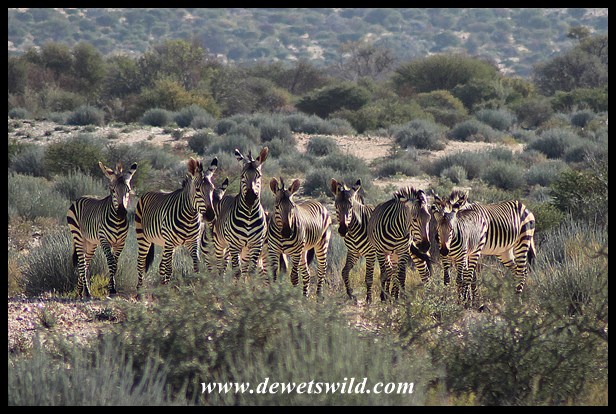
Hartmann’s Mountain Zebra

Augrabies Flat Lizard male

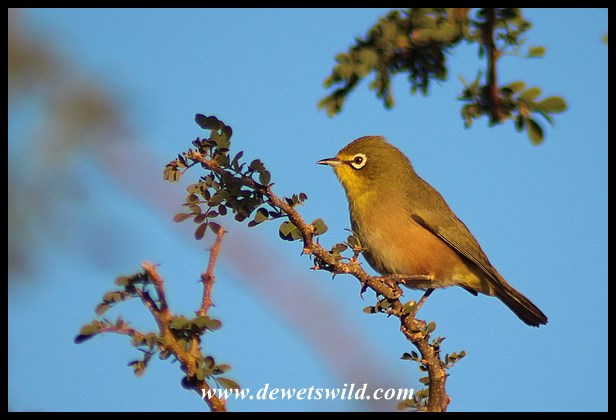
Orange River White-eye

Baby Dassie

Dassie (Rock Hyrax)

Dassie enjoying the view

Baboon surveying the landscape

Baboons frequent the camp in the mornings

Black-backed Jackal

Black-chested Prinia

Cape Robin-Chat at Augrabies Falls National Park (race C. c. namaquensis)

Common Waxbill

Dassie Rat, a unique kind of rodent

Dusky Sunbird on a flowering Quiver Tree

Gemsbok

Giraffe seem to thrive at Augrabies despite the harsh environment

Ground Squirrels run around the camp

Karoo Korhaan are excellently camouflaged in the arid landscape

Klipspringer

Long-billed Crombec

Namaqua Sandgrouse

Pale-winged Starling

Pririt Batis

Red-eyed Bulbul

Southern Masked Weaver getting its breeding plumage

Speckled Pigeon

Spike-heeled Lark

Springbok

Swallow-tailed Bee-eater

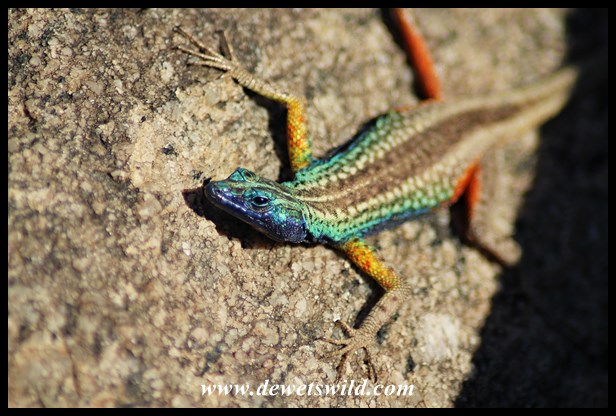
Western Rock Skink male

White-browed Sparrow-Weaver

White-throated Canary

Yellow Mongoose
Guests can be accommodated overnight in the rest camp’s chalets or the very neat camping area, all within easy walking distance from the Falls (illuminated until 10pm each evening). At the camp there’s four swimming pools (including one for day visitors), a shop, restaurant, fuel station and a little bird-watching hide. The Oranjekom Gorge Cottage is located about 10km from the main camp, and offers privacy and magnificent views over the ravine and river. Provision is also made for day visitors with picnic sites in the camp and along the game viewing loop. Visitors are welcome to explore the Park’s roads in their own vehicle (some roads are only accessible to 4×4 vehicles) or on mountain bikes, and there’s several hiking trails to choose from ranging in length from 2 to 33km (the latter being the Klipspringer Trail which includes two overnight stops). Guided drives (both day and night) in open vehicles can be booked at reception.

Af-en-Toe Picnic Site on the game-viewing circuit

Af-en-Toe Picnic Site on the game-viewing circuit

Camping at Augrabies

Augrabies Chalets

One of three swimming pools for overnight visitors at the rest camp

Chalet 26 at Augrabies Falls National Park, June 2018

Oranjekom Gorge Cottage
The Augrabies Falls National Park is in one of the remotest corners of South Africa’s Northern Cape Province; roughly 930km from Pretoria and 870km from Cape Town. The nearest major airport with daily flights is at Upington, about 125km away. We enjoyed a wonderful two-night visit to Augrabies at the end of June 2018, during which all these photos were taken.
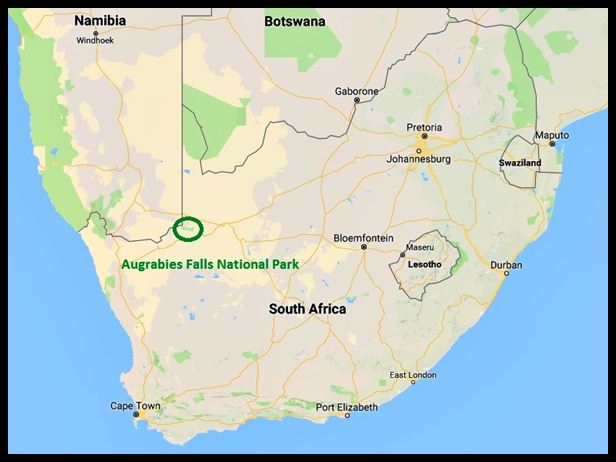
Location of Augrabies Falls National Park
-28.594250
20.338066








 DeWetsWild