Chlorocebus pygerythrus
Along with the Chacma Baboon, the Vervet Monkey must be South Africa’s best known indigenous primate. Male Vervets are considerable stronger built than the females, weighing in at an average of 6kg compared to females at 4kg. Including their tail, Vervet Monkeys are usually just over a meter long.

The cutest monkey in Hilltop

Dominant male vervet monkey showing off his weaponry

Ample opportunity to enjoy the antics of Skukuza’s vervet monkeys

Timbavati’s white vervet monkey

Vervet monkeys

Thoughtful Vervet Monkey

Grooming Vervet Monkeys

Vervet Monkey

Baby Vervet Monkey

Vervet Monkey youngster with a pod of some kind

Vervet Monkey

Vervet Monkeys

Vervet Monkey
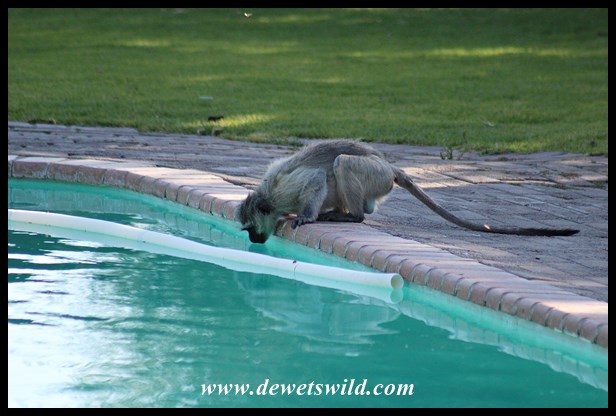
Vervet Monkeys inhabit coastal and mountain forests, woodland, bushveld, riverine thickets, and adjacent grasslands. They’ve adapted to suburban living in many of our towns and cities, and they’ll even forage in plantations and on beaches, provided there is sufficient natural vegetation nearby. Access to drinking water is a crucial habitat requirement for them. Vervet Monkeys follow an extremely wide diet, feeding on fruits and berries, seeds, pods, flowers, leaves, roots, bulbs, tree gum, grass, herbs, spiders and scorpions, snails, insects, eggs and small birds, other small vertebrates, and even marine organisms. Unfortunately they also quickly learn that humans are an easy source of food, either through deliberate feeding or irresponsible discarding of food waste, and can then become a dangerous nuisance.

Vervet Monkey

Vervet monkeys raid picnic sites next to the river

Vervet Monkey in a mangrove tree

Vervet monkey

Vervet monkeys

Vervet monkey in Crocodile Bridge

Vervet Monkey

Vervet Monkey female with baby

Thieving Vervet Monkey with a stolen bounty (photo by Marilize)

Vervet Monkey

Vervet Monkey (photo by Joubert)

Vervet Monkey looking for mischief in Crocodile Bridge’s camping area

Vervet Monkey

Vervet Monkey drinking from an airconditioner outlet

Vervet Monkey

Vervet Monkey

Vervet Monkey

Vervet Monkey

Vervet Monkey

Vervet Monkey

Vervet Monkey

Vervet Monkey and Warthog
A highly gregarious species, Vervet Monkeys live in troops numbering from 8 to 140 members (usually around 25) made up of a dominant male, several other males, females (who have their own pecking order) and their young. Troop members have strong bonds of friendship and alliances with others of similar status in the group. Vervets are diurnal, being most active in the morning and afternoon and resting in the midday heat. At night they sleep huddled in small groups in high trees or on inaccessible cliffs. They spend about an equal amount of time foraging in the trees and on the ground.

Vervet monkey

Energetic youngsters

Energetic youngsters

Squabbling family members

Vervet monkey

Keep an eye open for the vervet monkeys while having a picnic at Mission Rocks

Vervet monkey

Monkey antics

Monkey antics

Vervet Monkey

Vervet Monkey

Vervet Monkey

Grooming Vervet Monkeys

Grooming Vervet Monkeys

Vervet Monkey
Female Vervet Monkeys give birth to a single baby – twins are very rare – at any time of the year, though most babies arrive in the spring or summer when food is more abundant, after a 7 month pregnancy. All troop members are very protective of the little ones. Females may live their entire lives in the troop they were born in, while males leave their maternal group at the age of about 4 years to join other troops, staying on average about 3 years with a troop before moving along to another again. Leopards, smaller wild cats, large raptors and pythons are the biggest predators of Vervet Monkeys, which can live to between 12 and 24 years old in the wild.

The cutest monkey in Hilltop

Vervet monkey

Vervet monkeys hiding from the wet weather (iSimangaliso 22122014)

Ample opportunity to enjoy the antics of Skukuza’s vervet monkeys

Ample opportunity to enjoy the antics of Skukuza’s vervet monkeys

Vervet monkey family portrait

Vervet Monkey

Vervet Monkey

Vervet Monkey

Vervet Monkey

Vervet Monkey

Vervet Monkey

I did it my way…

I did it my way…

Vervet baby suckling (photo by Joubert)

Playful Vervet Monkey baby

Vervet Monkey

Young Vervet Monkeys

Vervet baby

Vervet baby

Vervet baby
The Vervet Monkey occurs in a wide band from Somalia and Ethiopia in the north to South Africa, where they are found in all provinces and most of our conservation areas, though their occurrence in the arid west and open central parts of the country is restricted to major riverine arteries. They are regarded as a pest in farming communities and in suburbs, but being a widespread and abundant species the IUCN lists the Vervet Monkey as “Least Concern”.

Vervet Monkey

Cute little Vervet Monkeys – just look at that smile!

Peek-a-boo! Mother and baby Vervet Monkey

Grooming Vervet Monkeys

Vervet Monkey

Grooming Vervet Monkeys

Alarmed Vervet Monkey

Baby Vervet Monkey

Vervet Monkey (sitting on a thorn, perhaps!?)

Vervet Monkey

Dominant male Vervet Monkey

Vervet monkey waiting for a gap at our tent in Tlopi Tented Camp

Vervet monkey waiting for a gap at our tent in Tlopi Tented Camp

Vervet monkey waiting for a gap at our tent in Tlopi Tented Camp (photo by Joubert)

Vervet monkey jumping across the stream feeding into Tlopi’s dam

Vervet monkey jumping across the stream feeding into Tlopi’s dam

Vervet monkey jumping across the stream feeding into Tlopi’s dam

Vervet monkey jumping across the stream feeding into Tlopi’s dam

Vervet monkey jumping across the stream feeding into Tlopi’s dam

Vervet monkey jumping across the stream feeding into Tlopi’s dam

Vervet Monkey waiting for a lift at Bakubung Gate

Vervet Monkey

Vervet Monkey (photo by Joubert)

Vervet Monkeys admiring their reflections

Vervet Monkey

Young Vervet Monkey (photo by Joubert)

Vervet Monkey

Vervet Monkey (photo by Joubert)

Vervet Monkey at Kumasinga

Vervet Monkey at Kumasinga

Vervet Monkey at Kumasinga (photo by Joubert)

Vervet Monkey at Kumasinga (photo by Joubert)

Vervet Monkey at Kumasinga (photo by Joubert)

Vervet Monkeys gossiping (photo by Joubert)

Vervet Monkey in Mapungubwe National Park

Joubert got this photograph of a Vervet Monkey sneaking into Tlopi Camp by jumping across the electric fence spun over the entrance to camp

Young Vervet Monkey in Marakele National Park

Vervet Monkey portrait (photo by Joubert)

Vervet Monkey (photo by Joubert)

Vervet Monkey eating gum from a thorn tree (photo by Joubert)
In Northern Botswana and around the Victoria Falls occurs a different subspecies of Vervet Monkey, C. p. ngamiensis, which is characterised by the richer hues of its coat.

Vervet Monkey of the race C. p. ngamiensis photographed in the Chobe National Park

Vervet Monkey of the race C. p. ngamiensis photographed in the Chobe National Park

Vervet Monkey of the race C. p. ngamiensis photographed in the Chobe National Park

Vervet Monkey of the race C. p. ngamiensis photographed in the Chobe National Park

Vervet Monkey of the race C. p. ngamiensis photographed in the Chobe National Park

Vervet Monkey of the race C. p. ngamiensis photographed in the Victoria Falls National Park

Vervet Monkey of the race C. p. ngamiensis photographed in the Victoria Falls National Park

Vervet Monkey of the race C. p. ngamiensis photographed in the Victoria Falls National Park


 DeWetsWild
Pingback: Satara Summer 2021 – Primate Romps | de Wets Wild
Pingback: Satara Summer 2021 – Vervets versus Dikkoppe | de Wets Wild
I learned a lot from this post! Now I can tell my grand daughter what kind of new plush monkey she has… a white vervet!
~JANE
And a very rare one at that!
Te oulik! Hulle kan familie wees
As ek so na hulle manewales kyk is hulle nogal naby familie!
Net so!
Brilliant photos but the 3rd last one is my favourite 🙂
Thank you so much, Alba! That little one and his mom was a real treat for us in Skukuza in the Kruger Park.
Hi guys, beautiful photos as always. I wonder what is so different about the environment at Timbavati that results in white lions and white vervets occurring there?
That’s a very good question, Kim, and I think the same applies to the nearby Tshokwane area in Kruger where there’s been white giraffes, kudus, impalas and buffaloes noted as well!
I have visited the Tshokwane area of Kruger Park but didn’t see any albino animals. Maybe the Timbavati river flows into the Tshokwane area and contains something magical!
Okay, monkeys tend to creep me out a bit (but not as badly as clowns!) but these guys are rather cute. You got a GREAT group of pictures.
And they use their looks and cunning to great effect, Kathy. They can be very, very naughty!
Wow so beautiful!
Thank you very much, Annica, and welcome here!
I guess their ears don’t grow much. Babies are big eared and the adults ears look about the same size. Don’t know if all monkeys are like that (we don’t have monkeys in England – at least not the animal type).
I think you’re quite correct that they have a lifetime to grow into their ears, Ted!
😀
It’s really a cute monkey. Monkeys are like us humans, take care of each other, and maternal instincts are very high in monkeys.
I read about them that they are excellent swimmers as well. Very nice pictures you’ve taken, as usual. 🙂 I understand that you put a lot of work on your photos, and have a lot of patience.
Thanks very much, John. Your generous comments always make us feel so thankful.
Their faces are pretty cute. 🙂
janet
Most definitely Janet, like little masked thieves (which they are if you give them half a chance!)
Amazing and beautiful animals. Great shots, de Wets!
Thanks Jane! They’re great fun to watch – that is when they’re not raiding your kitchen or picnic basket!