
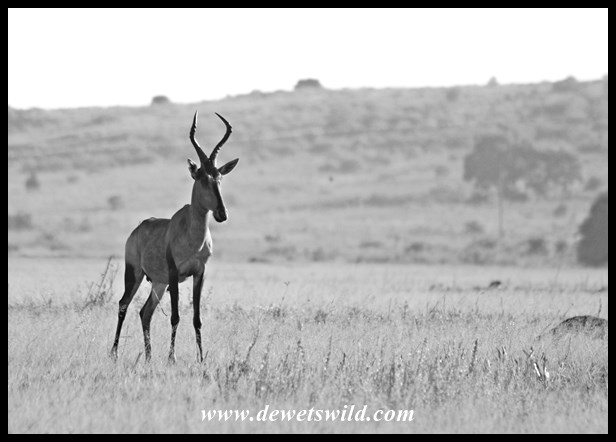
Standing tall and proud, a red hartebeest surveys the Rietvlei Nature Reserve for hidden predators.
Our end-of-year 2015 holidays were absolutely packed to the brim. Apart from our ten-day visit to the Kruger National Park (read more about our time at Lower Sabie, Olifants and Shingwedzi in December), we also made day trips to five other reserves, and will be sharing photos from those (except Suikerbosrand, which we introduced in a post all of its own) daily through the month of February, in a series we call “a month of monochrome memories”.
 DeWetsWild
Hul lyk altyd so stokkerig. Ook maar n skaars bok is dit nie?
Dit is so Ineke, maar hulle is darem meer volop as die ander twee hartbeeste wat ook in SA voorkom (die tsessebe en mofhartbees).
Ek praat nou van 1968-9 toe hartebeeste nie baie gesien is nie.
Hulle is baie gewild op wildplase Ineke, en ek dink hul relatief groter getalle vandag is direk daaraan te danke.
Aaa ek sien! Ek het op Hennosrivier skool gehou en oorkant die hoofweg(van die skool af) was n proefplaas wat hartebeeste aangehou het om die vliëe wat hul eiers in skape se oë lê te bestudeer en teen middel te ontwikkel. Vliëe was baie lief vir hartebeeste dis hoekom hul dit aangehou het.(was n veeartsenynavorsing plek gewees)
Dis nou baie interresant, Ineke! Die hartbeeste, blesbokke en wildebeeste loop erg deur onder die botvliee, ek wonder wat het van daardie navorsing geword…
Dit was Merck Sharp & Dohme se navorsingsentrum. Glo nie hul is meer daar nie as ek so kan onthou het die maatskappy een of ander probleem gehad met hul medisyne doerdie tyd.
Pragtig
Dankie Tina!
I’ve been to Hartebeespoort – I had no idea that a Hartebeest was a type of animal. Now I know. Thank you.
Glad we could help you make sense of that place name, Nicola!
They always look to me like they didn’t get put together quite right. 🙂
That’s true Pat!