Kobus ellipsiprymnus
The Waterbuck is the largest member of the family Reduncinae, which also includes the Southern Reedbuck, Mountain Reedbuck, Grey Rhebok and several other species occurring elsewhere in Africa.

Waterbuck bull

Waterbuck cow

The waterbuck’s most characteristic feature…

Waterbuck

Waterbuck

Waterbuck youngster

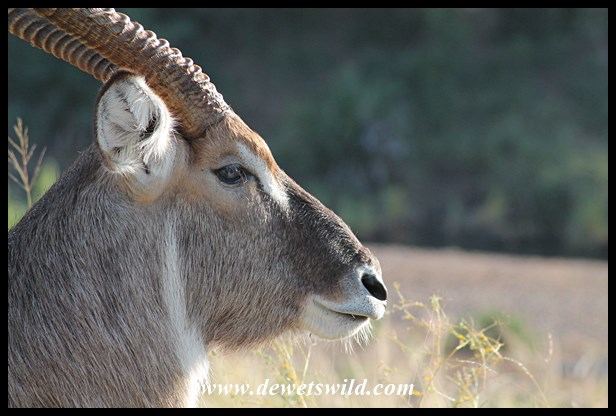
Waterbuck close-up

Waterbuck bull

Waterbuck Bull

Waterbuck Cow

Waterbuck Calf

Waterbuck herd at Transport Dam

Waterbuck close-up (photo by Joubert)

Waterbuck youngsters

Waterbuck

Waterbuck Bull

Waterbuck

Waterbuck cow

Waterbuck bull

Waterbuck ewes on the S100

Waterbuck
The race occurring in South Africa, the Common Waterbuck (K.e.ellipsiprymnus) is characterised by a white circle around their tails, distinguishing them from the Defassa Waterbuck (K.e.defassa) which has a solid white patch on their posteriors. These shaggy antelope weigh up to 270kg and adult bulls are up to 1.7m high at the shoulder. The gracefully curved horns of the bulls can reach a meter in length.

Waterbuck cow

Waterbuck bull

Waterbuck cows

Waterbuck bull

Waterbuck bull

Waterbuck bull

Waterbuck at the Mapilini stream just north of Nkumbe

Waterbuck

Waterbuck cow

Showing just how the waterbuck got its name!

Waterbuck bull

Wet waterbuck

Waterbuck

Waterbuck

Waterbuck

Waterbuck

Waterbuck Bull

Waterbuck cows and calves

Waterbuck Bull on the bank of the Sabie

Waterbuck herd on the banks of the Pioneer Dam near Mopani

Waterbuck Bull

Waterbuck

Waterbuck bull(seye)

Waterbuck bull

Waterbuck herd in the eMfabeni Swamp

Waterbuck

Waterbuck family

Waterbuck

Waterbuck

Waterbuck

Waterbuck cows

Waterbuck

Waterbuck
As their name suggests, the waterbuck is seldom found far from a permanent water source, requiring to drink around 9 liters of water daily. Waterbuck inhabit open savannah, grasslands, floodplains, marshes and reedbeds, where they feed predominantly on long grass. They occur in mixed herds with up to sixty members, though normally much smaller. Most calves are born in the rainy season, and remain hidden for up to four weeks before joining their maternal herds. When pursued by predators, waterbuck will often take refuge in deep water, being good swimmers. They’re a favourite prey of lions, though calves fall victim to all of Africa’s large predators, and have a life expectancy up to 18 years.

Waterbuck cow and calf

Waterbuck bull

Waterbuck cow

Waterbuck bull

Waterbuck bulls

Waterbuck calf

Waterbuck

Waterbuck calf

Waterbuck among the spiderwebs

Waterbuck drinking at Zincakeni Dam

Waterbuck

Waterbuck

Waterbuck

Waterbuck

Waterbuck

Waterbuck calves

Waterbuck cow

Dueling Waterbuck Bulls in the Nshawu Vlei (marsh) near Mopani in the Kruger National Park

Waterbuck bull

Waterbuck herd

Waterbuck bull (photo by Joubert)

Waterbuck bull

Waterbuck trio

Waterbuck bulls

Waterbuck herd

Waterbuck

Waterbuck cow

Waterbuck in the mist

Waterbuck bull

Waterbuck bull
The waterbuck is one of South Africa’s most common and well-known antelope, occurring naturally in most of the Northern and Eastern provinces and introduced widely outside its natural range on private land. The biggest population occurs in the Kruger National Park, with sizeable herds also at Ithala Game Reserve, Pilanesberg National Park and the iSimangaliso Wetland Park, among the many private and public protected areas in which they can be found. It is also widespread in the rest of Africa, with the IUCN estimating a total population of around 200,000 for the continent.

Waterbuck Bull

Young Waterbuck bull

Waterbuck bull

Young Waterbuck bull

Waterbuck youngsters

Young Waterbuck rams

Waterbuck

Waterbuck

Waterbuck bull

Waterbuck calf

Waterbuck

Waterbuck with oddly shaped horns

Youngish Waterbuck bull

Waterbuck

Waterbuck on their way to Orpen Dam

Waterbuck at Nsemani Dam

Waterbuck

One of the hides at Vogelfontein in Nylsvley Nature Reserve, with waterbuck in the foreground

Waterbuck cow

Waterbuck bull

Waterbuck visiting Tlopi Tented Camp

Waterbuck

Waterbuck

Waterbuck calf

Waterbuck

Waterbuck

Waterbuck

Waterbuck

Waterbuck

Waterbuck

Waterbuck

Waterbuck

Waterbuck

Waterbuck

Waterbuck

Waterbuck (photo by Joubert)

Waterbuck

Waterbuck

Waterbuck bull

Waterbuck bull

Waterbuck cow and calves





 DeWetsWild