Along came the 1st of May, and we had another long drive southwards from Orpen to Berg-en-Dal Rest Camp, in the far south-west corner of the Kruger National Park. The three nights we’d spend at Berg-en-Dal would conclude our autumn visit to the Park, and though the thought that our time in Kruger was coming to an end weighed heavy on our minds, we were looking forward to finding out what was still lying in wait for us.
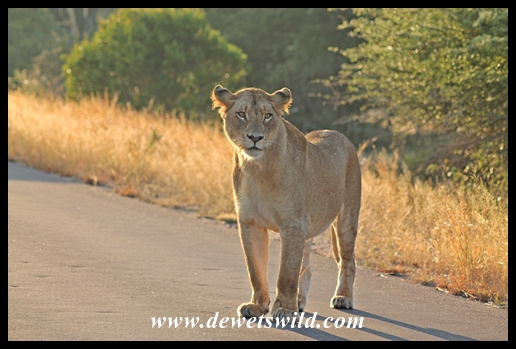
Lions between Orpen and Satara
As expected, we had wonderful sightings along the way and we enjoyed a nice lunch with good friends at the Skukuza Golf Club.


We’ll dedicate a special post to Berg-en-Dal soon, but wanted to include some photos of the camp and our accommodation (Wielewaal Cottage, #26) as a little appetiser.
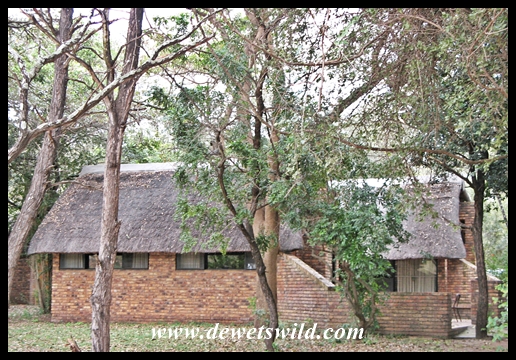
Wielewaal Cottage

Educational displays in the Rhino Hall
Apart from the wonderful array of wildlife in the Berg-en-Dal area, it is one of the most scenic parts of the Kruger Park.


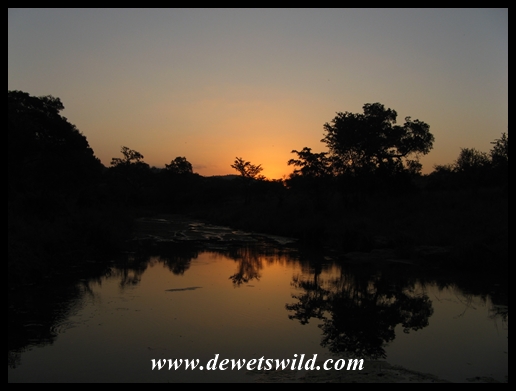
Berg-en-Dal sunset
Taking a morning drive to the Biyamiti weir turned out to be one of our most enjoyable drives of the trip.


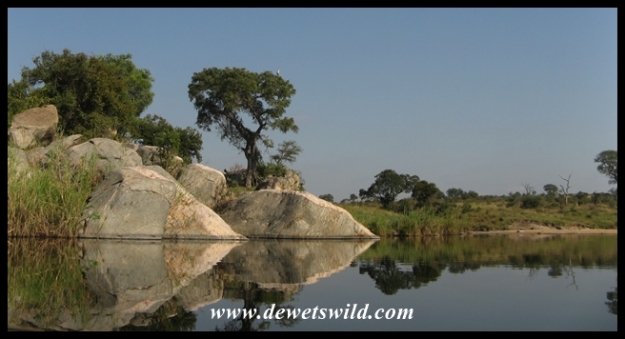
Biyamiti Weir is a beautiful photography spot
How Marilize managed to spot this boomslang at a distance of about 50 metres still has me amazed!
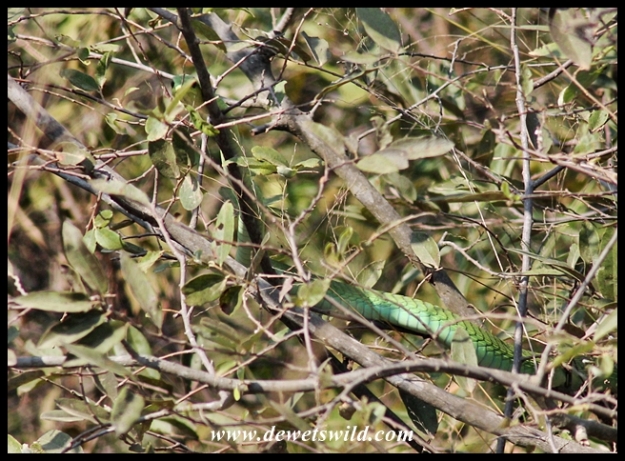
Can you spot the snake?
In camp, the Rhino Trail offers up close-and-personal encounters with a variety of wildlife; big and small, furry and feathery.


Time for one final afternoon drive:


And as it often does, Kruger keeps the best for last. Heading back to camp on our final afternoon, with the sun almost at the horizon, we come across a pack of wild dogs in the road, one of them heavily pregnant. These are among Africa’s rarest animals, and it was indeed a very special treat to have such a close encounter with these top predators.


It was the morning of the 4th of May and our autumn 2014 visit to the Kruger National Park has come to an end.
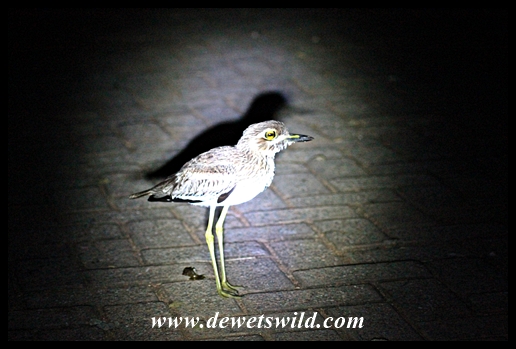
Thick-knee (Dikkop) in camp
On the way to Malelane Gate we had a splendid sighting of more hyenas in the very early morning.
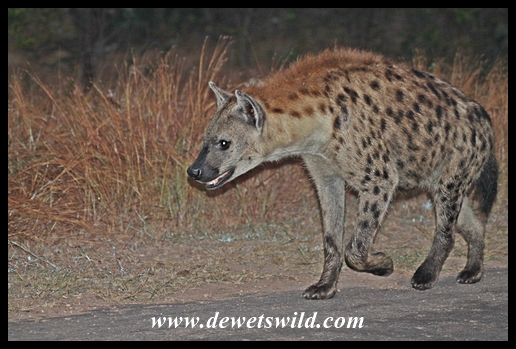
Spotted hyena on the way to Malelane Gate
Eight nights of serene peace and quiet flew past in the wink of an eye. And of course we’re counting the days till we return!
 DeWetsWild
Oh!!! I think this is one of your best posts!!! Wonderful serie of photographies!!! My congratulations once more!!!
Wow Ilargia, thank you very much!
Pingback: Autumn in Kruger: Orpen, April 2014 | de Wets Wild
I have just nominated you for the Most Inspiring Blogger Award. I really appreciate your work! http://learnmoreeveryday.wordpress.com/2014/06/03/its-an-honor-to-be-nominated/
We’re honoured that you would think of us Patti, thank you so very much! We’re so thankful to have you as one of friends here at de Wets Wild!
Pingback: It’s an Honor to Be Nominated! | Learn More Everyday
Absolutely incredible (again!) 😀
Thank you Linda, very much!
As rare as they are those wild dogs are fabulous; but that chameleon is a winner for me too!
Ah, thanks a lot Maurice! Joubert actually saw the chameleon on one of the camp’s fencewires as we were driving out, the rest of us all missed it!
Your multi posts are as welcome as anything I can think of ! 🙂 Now, tell me about the wild dogs: their name isn’t very specific, and yet they are really a specific breed, are they not ? A cross between a hyena and a wild dog, maybe, started it all off ?
Thanks again Margaret-Rose!
There’s a much more descriptive name for the African Wild Dog, though not as widely in use: “Painted Wolf”. Fits them so will, don’t you agree?
They’re 100% canine and hate hyenas to pieces…
But they all look the same, and that’s nothing like domesticated dogs … Am I being dumb ? I think I am.
No, you are absolutely correct Margaret-Rose. They’re absolutely pure-bred and I’ve never heard of them crossing with domesticated dogs. In fact, domestic dogs are part of the reason why the ‘painted wolves” are so rare, as they transmit all kinds of diseases to them.
Researchers use the patterns on their bodies to distinguish individuals, as the blotches are as unique from one another as our fingerprints are.
OK .. then from now on I shall look upon the nomenclature of ‘wild dog’ in exactly the same way as if it were ‘black rhino’.
🙂
MANY thanks for your inpit !
THANK YOU Margaret-Rose!
Love the photos.. a special area of the park… but the road back from Malalane to Nelspruit with the “stop and go” is a pain in the you know where…
Thanks Bulldog!
A “local” shared a very nice alternative road with us to get past those roadworks – via the Boulders Pass (turns off the N4 just before and after the Crocodile Gorge and only a few kilometres longer, with absolutely gorgeous scenery)
Ok so you know about it then… the old Kaap Maiden road… I returned from the Talking Turf on that road, a friend followed me to where I turned off, but did not want to take the road… I was safely back in Nelspruit and phoned him, he was still in the queue and couldn’t even see the stop-n-go… my time one hour from Leopard Creek to Nelspruit, his time 3.5 hours …
It’s a lovely (in scenic terms) piece of road, isn’t it Bulldog?
It is a pity one can’t stop in some places, the photo ops are perfect …
Pragtige foto’s
Baie dankie Rondomtaliedraai, en welkom hier by ons!
What an experience! Just by looking at these pictures, I feel excited and nervous. 😉
We’re so glad to know that we could bring you a little bit of the Kruger’s “sense of place” Helen, thank you so much!
Amazing! I love tagging along with you on your wonderful trips!
And we love sharing our experiences with enthusiastic nature-lovers like you Patti! Thanks for the support!
Beuatiful wildlife photos as always.
Thanks for the thumbs-up Imelda!