Equus quagga
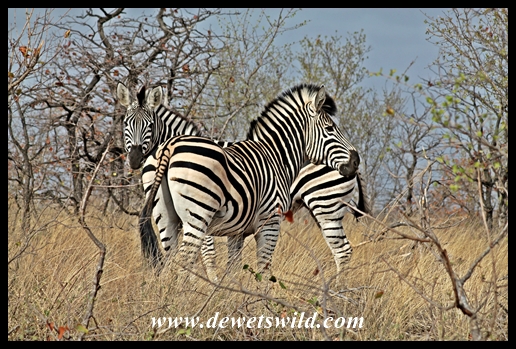
The photogenic plains zebra is one of Africa’s most familiar and popular large game animals and they occur in good numbers in protected areas almost all over South Africa.

Plains Zebra

Plains Zebra

Plains Zebra

Plains Zebra

Plains Zebra

Plains Zebra on the move

Plains Zebra

Plains Zebra

Plains Zebra

Plains Zebra

Plains Zebra stallion, sporting battle scars

Plains Zebra

Plains Zebra

Plains Zebra

Plains zebra

Plains Zebra

Plains Zebra

Plains Zebra
They occur in small and relatively stable family groups of up to 30 animals, consisting of a dominant stallion, up to nine mares and their foals of various ages. Young stallions are kicked out of their maternal groups at about the age of three years, and then band together in bachelor groups. Larger groups, that sometimes number into the thousands, are aggregations of these family and bachelor groups. Adults are normally very protective of the foals, though stallions will often kill foals when they take over a family group from another stallion.

Plains Zebras

Plains Zebra

Plains Zebra

Plains Zebras

Plains Zebras

Plains Zebras

Plains Zebras

Herd of Plains Zebra on the move

Plains Zebra

Plains Zebra

Plains Zebra

Plains Zebra

Plains Zebra

Plains Zebra

Plains Zebra

Plains Zebras

Plains zebras

Plains Zebra

Plains Zebras

Plains Zebras

Plains Zebra

Plains Zebra

Plains Zebras

Plains Zebra

Plains Zebra

Zebra foal

Plains Zebras

Plains Zebra on the run

Plains Zebras

Plains Zebras drinking at Zincakeni Dam
Plains zebra inhabits open grasslands and bushveld and avoid densely vegetated areas. They are extremely dependant on water and need to drink daily, and subsists almost exclusively on a diet of grass.

Plains Zebras

Plains Zebras

Plains Zebras drinking at a waterhole in Mapungubwe National Park

Plains Zebra

Plains Zebra (Photo by Joubert)

Plains Zebra

Plains Zebra mare and newborn foal

Plains Zebras in Mapungubwe National Park

Plains Zebra

Plains Zebras

Plains Zebra searching for fresh green shoots

Plains Zebra

Plains Zebra close-up

Plains Zebra mare and foal (with a photo-bombing cattle egret)

Plains Zebras

Plains Zebras

Plains Zebras fighting

Plains Zebra

Plains Zebras

Plains Zebra

Plains Zebras in Mapungubwe National Park (photo by Joubert)
Foals are born at any time of the year, though births peak around the start of the rainy season. The foals can stand and walk within twenty minutes of birth and are suckled until about 13 months of age. Adults weigh between 220 and 340kg (stallions being only slightly heavier than adult mares) and stand up to 1.4m high at the shoulder.

Plains Zebras

Many of Mokala’s Plains Zebras have fewer stripes that animals in most other populations

Plains Zebra

Plains Zebra

Plains Zebras

Zebra foal

Plains Zebras

Plains Zebra

Plains Zebra

Many of Mokala’s Plains Zebras have fewer stripes that animals in most other populations

Many of Mokala’s Plains Zebras have fewer stripes that animals in most other populations

Plains Zebra

Plains Zebra

Many of Mokala’s Plains Zebras have fewer stripes that animals in most other populations

Plains Zebra

Plains Zebra

Plains Zebra

Plains Zebra

Plains Zebra mare and foal

Plains Zebra foal

Many of Mokala’s Plains Zebras have fewer stripes that animals in most other populations

Many of Mokala’s Plains Zebras have fewer stripes that animals in most other populations

Plains Zebra

Plains Zebra

Many of Mokala’s Plains Zebras have fewer stripes that animals in most other populations

Zebra foal

Many of Mokala’s Plains Zebras have fewer stripes that animals in most other populations

Plains Zebras

Many of Mokala’s Plains Zebras have fewer stripes that animals in most other populations

Plains Zebra (photo by Joubert)

Many of Mokala’s Plains Zebras have fewer stripes that animals in most other populations

Plains Zebra

Zebra foals mutual grooming

Plains zebra

Plains Zebra

Plains Zebra foal drinking

Plains Zebra family

Plains Zebra

Plains Zebras

Plains Zebras

Zebras in the rain…

Plains Zebra mare and foal
Zebras are a favourite prey of lions and spotted hyenas, and foals also often fall prey to leopards, cheetahs and wild dogs. As a result, their life expectancy in the wild is usually below 20 years.

Thirsty Zebra foal

Plains Zebra

Plains Zebra close-up (photo by Joubert)

Plains zebra

Plains Zebra foal

Plains Zebra

Plains Zebras

Plains Zebra with unique pattern

Plains Zebra close-up

Plains Zebra mare and foal

Plains Zebra and White Rhino sharing a waterhole

Plains Zebra (photo by Joubert)

Zebra huddle (photo by Joubert)

Plains Zebra foal

Plains Zebras

Plains Zebra trying to trip an opponent

Zebras and marulas outside Satara

Thirsty baby zebra

Plains Zebra drinking

Plains zebra

Two very dusty zebras (photo by Joubert)

Plains Zebras

Plains Zebra stallion

Plains Zebra (photo by Joubert)

Plains Zebra stallion

Plains Zebras on the run

Plains Zebra

Plains Zebra Trio (photo by Joubert)

Plains Zebras

Plains Zebra stallion close-up (photo by Joubert)

Plains Zebra

Plains zebra and foal

Plains Zebra

Loving Zebras

Plains Zebra mare and foal (photo by Joubert)

Plains Zebra playing in the mud

Plains Zebra

Plains zebra

Plains Zebra

Plains Zebra

A dazzle of zebra on the plains south of Pafuri

Plains zebras drinking from Grootvlei Dam

Plains Zebra

Plains Zebra foal

Plains Zebra

Plains Zebra

Plains Zebras

Plains Zebras on the aptly named Kwaggasvlakte (photo by Joubert)

Plains Zebras gathering at a waterhole in the Shingwedzi River

Plains Zebra

Zebras at sunrise

Plains Zebra

Plains zebra

Plains Zebra

Plains Zebra

Huge herds of plains zebra congregating along the Mnondozi stream

Plains Zebras

Plains Zebras (photo by Joubert)

Plains Zebras (photo by Joubert)

Plains Zebra

Plains Zebra

Plains Zebra

Plains zebra

Plains Zebra

Plains Zebra smile

Plains Zebra

Plains Zebra

Plains Zebra

Plains Zebras

Plains Zebra stallion (photo by Joubert)

Plains Zebras

Plains Zebra

Heavily pregnant Plains Zebra mare

Plains Zebra portrait

Zebra altercation

Plains Zebras

Plains Zebra (photo by Joubert)

Plains Zebra

Plains Zebra

Plains Zebra

Another energetic zebra

Plains Zebra

Plains Zebras

Playful Plains Zebra stallion

Plains zebra

Plains Zebras

Plains Zebra with muddy socks

Huge congregation of zebra at Mooiplaas

Plains Zebra foal getting a tail in the face

Plains Zebra (photo by Joubert)

Plains zebra mare and foal

Plains Zebra (photo by Joubert)

Plains Zebra foals

Plains Zebra mare and foal

Plains Zebra female and foal

Plains Zebra altercation

Plains Zebras

Plains Zebra on a hillside

Plains Zebra
One of the most inspiring conservation projects in South Africa is the breeding of zebras that resemble the extinct quagga (Equus quagga quagga), the southernmost subspecies of the plains zebra that was hunted to extinction in the late 1870’s, with the last specimen of this uniquely South African species of horse, a mare, dying in distant Amsterdam Zoo in 1883. Over a century later however it was realised, through DNA analysis, that the quagga was a localised race of the still extant plains zebra, and the Quagga Project came into being to try and bring them back through selective breeding. With each subsequent generation showing more and more quagga-like characteristics, one day we may again see true-to-form quaggas roaming their native country in vast numbers.

Plains Zebra with very Quagga-like markings in the Nuwejaars Wetland

One of the Nuwejaar’s Wetland’s prized “quaggas”

Three of the Nuwejaar’s Wetland’s prized “quaggas”

Three of the Nuwejaar’s Wetland’s prized “quaggas”

A herd of “quaggas” mixing with buffaloes – a sight not seen in this part of the world for hundreds of years!

A herd of “quaggas” mixing with buffaloes – a sight not seen in this part of the world for hundreds of years!

A herd of “quaggas” mixing with buffaloes – a sight not seen in this part of the world for hundreds of years!

A herd of “quaggas” mixing with buffaloes – a sight not seen in this part of the world for hundreds of years!

Three bachelor “quaggas” at the Nuwejaars Wetlands

Bachelor “quagga” at the Nuwejaars Wetlands

Bachelor “quaggas” at the Nuwejaars Wetlands



 DeWetsWild
Pingback: A Quick Nature Fix at Rietvlei | de Wets Wild
Pingback: Camping fest at Satara | de Wets Wild
Pingback: Creatures Great and Small at uMkhuze | de Wets Wild
Pingback: Pilanesberg National Park: 10 – 13 May 2012 | de Wets Wild
Pingback: The staple diet… | de Wets Wild
Pingback: Exploring Golden Gate | de Wets Wild
Pingback: Dinokeng Game Reserve | de Wets Wild
Pingback: Common Ostrich | de Wets Wild
Pingback: Tsessebe | de Wets Wild
Pingback: Mokala National Park | de Wets Wild
Pingback: Dazzling in the Dust | de Wets Wild
Pingback: Blue Wildebeest | de Wets Wild
Pingback: Lower Sabie Rest Camp, Kruger National Park | de Wets Wild
Pingback: Beautiful Bontle | de Wets Wild
Pingback: Introduction to Umlalazi Nature Reserve | de Wets Wild
Pingback: A month of monochrome memories: Dry Stripes | de Wets Wild
Pingback: A month of monochrome memories: Close-up Zebra | de Wets Wild
Pingback: A month of monochrome memories: Stripes | de Wets Wild
Pingback: Common Impala | de Wets Wild
Pingback: Victory | de Wets Wild
Pingback: Getting to Pafuri | de Wets Wild
Pingback: A new treasure unveiled in Kruger; the Pafuri Border Camp | de Wets Wild
Pingback: Heritage Day at Ithala | de Wets Wild
Pingback: Monochromatic | de Wets Wild
Pingback: A Lazy Sunday At Rietvlei | de Wets Wild
Pingback: Sweni Wilderness Trail | de Wets Wild
Pingback: Kgaswane Mountain Reserve | de Wets Wild
Pingback: Loskop Dam Nature Reserve | de Wets Wild
Pingback: The month of love is drawing to a close… | de Wets Wild
Pingback: Summer on the Western Shores of Lake Saint Lucia | de Wets Wild
Pingback: Fight for dominance | de Wets Wild
Pingback: Marvelous Mooiplaas | de Wets Wild
Pingback: Dreamy | de Wets Wild
Pingback: The Fray | de Wets Wild
These are such amazing animals-beautiful photographs!
I’m convinced that it is impossible to mess up a zebra photograph, they’re just too photogenic! Thanks for the compliment Meg!
Pingback: Cape Mountain Zebra | de Wets Wild
Great shots and very valuable info!
Thanks Paula – Nice to see you around here again!
Some great images, love the eye shot!!!
Thanks a lot Derek!
You just can’t see too many photos of zebras, can you. Viewing gets a bit compulsive. Lovely shots.
Thanks Tish! We love taking photos of zebras, but I’m sure you knew that by now :-P!
Your photos are gorgeous! How blessed you are to be close to these beautiful creatures. 🙂
We really are fortunate Imelda, and we try to make the most of it! Thanks also for the kind comment!
Love these photos! Zebras (pyjama donkeys, as I call them) are my favourite animal EVER 🙂
Glad we could deliver a special treat for you then! Thanks for the kind compliment, as always :-)!
Very informative and fascinating strips. I’ve seen a donkey with strips. I wonder if there was interbreeding. Thank you.
That may well be Seeker, you do see donkeys (or horses) and zebras interbreeding from time to time but mostly in more unnatural settings, like on farms or in zoos. The offspring are called “zonkeys” :-P.
http://en.wikipedia.org/wiki/Zonkey
Thank makes sense. Thanks for the link
Yes, I have been very near to zebras, and they did not get scared….I was told each one has different stripes patterns,…That way the foals can recognize them….Do you know if that is true?
It is absolutely true Ilargia – each zebra’s stripe pattern is as unique as human fingerprints are!
Thanks for visiting us again here at de Wets Wild.
Thanks to you!!! I love Reading your posts!!!
Have a nice weekend!
Thank you for the very kind words Ilargia, we really appreciate it!
We wish you a lovely weekend as well!
Oulik, die pajama donkies!! 😉
Beslis AJ, veral die vulletjies!
Gosh, these zebras are absolutely fascinating! Nature is an amazing artist. I am simply stunned at how beautiful they are and how amazing your photos are. It looks like you got pretty close to them to take the photos. Were they not afraid of you?
Thank you very much for the kind comments Time Collage!
Zebras are less skittish than most antelope for instance, and you’ll be amazed how close you can get to them, especially when you’re in a vehicle and they can’t recognise the human form.
I love following you, but being a horse trainer, of course this is my all time favorite. Wonderful.
Glad we could deliver something right up your alley Anna!
Gorgeous shots. 🙂
Thank you very much!
Group in thousands, wow! And stallions often kill foals… they are aggressive. Fascinating background. Thank you for the post!
Thanks for paying us yet another visit Amy, and glad to hear that you like the additional information we included together with the photos!
What beautiful photos. I think zebras are fascinating…amazing 🙂
Thanks for the compliment Elizabeth!
They are such beautiful creatures. Lovely photos!
Thanks Janaline! We agree wholeheartedly that zebras are beautiful animals!