Early one morning during our recent visit we found a sizable herd of Sable Antelope on the Kniekie Loop in the Mokala National Park. The dominant bull was particularly interested in one cow and we had a front-row seat as he turned on the romance.
Sable Antelope Bull
Sable Antelope Bull
Sable Antelope Bull
Sable Antelope Bull and Cow
Sable Antelope calf
Here’s a short video showing the Sable bull courting his mate.
No mention of Mokala National Park would be complete without bringing up the amazing diversity of mammals, large and small, that find sanctuary there. Several of them are species rarely encountered in most of our other reserves and it is not for nothing that Mokala’s tagline is “where endangered species roam”.
Blue Wildebeest
Buffalo
Buffalo
Eland
Eland
Eland
Eland
Gemsbok
Gemsbok
Gemsbok
Gemsbok
Gemsbok
Giraffe
Giraffe
Giraffe
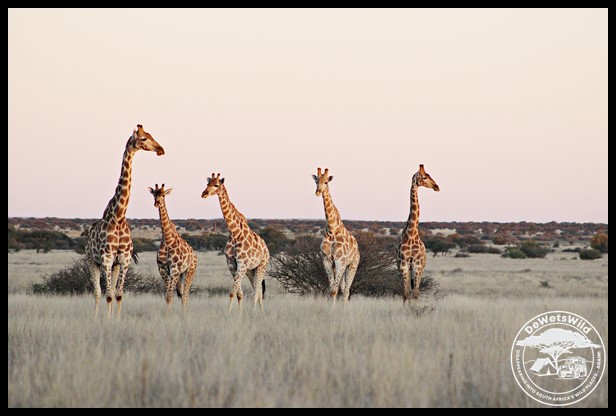
Giraffes
Giraffes
Giraffes
Kudu
Kudu
Kudu
Kudu
Kudu calf
Plains Zebra
Plains Zebras
Plains Zebras
Roan Antelope calf – such long ears!
Roan Antelope
Roan Antelope
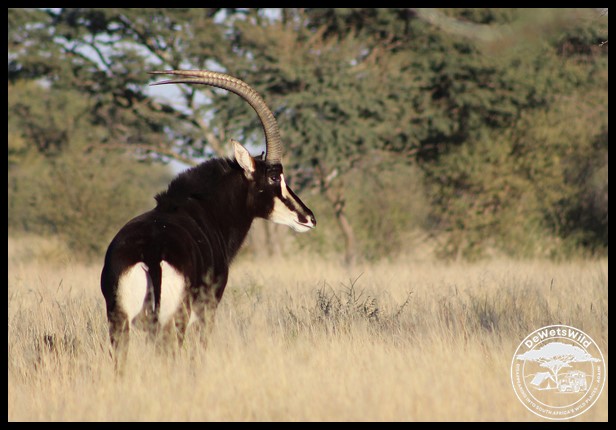
Sable Antelope
Sable Antelope
Slender Mongoose
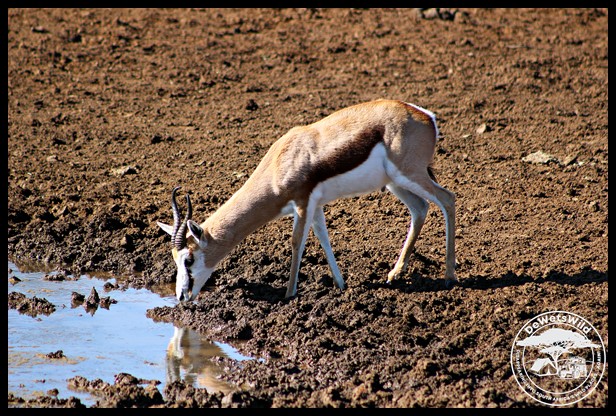
Springbok
Springbok
Springbok
Springbok
Springbok
Springbok
Steenbok
Steenbok
Tsessebe
Tsessebes
Vervet Monkey
White Rhinoceros
White Rhino cow and calf
Come along as we go on a game drive through the Mokala National Park:
Almost smack in the middle of the Mokala National Park you will find the Stofdam Hide; an excellent place to stop for a while, stretch your legs and wait for the wildlife to come to you instead of driving around to find them.
Walkway to Stofdam Hide
The Stofdam Waterhole
Acacia Pied Barbet
Pin-tailed Whydah
Egyptian Goose
Red-billed Quelea
Red-billed Queleas
Red-billed Firefinch
Red-eyed Bulbul
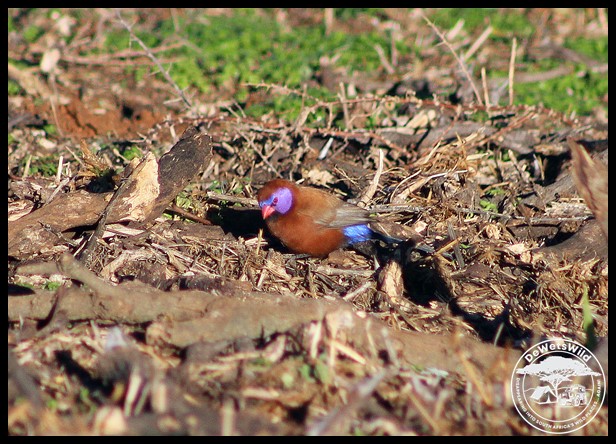
Violet-eared Waxbill (female)
Neddicky
Blue Waxbill
Black-faced Waxbill
Black-faced Waxbills
Black-faced Waxbill
Springbok
Chacma Baboon
Grey-headed Sparrows
Common Duiker
Fiscal Flycatcher
Orange River White-eye (thank you Don Reid for helping with the ID!)
Green-winged Pytilia
Vervet Monkey
Red-billed Firefinch
Cape Wagtail
Cape Glossy Starling
White-backed Mousebird
Black Springbok
Springbok
Springbok
Female Red-headed Finch
Impala
Warthog
Yellow Canary
Yellow Canary
This is a little compilation of sightings Hannes and I had one morning at Stofdam while visiting Mokala earlier in June.
We’ll soon be announcing a very exciting spring-time tour to the Mokala National Park – and we’re sure to spend some time at Stofdam on that trip! Do keep an eye on DeWetsWild’s facebook page so that you don’t miss out!
The Mokala National Park has a very healthy population of birds, and even in winter with all the summer migrants having left for warmer parts of the globe Hannes and I still managed to tick 66 species without much effort during our recent 4-night stay.
Ant-eating Chat
Burchell’s Sandgrouse
Burchell’s Sandgrouse
Burchell’s Sandgrouse
Cardinal Woodpecker
Common Scimitarbill
Familiar Chat
Gabar Goshawk
Kalahari Scrub Robin
Kalahari Scrub Robin
Mountain Wheatear
Pale Chanting Goshawk
Rock Martin
Scaly-feathered Finch
Violet-eared Waxbill male
Violet-eared Waxbill pair
Yellow Canary
Yellow-bellied Eremomela
If you are a bird lover you are in for a treat, because we’ll be sharing even more of Mokala’s bird life tomorrow.
The scenery in Mokala National Park seems purpose-built for a television documentary on Africa, and I might be biased but there’s no continent with more beautiful sunrises and sunsets than ours.
Mokala Gold
Mokala Gold
Mokala Gold
Roan Antelope in silhouette
Camel Thorn
What a sunrise!
Brightness in winter
Mokala’s plains
Mokala’s plains
Camel Thorn Tree with Sociable Weaver nest
Gemsbok on the plains
An Aardvark was busy here digging up the road!
Kniekie Loop
Tsessebe silhouette
Umbrella Thorn silhouette
Come take a drive with us through this beautiful national park:
On the last night of our visit to Mokala National Park last week I found this Bibron’s Thick-toed Gecko on the floor of the bathroom in Lilydale Rest Camp’s Chalet #1. I didn’t question it about its intentions but I did carry it outside to more suitable habitat. The towel was a very necessary precaution; she’s a biter!
Bibron’s Thick-toed Gecko found at Lilydale in the Mokala National Park
Bibron’s Thick-toed Gecko found at Lilydale in the Mokala National Park
Bibron’s Thick-toed Gecko found at Lilydale in the Mokala National Park
Bibron’s Thick-toed Gecko found at Lilydale in the Mokala National Park
Bibron’s Thick-toed Gecko found at Lilydale in the Mokala National Park
This little Chestnut-Vented Warbler came to welcome us to Lilydale’s Chalet 1 immediately on our arrival – Hannes and I hadn’t even unpacked the car yet! Invariably it would appear in a flash every time we stepped outside. So habituated was it that it would peck crumbs from beneath our hands where we sat eating sandwiches on the deck outside the chalet, offering wonderful opportunities for up-close views of a bird species that is notoriously frustrating to photograph because it never sits still!
This little Chestnut-vented Warbler was a frequent visitor to the deck in front of our chalet at Lilydale in the Mokala National Park
This little Chestnut-vented Warbler was a frequent visitor to the deck in front of our chalet at Lilydale in the Mokala National Park
This little Chestnut-vented Warbler was a frequent visitor to the deck in front of our chalet at Lilydale in the Mokala National Park
This little Chestnut-vented Warbler was a frequent visitor to the deck in front of our chalet at Lilydale in the Mokala National Park
This little Chestnut-vented Warbler was a frequent visitor to the deck in front of our chalet at Lilydale in the Mokala National Park
This little Chestnut-vented Warbler was a frequent visitor to the deck in front of our chalet at Lilydale in the Mokala National Park
This little Chestnut-vented Warbler was a frequent visitor to the deck in front of our chalet at Lilydale in the Mokala National Park
I am fresh back from a mid-week visit to the Mokala National Park in our Northern Cape Province with friend and colleague Hannes Rossouw.
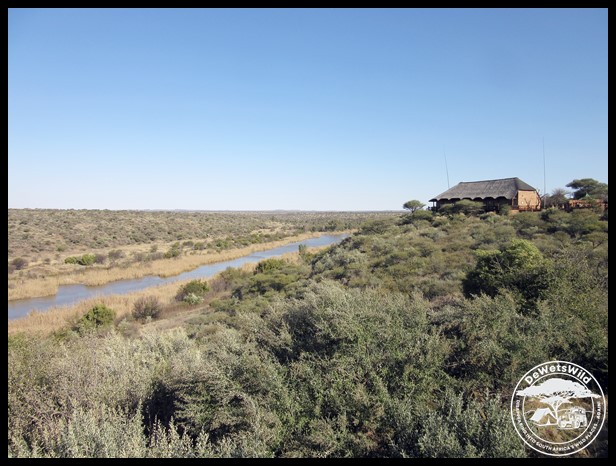
We stayed in the beautifully situated Lilydale Rest Camp, where our chalet – # 1 – had a lovely view over the Riet River. Truth be told, all the chalets in the camp as well as the dining room behind reception have equally good views of the fast-flowing stream down below.
Chalet #1 in Lilydale Rest Camp
Chalets in Lilydale Rest Camp
Lilydale’s reception building
Lilydale might be built to provide a comfortable stay to human visitors, but it seems to be even more popular with Mokala’s wildlife – from tiny birds to kudus paid us a visit during our stay, and I’ll be telling you more about three of the cutest visitors in the next three posts on DeWetsWild.
Warthog family enjoying the green grass next to Lilydale’s swimming pool
Rock Hyraxes sunning themselves on a ridge below our chalet
This little Chestnut-vented Warbler was a frequent visitor to the deck in front of our chalet at Lilydale in the Mokala National Park
A Small-spotted Genet came by in the early evenings after we finished braaiing
This is one of two Kudu bulls that regularly ventured into camp after dark
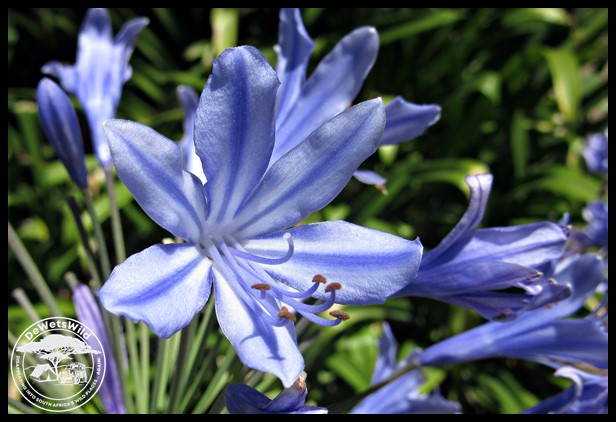
The genus Agapanthus, known as Blue Lily, Star of Bethlehem, Lily of the Nile and African Lily in different parts of the world, is a family of flowering plants consisting of between 6 and 10 species that occur naturally in southern Africa, though they’ve been spread to nearly all corners of the world due to their popularity as garden plants. These are hardy plants, relatively pest resistant and easily propagated. Agapanthus plants grow to about 1m tall. It contains chemical compounds that are useful for a wide range of medical conditions, ranging from inflammation to coughing, explaining why it is so widely used in traditional medicine and folklore.
















 DeWetsWild