
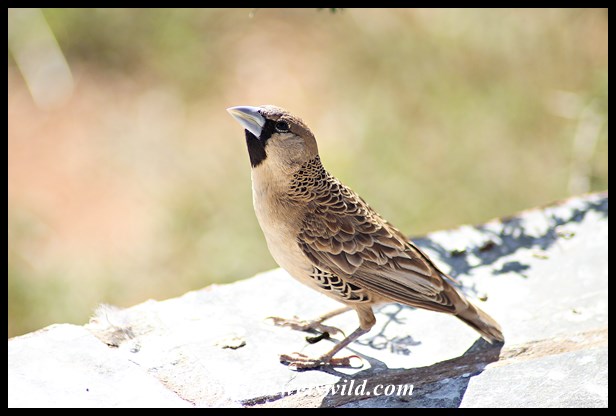
Mokala National Park owes its diversity of bird species both to its location at the transition between South Africa’s arid west and wetter eastern regions, as well as the diversity of habitats protected within its borders. To date, more than 200 species of birds have been recorded within this relatively new Park and we, not considering ourselves very proficient birders (yet) managed to tick a respectable 70 of those. These are just a few of the feathered friends we made at Mokala during our visit in April 2018.

Ant-eating Chat

Ashy Tit

Black-faced Waxbill

Blacksmith Lapwings protecting their eggs against two wildebeest

Black-throated Canary

Black-winged Stilts

Brown-throated Martin

Brubru

Buffy Pipit

Burchell’s Sandgrouse (male)

Cape Sparrow female

Double-banded Courser

Crowned Lapwing

Egyptian Goose chasing South African Shelduck

Egyptian Goose chasing South African Shelduck

South African Shelduck (male)

Familiar Chat

Fiscal Flycatcher

Cape Glossy Starling

Shy Golden-tailed Woodpecker

Grey-backed Sparrow Lark (male and chick)

Helmeted Guineafowl in flight

Kalahari Scrub Robin

Marico Flycatcher

Mountain Wheatear (male)

Namaqua Dove (male)

Ostrich female

Ostrich male

Pale Chanting Goshawk

Pied Crow

Red-billed Firefinch

Red-crested Korhaan

Red-headed Finch (male)

Sabota Lark

Scaly-feathered Finch

Common Scimitarbill

Southern Masked Weaver (female)

Sociable Weaver

Sociable Weaver nest

White-browed Sparrow Weaver

Spike-heeled Lark

African Spoonbill

Three-banded Plover

Cape Wagtail

White-backed Vulture W428

Yellow-billed Hornbill

Yellow Canary (Male)
If you’d like to learn more about Mokala National Park, why not have a read through the detailed post we did about the Park in 2016.










 DeWetsWild