Tag Archives: travel

Clouded Mother-of-Pearl Butterfly

This wonderful present came my way while I was taking a walk through Satara Rest Camp on Christmas Day last year when we were visiting the Kruger National Park for our summer holiday. Looking this butterfly up in my guide book i thought “What a beautiful name for a beautiful butterfly!

Protogoniomorpha (Salamis) anacardii

The Clouded Mother-of-Pearl is a medium-sized butterfly with a wingspan of up to 7cm. They prefer dense habitats ranging from coastal and montane forests to riverine galleries, and in South Africa are found through coastal Kwazulu-Natal and into the Lowveld and escarpment of Mpumalanga and Limpopo. Adults are seen throughout the year though their numbers reach a peak in late summer and early autumn. Their flight may seem ungainly but they’re exceptionally quick when troubled – this one gave me quite the walk-around through camp trying to take its picture. Clouded Mothers-of-Pearl love sitting exposed on prominent perches such as leaves and flowers, apparently basking in the sun – behaviour this one also displayed at least long enough so I could get a few photographs.

While visiting Cape Vidal in the iSimangaliso Wetland Park in March 2022 we again encountered this beautiful butterfly, though this time a really tattered specimen.

Satara Summer 2021 – Invertebrate Diversity

With the Kruger National Park as vast as it is, and with human impacts kept to an absolute minimum, invertebrate life can thrive to an extent that is no longer possible in most of our “developed” society. Summer is a good time to see these fascinating creatures, as our visit in December 2021 proved yet again.

Beetles form the largest and most diverse order in the entire animal kingdom, and there are thousands of beetle species in the Kruger National Park.

While perhaps not as numerous as beetles, the various kinds of Butterflies gets lots of attention thanks to their delicate beauty.

Why exactly Moths are often regarded with such disdain compared to their relatives the butterflies I can’t comprehend, as some of these night-flying creatures are equally beautiful.

Our dislike of Flies is a lot easier to understand, though only a very few of them are actually a nuisance to humans and they all perform a wide variety of vital functions in the ecosystem.

We were lucky to see several “armies” of Matabele Ants on the hunt:

Another diverse insect group, with equally diverse survival strategies, are the Bees and Wasps.

My aptitude at identifying the various kinds of Damselflies and Dragonflies is still sorely lacking.

Web-spinners are a small and little known insect order.

A group of Gregarious Spotted Cockroaches scrambling up the wall of the laundry building at Satara was a welcome distraction on washing day.

So scary and large was this Bark Katydid crawling up a tree in Satara that you’d have to forgive me for the photograph not being entirely in focus…

Bark Katydid

Millipedes are such a familiar group of animals, and yet every time we visit the Kruger Park we are astounded to see just how many unique kinds find a home there!

We end of this post with a group that makes many peoples’ skins crawl: Spiders. Being responsible in no small part for controlling the numbers of all the other invertebrates, the entire ecosystem would collapse in their absence.


Satara Summer 2021 – Reptilian Encounters

There’s just something about reptilians that grabs our attention. Maybe it’s the fact that they’re cold-blooded, or covered in scales, or because they remind us of dinosaurs and dragons. Whatever the case might be, if you are as fascinated by reptiles as we are then the Kruger National Park, home to at least 118 species of reptiles, should definitely be on your list of places to visit and perhaps this collection of reptile photos taken during our visit in December 2021 is all that is needed to convince you.

Of course, there’s probably not many people who think of Flap-necked Chameleons as being dangerous. These masters at camouflage whose eyes can move independently to see almost every inch of their surroundings are always a welcome sight. Easy to notice when they cross a road or pathway, they quickly disappear from sight as soon as they reach the vegetation on the verge.

There’s a rich variety of lizards and geckos in Kruger Park, and the best place to see them is undoubtedly inside the rest camps and picnic sites where they’re accustomed to having people around.

Of course we can’t forget Satara’s show-off Agama King we posted about on the 22nd of January!

Due to their massive size the two species of monitor lizard that occur in the Park – the Rock and Water Monitors – really are a class apart!

We were parked at a leopard sighting when Marilize noticed this Western Stripe-bellied Sand Snake in a bush next to our car. For a while we forgot all about the leopard above our heads…

Stripe-bellied Sand Snake (photo by Joubert)

Tortoises and terrapins too are sure to please the crowd. Often seen crossing the road in hot weather their endearing habit of crawling into their shell when you stop next to them never gets old. Seeing two Speke’s Hinged Tortoises mating – the female munching on flowers through the process – was an unexpected highlight of our latest visit.

To end of this post with, the fearsome Nile Crocodile. Kruger Park is home to some of the biggest specimens of these top predators you could ever imagine seeing.


Satara Summer 2021 – Brown-backed Tree Frog

A very interesting frog that we have never seen before, that is until our December 2021 visit to Satara in the Kruger National Park, is the Brown-backed Tree Frog, and these two individuals might also have remained hidden if they didn’t betray their presence with their call near where we were standing.

Leptopelis mossambicus

In South Africa, the Brown-backed Tree Frog is found in northern Kwazulu-Natal and the Lowveld and escarpment of Mpumalanga and Limpopo. They’re also found in Eswatini (previously Swaziland), eastern Zimbabwe, central and southern Mozambique and the extreme southern tip of Malawi. The IUCN lists it as being of least concern.

The Brown-backed Tree Frog inhabits moist savannas, coastal forest and mangrove swamps. During the dry season these frogs remain underground for up to 6 months, buried in the soil about a foot deep. With the first rains of summer they emerge to breed. The males then climb into bushes, reeds, shrubs and trees, up to about 1.5m high, and usually close to open water, from where they call to attract females. During this time the males may become involved in fights with one another. During mating the females deposit the fertilised eggs underneath dead leaves near the water’s edge. Here the eggs remain, developing slowly, until the next good spate of rain, during which the tadpoles wriggle out the eggs and to the water, where they then complete their metamorphosis. Adults measure about 6cm in length. Brown-backed Tree Frogs feed on a wide variety of invertebrates.

Satara Summer 2021 – Eastern Olive Toad

Another amphibian that we regularly encountered during our nocturnal walks though Satara in December 2021 is the Eastern Olive Toad, whose loud calls made it quite easy to find them.

Sclerophrys (Bufo) garmani

The Eastern Olive Toad occurs patchily from Ethiopia to South Africa and is considered to be of least concern according to the IUCN. It is a savanna species preferring areas with relatively high rainfall, and thus in South Africa is found in northern Kwazulu-Natal, eastern Mpumalanga and most of the Limpopo Province. By day these toads shelter under rocks and logs, in dense vegetation or termite mounds and around houses. They feed on almost any kind of invertebrate.

Females are considerably larger and measure almost 12cm long when fully grown. Breeding usually takes place in temporary pans and marshes, though they’ll also use garden ponds and farm dams, during spring and summer. Females may lay several thousand eggs, which hatch within 24 hours. The tadpoles complete their metamorphosis in 2 to 3 months.

These photographs of Eastern Olive Toads were not taken during our recent visit to the Kruger National Park in December 2021:

Satara Summer 2021 – Banded Rubber Frog

Whenever we experienced a rain shower during our December 2021 visit to the Satara area of the Kruger National Parkand this was a regular occurrence – the high-pitched calls of Banded Rubber Frogs quickly filled the air. Once the rain subsided we’d go looking for them around the camp and usually found at least a few individuals.

Phrynomantis bifasciatus

Banded Rubber Frogs occur from southern Somalia to Angola and South Africa. In our country specifically they’re found from northern Kwazulu-Natal, through Mpumalanga, Limpopo and Gauteng to the North West Province. The IUCN considers the species to be of least concern.

Banded Rubber Frogs inhabit savanna habitats, where they hide under rocks and logs, inside tree trunks or termite mounds, tunnels dug by other animals and even in and around houses and drains. They feed mainly on ants and termites, but will also include other invertebrates in their diet.  They breed in temporary pools and pans and other similarly shallow watery habitats after the first rains have fallen. Females lay between 300 and 1,500 eggs, which hatch after 4 days, in a mass of “jelly” that surrounds each egg, usually attached to emergent vegetation in the water. The tadpoles are gregarious and if they have sufficient food may complete their metamorphosis in 1½ to 3 months. Adults grow to about 6cm long.

Banded Rubber Frogs rarely jump, preferring to walk or run. When threatened they stiffen their legs and inflate their bodies, showing off their bright warning colouration to great effect. These warning colours should be heeded, for the Banded Rubber Frog can secrete cardiotoxic poisons through their skin which, if it gets into the skin or bloodstream in sufficient quantities can cause humans to experience painful swelling, nausea, headaches, and difficulty breathing. The poison can be deadly to smaller creatures.

These photographs of Banded Rubber Frogs were taken during a previous visit to Satara in 2019:

Satara Summer 2021 – Frogging

One of the great pleasures of our summer 2021 holidays at Satara in the Kruger National Park was searching for frogs after dark in the aftermath of the rain showers that passed over the camp regularly.

In the next three installments of de Wets Wild we’ll be taking a closer look at the Banded Rubber Frog, Brown-backed Tree Frog and Eastern Olive Toad. We’ll also feature the Sharp-nosed Grass Frog soon, and have a read here to learn more about the Southern Foam Nest Frog if you’d like.

Mozambique Tilapia

To the east of Satara, the S41 gravel road crosses several streams as it winds its way over the plains. Three of these – the Mavumbye, Gudzani and Nwanetsi – usually have water, but owing to good summer rains were flowing especially strongly when we visited during December 2021. While flowing water is always a pleasing sight (and sound), crossing these streams during this latest visit was particularly enjoyable for us as it allowed a glimpse into a facet of the Lowveld ecosystem that is pretty difficult to experience while driving around in a vehicle. With the water flowing over the causeways we were able to watch large schools of juvenile Mozambique Tilapia, as well as the occasional adult, swimming around in the pools on either side of the drifts.

Oreochromis mossambicus

Naturally the Mozambique Tilapia occurs in rivers flowing into the Indian Ocean from the Zambezi River southwards to the Boesmans River and its tributaries in the Eastern Cape of South Africa. They have however been introduced to waters outside this range, both in South Africa and elsewhere in the world, as they are a highly regarded aquaculture species. Regrettably their adaptive nature means that they often outcompete indigenous fish species for food and prime breeding locations in places where they were introduced. Ironically the IUCN considers the Mozambique Tilapia to be vulnerable in its native range due to the introduced Nile Tilapia, with which it hybridizes.

Male Mozambique Tilapia are considerably larger than the females. They grow to about 40cm in length and can weigh over 3kg, though around 1kg is more usual.

Mozambique Tilapia are very adapatable and hardy, being able to live in fresh, brackish and sea water, allowing them to exploit estuaries under the influence of the ocean tides, with water temperatures in the range from below 15ºC to 42ºC. They prefer standing or slow-flowing water. These fish have a varied diet ranging from algae and other water plants to invertebrates and even small fish.

Mozambique Tilapia breed in summer, when adult males sport a deep black body colour with a white throat. The male prepares a saucer-shaped nest on a sandy bottom in which he courts the female. After spawning, the female broods the eggs and fry in her mouth until they are more capable of looking after themselves. In this way she can produce a brood every 3-4 weeks. Young Mozambique Tilapia mature rapidly and can breed within a year of hatching. They may live for up to 11 years.

The following photographs of Mozambique Tilapia were not take during the above-mentioned trip to the Kruger National Park:


Satara Summer 2021 – In Awe Of Thunderstorms

Ever since I can remember I’ve been fascinated by the power of our African thunderstorms. And nowhere can these awesome powers of nature be appreciated more than out in South Africa’s wild places, where the view is big and wide and unpolluted by human additions to the landscape. Our trip to the Kruger National Park in December 2021 was punctuated by several of these storms as many parts of South Africa is currently experiencing a much better rainy season than we’ve had in several years.

There is however one storm that stands out above all others in our memories. In the afternoon of the 27th of December we were travelling along the S126 Sweni Road south of Satara, when dark clouds started appearing in our rearview mirrors as a thunderstorm approached from the west. We made it back to the main tarred road just in time before the first big drops started to fall. We had a few minutes to look on in awe as the dark clouds rolled up, lightning striking almost continuously, before the full might of the rain driven by a very strong wind passed over us. At times it was impossible for the car’s wipers to keep up with the deluge. We were almost back at Satara by the time the storm had passed over, heading in the direction of Nwanetsi.

Satara Summer 2021 – The Lie Of The Land

While there’s no denying that the diversity and numbers of animal life of all descriptions steal the show in South Africa’s Kruger National Park, none of that would have been there if it wasn’t for the healthy Lowveld ecosystem sustaining it all. We were reminded again of this fact while exploring the Satara area of the Park during December 2021. From delicate plants to vast plains stretching as far as the eye can see, all of it forms an important piece in a wonderfully created and intricate jigsaw.

There’s a good reason why the opening sequence of Disney’s “The Lion King” features a rising sun. The symbolism aside, there’s very few things on this planet more beautiful or inspiring than an African sunrise. I am biased, I know.

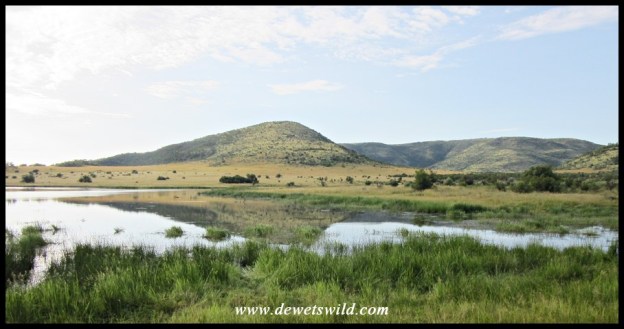
The central sections of the Kruger National Park is characterised by relatively flat plains stretching to the horizon and dotted with Marula, Knobthorn and Leadwood trees, interspersed with only a few rocky outcrops.

Through these open plains flow a number of small streams, most of which have their source right here in the Park and are thus devoid of any human pollution and all eventually forming part of the greater Olifants and Nkomati River systems flowing towards the Indian Ocean – these are the arteries carrying the lifeblood of the Lowveld.

With sunlight, soil and water available the plants and fungi thrive in greater diversity than I can even comprehend.

What a privilege for us humans to be able to get a glimpse into this fascinating world in a place like the Kruger National Park.

A group of hikers and their ranger-guides encounter a small herd of elephant soon after starting their morning walk along the Sweni