Antidorcas marsupialis
The Springbok is the only gazelle occurring in South Africa. They are medium-sized antelope, with a shoulder height of 70 – 85cm and a weight of 26 – 50kg, rams being more strongly built with thicker, longer horns than the ewes.

Springbok ram

Springbok ewe

Black Springbok

Copper Springbok

Springbok Ram

Springbok Lamb

Springbok showing off

Springbok herd in the Auob valley

Springbok Ram

Springbok Rams

Black Springbok (photo by Joubert)

Black Springbok

Black Springbok (photo by Joubert)

Black and “normal” Springbok (photo by Joubert)

Female Black Springbok

Female Black Springbok

Black Springbok

“Standard” Springbok

White Springbok
The Springbok prefers open country, occurring from deserts and semi-deserts to dry shrubby plains and grasslands. They are mixed feeders, including a wide variety of grass and browse in their diet. They will drink regularly if surface water is available, but can live for indefinite periods without drinking.

Springbok herd at Mountain Zebra National Park

Young springbokin Pilanesberg National Park

Springbok ram at Chelmsford Nature Reserve

Springbok herd in Golden Gate Highlands National Park

Springbok in the Moreletakloof Nature Reserve

Springbok herd in Golden Gate Highlands National Park

Springbok ram at Rietvlei Nature Reserve

Springbok ram

Springbok ram

Springbok herd

Herd of Springbok

Springbok

Black Springbok

Springbok

Springbok

Springbok

Springbok

Springbok

Springbok

Springbok

Springbok
Springbok are herding animals, sometimes congregating in their thousands. In the 1800’s, explorers and settlers recorded springbok treks numbering millions of animals, often taking days to pass through a particular area. Most groups however are much smaller, consisting of about 30 individuals. During the rutting season, adult rams establish small territories in the best grazing areas to which the breeding herds are most attracted. They are most active during early morning and late afternoon, resting during the heat of the day, often out in the open.

Springbok

Springbok

Young Springbok

Young Springbok

Springbok ewe

Springbok lamb

Springbok

Springbok

Springbok (photo by Joubert)

Springbok

Springbok in the rain (photo by Joubert)

Springbok

Springbok

Springbok

Springbok

Springbok (photo by Joubert)

Springbok

Springbok

Springbok

Springbok

Springbok

Springbok

Springbok

Springbok

Springbok

Springbok

Springbok

Springbok

Springbok

Gemsbok and Springbok

Springbok at sunset in Mokala (photo by Joubert)

Springbok

Springbok youngsters

Springbok

Springbok

Springbok ewe (photo by Joubert)

Black and normal coloured Springbok

Springbok herd on the move

Springbok (photo by Joubert)
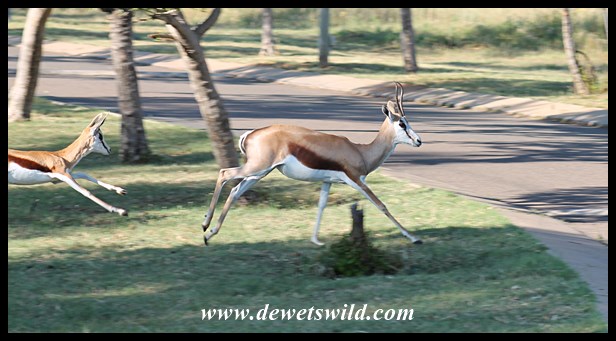
The Springbok is well known for their agility and stiff-legged jumping displays, known as “pronking”. They can jump as high as 3.5m, and can reach speeds in excess of 80km/h. It is thought that their “pronking” is an energy-efficient way of displaying to predators that it would not be worth their effort to attempt chasing the springbok. Despite being so fleet of foot, springbok, especially solitary rams, are a staple in the diet of cheetahs and other large predators, and lambs are easy prey for anything the size of an eagle, jackal or one of the small cat species and upwards. Their life expectancy in the wild is estimated at only 10 to 12 years.

Pronking Springbok

Pronking Springbok

Springbok lambs

Springbok

Springbok lambs

Pronking Springbok

Springbok ram

Pronking Springbok lamb

Pronking Springbok lamb (photo by Joubert)

Pronking Springbok (photo by Joubert)
Single lambs are born at anytime of the year, though most births coincide with the rainy season. The lambs remain hidden for the first couple of days of their lives, before joining their maternal herds and associating with other lambs in “nurseries” in the herd. Lambs start grazing by two weeks of age and by a month old they can run as fast as the adults. Lambs are weaned by 4 months of age and ewes can start reproducing at 6 months old. In years of good rainfall, adult ewes can lamb every 8 to 14 months. This exceptional fecundity ensures that springbok numbers can rebound quickly when better times return after droughts or disease epidemics.

Springbok at speed

Territorial springbok ram

Springbok lamb

Springbok ewe

Springbok ram

Springbok ram and youngster

“Pronking”

Springbok ram at Golden Gate Highlands National Park

Springbok ram at Golden Gate Highlands National Park

“Pronking”

Springbok at speed

Springbok ewe

Springbok Ram

Springbok on the run through wet grass

Springbok ewe and lamb

Territorial springbok ram

Springbok herd

Springbok herd
The Springbok is one of the most common and widespread antelope in South Africa. Their numbers were severely depleted by hunting in the 1800’s and the migrations of herds, millions strong, must have been a sight to behold. They have however been widely reintroduced to their former range, being popular game farm animals, and have also been introduced to areas which they didn’t naturally occupy. Today, the IUCN considers the springbok’s future to be secure, and estimates the population in South Africa at a minimum of 1,25-million animals, with a similar number occurring in Namibia, Botswana and Angola.

Springbok lambs

Springbok on the wide open plains of the Mountain Zebra National Park

Young Springbok rams testing their strength (photo by Joubert)

Young Springbok

Springbok dot the Rooiplaat Plateau

Springbok in the golden light of a Golden Gate sunrise

Springbok in the Golden Gate landscape (photo by Joubert)

Springbok at sunrise

Springbok lambs
The Springbok is South Africa’s national animal, and mascot of the country’s national rugby team (participating in the Rugby World Cup that starts today).


 DeWetsWild