Sagittarius serpentarius
The Secretarybird is a very unusual raptor, with a long neck, even longer legs and a bunch of quill-like feathers at the back of its head, like pens behind a secretary’s ear, possibly earning it its name. Another explanation for the name comes from a French corruption of an Arabic word, saqr-et-tair, meaning “hunter bird”, which is a great description of its lifestyle. They are up to 1.5m tall, with a wingspan of over 2 meters and a weight up to 5kg.
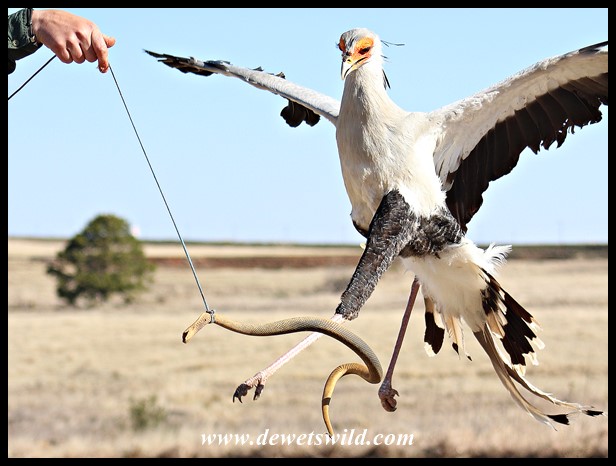
Secretarybirds roam savannas, grasslands and semi-deserts, usually singly or in pairs, walking along in search of prey, which ranges from eggs, insects and other invertebrates to small mammals (up to the size of hares), birds, amphibians and reptiles – even large, poisonous snakes – which they immobilise or kill by vigorously stomping on it with their feet. Secretarybirds breed throughout the year, in nests built of sticks atop flat-topped trees. Two to three eggs are laid and incubated mostly by the female for about 45 days, though both parents feed the chicks until they leave the nest at about 80 days old and then are taught how to hunt for themselves. At times they congregate in flocks of up to 50 birds at waterholes, but pairs are monogamous.

Secretarybirds nest on flat-topped trees

Secretarybird

Secretarybird

Secretarybird

Secretarybird searching for victims of a recent fire

Secretarybirds nest on flat-topped trees

Secretarybird

Secretarybird

Secretarybird nest building

Secretarybird nest building

Secretarybird nest building

Secretary Bird

Secretary Bird taking off

Secretary Bird

Secretary Bird

Secretary Bird

Secretary Bird on the Kamberg Road

Secretary Bird (photo by Joubert)

Secretarybird in flight

Secretarybird

Secretary Bird on the hunt

Thirsty Secretarybird

Secretarybirds

Secretarybird

Wind-blown Secretarybird

Secretarybird

Secretarybird

Secretarybird (photo by Joubert)

Wind-blown Secretary Bird

Secretarybird

Secretarybird

Secretary Bird

Secretary bird flying off

Secretary Bird in flight

Secretary Bird

Secretary Birds

Secretary Bird

Secretary Bird

Secretary Bird

Secretary Bird (photo by Joubert)

Secretary Bird

Secretary Bird

Secretary Bird (photo by Joubert)
A Secretarybird features prominently on the coat of arms of South Africa, and can be found all over the country, although they are not very common and even less so outside the major conservation areas. Even in the Kruger National Park it is thought that the population stands at only about 250 – 300 adult birds. The IUCN considers them “Vulnerable” as their populations have declined severely, mostly due to habitat loss and hunting for traditional medicine (the belief being that their ground-up bones confers respect, power and fearlessness).



 DeWetsWild