
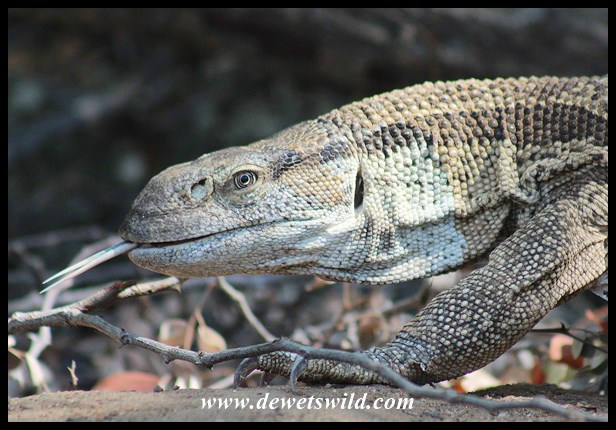
Varanus albigularis
The Rock Monitor, also known as the White-throated Monitor, at a total length of up to two meters, with males weighing as much as 17kg (average is about half that, and males are much bigger than females), is one of our biggest lizards (just slightly shorter, but heavier, than the closely related Water Monitor). They occur all over South Africa, with the exception of the southwestern Cape and very arid western parts of the Northern Cape, inhabiting arid scrublands, grasslands and savanna. It also occurs widely through the rest of southern, central and east Africa as far north as Ethiopia.
Rock Monitors are diurnal predators, feeding on anything small enough to overpower (mainly invertebrates and smaller reptiles) and carrion. At night they hole up in burrows, under or between rocks, or in large holes in trees. They also hibernate in these places during cold winters. Rock Monitors mate in early spring, wit the female laying clutches of up to 50 eggs in termite mounds or holes dug in soft soil. While incubation periods of about 4 months have been recorded in captivity, the eggs normally take much longer to hatch in the wild, with many clutches also being lost entirely to opportunistic predators like the Banded Mongoose.
When threatened, Rock Monitors will defend themselves with powerful lashes from their tails, failing which it will sham death in the hope that the attacker will lose interest and move on.


 DeWetsWild