Buphagus erythrorhynchus
Red-billed Oxpeckers subsists almost entirely on a diet of ticks and their larvae, maggots and other ecto-parasites, picked from the hides and orifices of large mammalian herbivores. They will however also peck at open wounds to feed on the blood. They are therefore closely associated with savannas and woodlands inhabited by good numbers of these large host animals, associating especially with the hairier game species like giraffes and antelope, as well as cattle and donkeys. Adults are about 20cm long and weigh around 50g.
At night, Red-billed Oxpeckers sleep in small flocks in trees, being especially fond of lalapalms. These birds nest in holes in trees lined with the fur of wild and domesticated mammals, particularly in the wet summer months. Usually there are three eggs in a clutch, incubated by both parents.
Red-billed Oxpeckers occur from Eritrea southwards to South Africa, where they can be found in the provinces of Kwazulu-Natal, Mpumalanga, Limpopo, Gauteng and Northwest, while an isolated population seems to have become established in the Eastern Cape as well. The eradication of wild game and the dipping of cattle has a detrimental impact on the food supply of the Red-billed Oxpecker, causing their populations outside protected areas to decline and, while the IUCN still views it as being of Least Concern, they are considered Near Threatened in South Africa and regularly reintroduced to reserves in areas from which they were previously exterminated.

Red-billed Oxpecker

Kudu bull with an oxpecker irritation

Red-billed Oxpecker clinging to a kudu

Red-billed Oxpecker climbing into a zebra’s ear

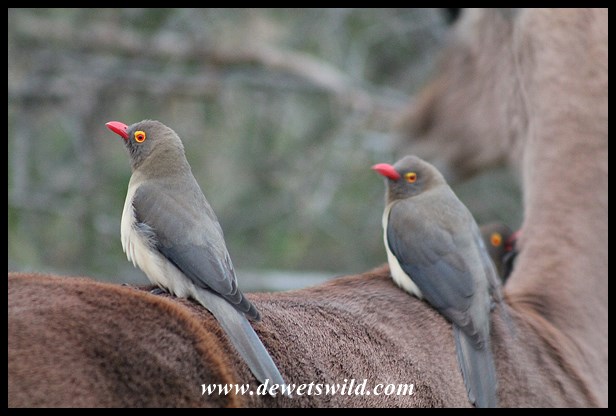
Red-billed oxpeckers

Buffalo and oxpecker in discussion

Red-billed oxpeckers on a giraffe’s back

Immature red-billed oxpecker on juvenile impala

Red-billed oxpeckers

Red-billed Oxpecker

Red-billed Oxpecker

Red-billed Oxpeckers pecking at an open wound on a buffalo

Red-billed Oxpecker

Red-billed Oxpecker

Red-billed Oxpecker

Red-billed Oxpecker

Red-billed Oxpecker

Red-billed Oxpecker

Red-billed Oxpecker

Red-billed Oxpecker

Sleepy buffalo and red-billed oxpecker

Red-billed Oxpeckers

Red-billed Oxpecker

Red-billed Oxpeckers

Red-billed Oxpecker

Red-billed Oxpecker

Red-billed Oxpeckers

Red-billed Oxpeckers

Red-billed Oxpecker

Red-billed Oxpecker

Red-billed Oxpeckers

Red-billed Oxpeckers

Red-billed Oxpecker

Red-billed Oxpecker

Red-billed Oxpecker

Red-billed Oxpecker on buffalo

Red-billed Oxpecker lining nest with fur

Red-billed Oxpecker

Red-billed Oxpecker

Red-billed Oxpecker

Red-billed Oxpecker juvenile

Red-billed Oxpecker juvenile

Red-billed Oxpecker (photo by Joubert)

Red-billed Oxpecker (photo by Joubert)

Red-billed Oxpecker

Young Red-billed Oxpeckers

Red-billed Oxpecker

Red-billed Oxpeckers and flies hanging around the back of a White Rhino

Red-billed Oxpecker (photo by Joubert)

Red-billed Oxpeckers

Impala ewe with a heavy load of red-billed oxpeckers

Impala ewe that’s had enough of free-loading Red-billed Oxpeckers (photo by Joubert)

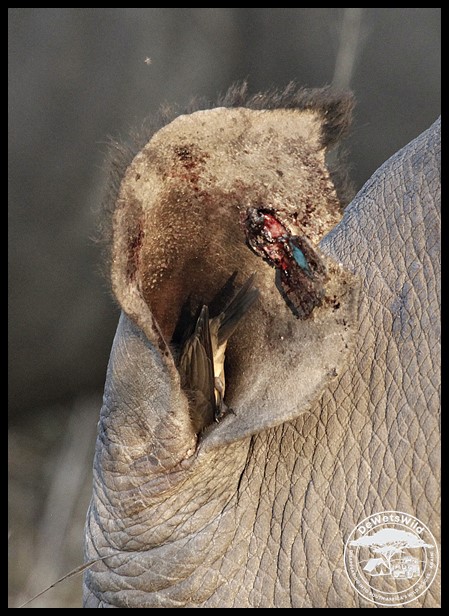
Red-billed Oxpecker diving into a White Rhino’s ear

Red-billed Oxpecker

Red-billed Oxpeckers on a nyala bull

Red-billed Oxpeckers

Red-billed Expecker

Red-billed Expecker




 DeWetsWild