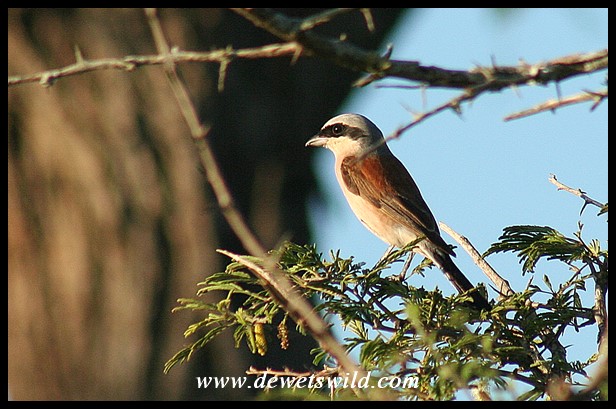
Lanius collurio
Red-backed Shrikes visit South Africa in our summer months, arriving from late October with the last individuals leaving again by April. While here, they can be seen in all our provinces, though they’re much more common on the eastern side of the country than the arid west. Apart from South Africa, they also spend their non-breeding season over much of the rest of southern, central and eastern Africa, departing back to their northern breeding grounds in Europe and Asia with the onset of warmer weather there. The IUCN considers this species to be of least concern, estimating a total population of at least 24-million.
In our southern climes the Red-backed Shrike inhabits more open habitats ranging from open scrublands and grassveld to a variety of savanna and woodland associations. They are mainly insectivorous in their diet, though they will also prey on smaller birds, rodents and lizards if the opportunity presents itself. Such larger prey is often impaled on a thorn or barbed wire, which is why the Red-backed Shrike (like several others of its family) are also known as “butcher birds”.
Males are more conspicuous than females thanks to their more colourful plumage and preference for more open areas. Adults measure about 18cm in length.


 DeWetsWild