Tag Archives: nature

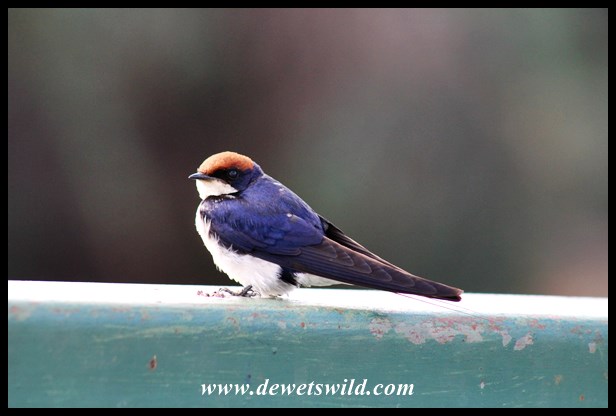
Wire-tailed Swallow

Hirundo smithii

Named for the two elongated, very thin tail feathers that trails behind it like antennae, the Wire-tailed Swallow is a beautiful bird that occurs over much of Africa and South Asia. Unlike many of their kin, Wire-tailed Swallows are mostly resident in their African home range year-round and do not migrate seasonally. In South Africa they’re to be found across northern Kwazulu-Natal, the Lowveld and Limpopo valley.

Wire-tailed Swallows are always to be found over or near fresh water bodies of any description, seemingly being less concerned with the habitat that surrounds these dams, rivers, streams and floodplains. They feed almost exclusively on insects caught in flight, and often mingle with other kinds of swallows in mixed flocks.

Wire-tailed Swallows breed throughout the year, peaking in spring and autumn. Pairs remain monogamous throughout the breeding season and possibly life-long. Their nests are cups of mud constructed in natural or man-made shelters like under overhanging rocks or under bridges, and usually used repeatedly season after season, being repaired annually before the clutch of 2-4 eggs are laid. The female takes responsibility for incubation over a 2-3 week period, but both parents feed the chicks once they’ve hatched. The chicks fledge when they’re about 3 weeks old but remain with their parents, and usually roost at the nest, for a considerable length of time – even till the next clutch of eggs are laid.

The IUCN considers the Wire-tailed Swallow to be of least concern.

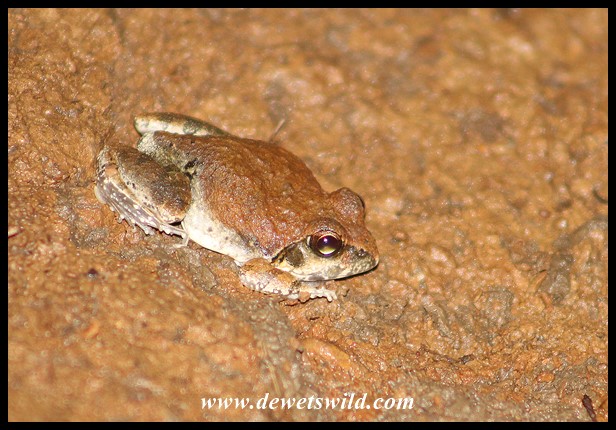
Natal Sand Frog

Tomopterna natalensis

A small frog, only about 4cm long, with variable colouration, the Natal Sand Frog occurs in grasslands and savanna habitats, where they usually breed in shallow water – standing or flowing – soon after the first rains of the season. The tadpoles grow exceptionally quickly, completing their metamorphosis in just two to three weeks! They hibernate underground in sandy soils, and dig themselves into the ground backwards with their hind legs.

In South Africa the Natal Sand Frog is distributed from the Eastern Cape through Kwazulu-Natal and into Mpumalanga, Gauteng and Limpopo. They’re also found in Mozambique and Eswatini (Swaziland) and is considered to be of least concern.

Red-breasted Swallow

Cecropis semirufa

To my mind the most beautiful member of the family, the Red-breasted Swallow (aka Rufous-chested Swallow) is a summer visitor to South Africa, arriving here from equatorial Africa from August and staying until around March or April. While spending the summer months locally these beautiful birds can be seen in the Free State, Kwazulu-Natal, North West, Gauteng, Mpumalanga and Limpopo, inhabiting open grasslands and savanna habitats. They feed mainly on flying insects.

Red-breasted Swallows form monogamous pairs in the breeding season, which starts almost as soon as they arrive here in South Africa. Their nests are built of mud in animal burrows and other cavities in the ground – and even inside man-made structures such as culverts – and comprise a bowl-shaped nesting chamber with a long tunnel leading to it. Both partners work on the construction of the nest, which may take longer than a month! The female is solely responsible for the incubation of the clutch of up to 6 eggs over a 3 week period. Once hatched, both parents provide food for the chicks until they leave the nest 3-4 weeks later. The youngsters remain with their parents for about 2 weeks after fledging. Pairs usually produce a second clutch of eggs 2-4 weeks after the first brood leaves the parents.

The IUCN lists the Red-breasted Swallow as being of least concern, noting that their populations are increasing and their distribution expanding.

Springtime rejuvenation at Nylsvley

Monday the 1st of November was a declared public holiday in South Africa, to allow for the running of the municipal elections. Of course this little gift of a long weekend was too good to pass up, so the de Wets headed north into the Bushveld for a two night visit to the Nylsvley Nature Reserve – one of our country’s most highly-rated bird watching destinations.

True to its reputation, Nylsvley delivered abundantly on the bird front during our visit, despite the fact that many of the summer regulars haven’t arrived in South Africa yet and despite most of the wetlands being completely dry at the end of the dry season. We managed to tick 82 species of birds without trying very hard.

Besides the birds, another reason to visit Nylsvley is the sizable populations of three of South Africa’s rarer antelope species that are found here: Southern Reedbuck, Roan Antelope, and Tsessebe.

These antelope were just some of the 25 kinds of mammals we encountered during the 48 hours or so we spent at Nylsvley, ranging from bats, squirrels and mice to lofty giraffes.

We found a little waterhole that was well frequented by the reserve’s giraffes, and had great fun photographing the giants as they stooped to drink.

Even on a smaller scale, Nylsvley has so much to offer!

If you’d like to learn more about Nylsvley you are welcome to have a read through a previous post we did on the reserve following a visit in 2017.

Entrance Gate at Nylsvley Nature Reserve

And don’t worry – Marilize and I performed our civic duty by casting our votes as soon as we got back to Pretoria on Monday afternoon. 😉

Long-crested Eagle

Lophaetus occipitalis

The Long-created Eagle is easy to identify thanks to the couple of extended feathers on its head that is so conspicuous when it sits prominently on an exposed tree top or utility pole along the road. They’re medium-sized raptors, weighing up to 1.5kg and measuring around 55cm in length – females are heavier than males. Long-crested Eagles inhabit moist woodland and forest adjacent to open patches, often in association with wetlands or along river courses, and seems especially fond of high-lying areas. Rodents make up the largest portion of their diet, though they will also take ground birds, frogs, reptiles and even crabs and fish.

Long-crested Eagles nest in the canopy of tall trees, usually during the summer months though breeding attempts are recorded throughout the year. Pairs are monogamous and territorial and perform acrobatic courtship displays at the start of their breeding cycle. Their nests are platforms built of sticks and lined with softer materials such as green leaves. Females lay clutches of 1 or 2 eggs and incubate them for around 6 weeks. The male provides food to the female at the nest while she incubates the eggs and then broods the chicks after they’ve emerged from the eggs. The chicks fledge at two months old and remain with their parents for 2-3 months more.

The IUCN lists the Long-crested Eagle as a species of least concern. It has a very wide distribution over sub-Saharan Africa, absent only from the most open and arid areas. In South Africa they’re found along the Eastern Cape coast, through most of Kwazulu-Natal and marginally into the eastern Free State, and also in the high-lying parts of Gauteng, Mpumalanga and Limpopo (especially along the escarpment). It seems that this species has benefitted from the establishment of commercial forestry in South Africa and could expand its range as a result.

Blue Pansy Butterfly

Junonia oenone

The outer (under) side of the Blue Pansy’s wings blends in so beautifully with its surroundings that when this butterfly opens its wings and flashes the bright blue, red and white markings on a black background on the inside (topside) of its 5cm wingspan, it often comes as quite a surprise, especially if you didn’t notice it sitting on the bare ground or a rock, as they often do.

Blue Pansies inhabit woodland and savanna, as well as suburban parks and gardens, and occurs over the moister eastern half of South Africa. Adults may be seen throughout the year though they’re much more numerous in spring and autumn. They’re very active during the warmest hours of the day and males, which are territorial, can often be seen chasing each other and other kinds of butterflies around on hilltops.

Osprey

Pandion haliaetus

The Osprey occurs throughout the world, on every continent except Antarctica. In South Africa Ospreys are rare, and any sightings we have of them are always a thrilling surprise whenever and wherever we’re lucky to find them. Feeding almost exclusively on fish snatched from the water, Ospreys are found in close association with natural and man-made lakes, rivers, estuaries and along the coast.

Most Ospreys seen here in South Africa are visiting summer migrants arriving from October and departing again by May, though there are records of birds staying through winter and even a few attempts at breeding. They’re usually seen alone, but have been found in groups numbering up to five on occasion.

The IUCN considers the Osprey to be of least concern.

Olive Grass Snake

Psammophis mossambicus

A common inhabitant of moist savannas and grasslands, often found in marshy areas, the Olive Grass Snake is distributed from Uganda and the Republic of Congo southwards to the northeastern provinces of South Africa (Limpopo, Mpumalanga and Kwazulu-Natal).

These snakes are diurnal, strongly built, very fast, and great climbers. They prey mainly on lizards, frogs, small mammals and birds and even other snakes, including venomous species, that is subdued by its own venom while being held in the mouth. Olive Grass Snakes will easily bite when handled and their venom has a mild effect on humans, leading mainly to nausea and localized pain and swelling.

During the summer months females lay clutches of 10-30 eggs. The eggs hatch about 2 months after laying. Adults may attain a length of 1.8m, with females being larger than males.

The IUCN lists the Olive Grass Snake as being of least concern.

African Pipit

Anthus cinnamomeus

The African Pipit, also sometimes called the Grassland Pipit, is a common but fairly inconspicuous bird of open savanna, short grasslands and dry floodplains, though it is also often encountered on sports fields, airfields, agricultural land, roadsides and recently burnt patches. They feed almost exclusively on insects and other small invertebrates.

African Pipits are monogamous, with the male using aerial displays and song to proclaim his breeding territory while the female builds the neat cup-shaped nest on the ground at the base of a bush or tuft of grass (they also sleep on the ground, often in a favourite location). When not breeding they form loose flocks that may number up to a hundred and often associate with birds of other species. African Pipits may breed at any time of the year, though mostly in spring and summer, with clutches of 1-5 eggs being incubated by both parents over a 2 week period. The chicks leave the nest at between 2 and 3 weeks old, but remain near it – and dependent on their parents – for a while longer. Parents will attempt to lure predators away from the chicks by feigning a broken wing. Adults measure around 16cm in length and weigh about 24g.

The IUCN lists the African Pipit as a species of least concern. It is found over much of sub-Saharan Africa as well as in the south-western corner of the Arabian Peninsula. African Pipits occur all over South Africa.

Wanderer

Bematistes aganice

The Wanderer inhabits montane, coastal and riverine forests. It normally stays high in the canopy of lofty forest trees, moving around with slow, confident wing beats – having a rather disagreeable taste most predators stay well clear of them. The male is territorial and will chase any other butterflies, not only of their own kind, that venture into his patch. Adults have a wingspan of about 7cm and can be seen year-round.

In South Africa it is found in the Eastern Cape, Kwazulu-Natal and the Lowveld of Mpumalanga and Limpopo, and beyond our borders as far afield as East Africa.