Lycaon pictus
African Wild Dogs are large canids, standing between 60 and 80cm high at the shoulder and weighing up to 36kg. Their blotched coats have patterns as unique to each individual as our fingerprints are. Perhaps “Painted Wolves” would be a more accurate name for these enigmatic carnivores, one of Africa’s rarest species.

Ragged African Wild Dog

African Wild Dog

Wild dog profile

African Wild Dog

Painted Wolves, or African Wild Dogs

Painted Wolves, or African Wild Dogs

African Wild Dog

Wild dogs near Orpen

Wild dogs near Orpen

Playful Painted Wolf (photo by Joubert)

African Wild Dog

African Wild Dogs in playful mood before starting their hunt
African Wild Dogs inhabit grasslands, marshes, savannas, woodlands and semi-deserts, where they hunt mammals ranging in size from rodents to buffaloes, though their main prey is medium-sized antelope like the impala, springbok, bushbuck, nyala and reedbuck. These dogs have great stamina, and tire out their prey by chasing it at speeds of up to 60km/h for distances of up to 6km. They are among the most successful of predators, with between 70 and 90% of their hunting attempts resulting in a kill. They kill their prey by disembowelment, and although it appears cruel is actually a much quicker death than the suffocation employed by lions and other big cats. They feed extremely quickly; a pack of nine dogs can completely devour a 100kg antelope within 15 minutes. African Wild Dogs are not dependent on the availability of drinking water, but will drink regularly if it is available.

On the hunt

On the hunt

On the hunt

On the hunt

Sizing up a pair of zebras

Leg of lamb, wild dog style…

African Wild Dog – Hluhluwe-Imfolozi Park
African Wild Dogs live in closely-knit packs numbering from 2 to 50 and occupying vast home ranges. Within the pack a strict hierarchy is maintained, with only the dominant pair allowed to breed. Often all the animals of the same sex within a pack are related as new packs are formed by groups of the same sex leaving their maternal packs when they become adult at about two years of age and joining up with unrelated animals of the opposite sex. Wild Dogs hunt mostly in the early morning and late afternoon, and also on moonlit nights, and rest up in the shade during the heat of the day.

Wild Dog pack on the move

African Wild Dog

Wild Dog pack on the move

Wild Dog pack on the move

Wild Dog on the hunt

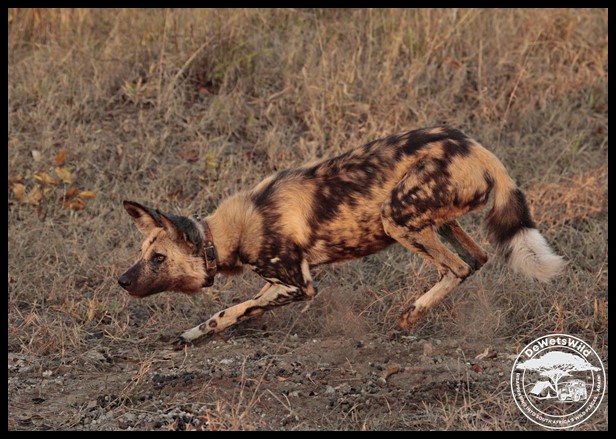
Wild Dog stretching for the hunt

Wild Dogs taking a break

Wild Dog pack on the move

Wild Dogs are very social

African Wild Dog

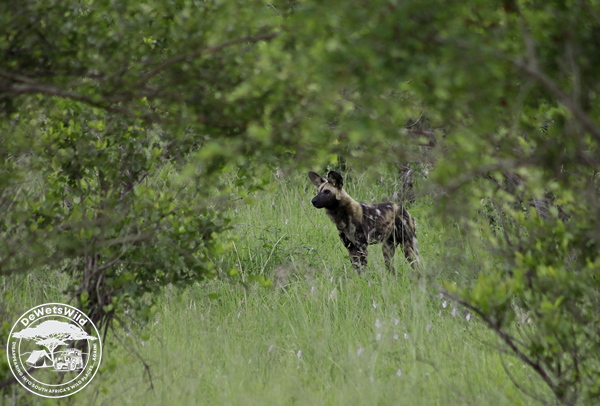
African Wild Dog on the alert
The alpha female gives birth to between 2 and 21 tiny pups annually, mostly during the dry season when prey is easier to come by. The pups are born in holes in the ground, usually abandoned aardvark or warthog burrows. All the pack members take excellent care of the pups in the pack, bringing food back to the den for small puppies and allowing older puppies to feed first at a kill. Wild Dogs are susceptible to a wide variety of infectious diseases, often causing entire packs to be wiped out, but it is bigger and stronger predators – lions, hyenas and leopards – that are the biggest natural threat to both adult and juvenile Wild Dogs. Their life expectancy in the wild is only about 10 years.

Wild Dog pups waiting for the adults to return

Wild Dog alpha pair

Wild Dog alpha pair

African Wild Dogs at the Rhino & Lion Nature Reserve

African Wild Dogs at the Rhino & Lion Nature Reserve

African Wild Dogs at the Rhino & Lion Nature Reserve

African Wild Dogs at the Rhino & Lion Nature Reserve

Wild Dog (Photo by Joubert)

Wild Dogs
The African Wild Dog is considered endangered with their population estimated at most around 6,600 and still declining due to disease and human pressures. Centuries of persecution by hunters and farmers have decimated their numbers, eradicating them from most of their former range. Today African Wild Dogs occur in only a few scattered pockets across the continent. In total South Africa is home to only about 400 – 500 African Wild Dogs, of which roughly half occurs in and around the Kruger National Park, with smaller populations in a handful of other public and private conservation areas, including Hluhluwe-Imfolozi Park, iSimangaliso Wetland Park, Tembe Elephant Park and Pilanesberg National Park.







 DeWetsWild