Giraffa camelopardalis
Out and about in South Africa’s wild places, the Giraffe is probably the closest thing you can get to a “gentle giant”, although I still wouldn’t venture too close to those powerful legs and heavy hooves if I were you! Towering up to 5 meters high, Giraffe are by far the tallest animal alive on earth today. Bulls can weigh up to 1,500kg, while cows are more delicately built and seldom reach a ton in weight.

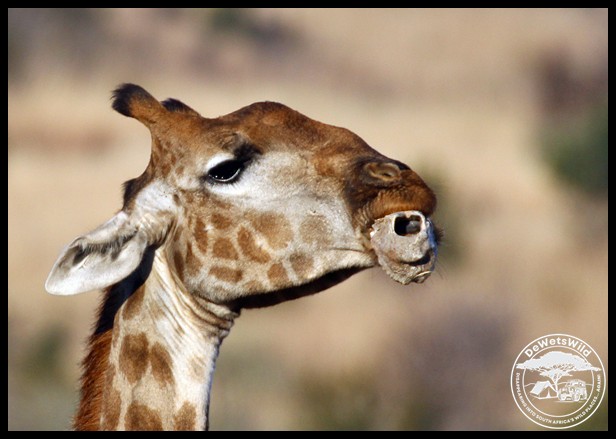
Giraffe close-up

Cheeky youngster!

Helloooo!

Giraffe pair

Giraffe

Giraffe bull

Giraffe hide
Giraffes prefer open semi-desert and savanna habitats, especially where thorn trees proliferate. They feed on leaves, shoots, pods, flowers, thorns and fruit, consuming more than 50kg of browse daily. They also have a curious habit of chewing on old bones to supplement the calcium in their diet. When surface water is available, Giraffes will drink regularly, but in drier areas, like the Namib desert, they can survive without water for extended periods.

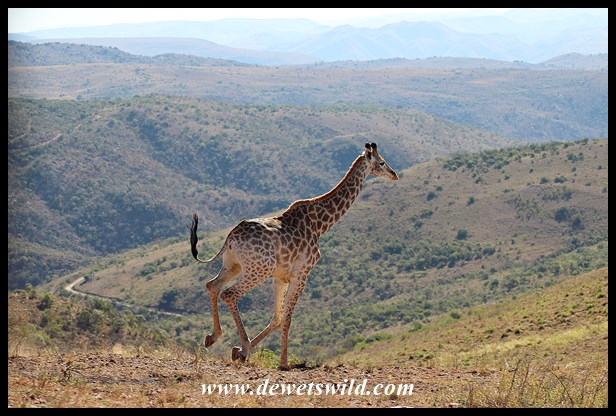
Giraffe walking away from Bangu in the Kruger Park

The giraffe is Ithala’s emblem

Curious giraffe

Giraffe drinking at Mazithi (Kruger Park)

Giraffe dwarfed

Giraffe and Imfolozi scenery

Giraffe, Girivana (Kruger)

Giraffe near Ngotso Dam (Kruger)

Giraffe reaching for tasty leaves

Giraffes in riverine forest

Curious giraffe

Bending low to quench a thirsty throat

Feeding on a thorn bush

That awkward drinking stance

Giraffe fountain

That awkward drinking stance

Hluhluwe-Imfolozi giraffe

Hluhluwe-Imfolozi giraffe

Giraffe

Giraffe seem to thrive at Augrabies despite the harsh environment

Giraffes
Giraffe society is a very fluid one. Adult cows and their calves congregate in herds numbering up to 30, but these are not very stable and individuals move between herds as they please. Adult bulls live mostly solitary lives, while younger bulls often associate in bachelor groups after leaving their maternal herds. Adult bulls establish their dominance through ritualised displays and fighting by using their long necks and heads as clubs, often knocking one another unconscious and sometimes even causing the death of one of the combatants through a broken neck or limb when they crash to the ground after a well placed blow. Although they seem ungainly, Giraffes can attain speeds of up to 60km/h, run for distances of up to 7km, and jump over fences 1.5m high! Giraffes have acute senses and other herbivore species often accompany them, as Giraffes are usually the first to detect the presence of predators. They are mostly diurnal, preferring to rest in the shade during the heat of the day.

Giraffe in a sea of Mopani

Giraffe in the mopane

Giraffe under heavy skies

Giraffe and oxpecker

Giraffes, S41 (Kruger)

Lazy giraffe

Standing proud

Peek-a-boo!

Mature giraffe bull

Time for a rest

Towering over the road

Tower of giraffes

Young giraffe in Mokala National Park

Giraffe in Mokala National Park

Giraffe family in Mokala National Park

Close-up of a stately giraffe bull

Giraffes in Mokala National Park

Giraffes

Giraffe

Giraffe bull

Giraffe at a gallop

Iconic Ithala: Giraffe and Ngotshe Mountain

Giraffe on the Kwaggasvlakte near Bontle in the Marakele National Park

Giraffe bull

Giraffe

Giraffes

Newly born Giraffe calf with its mother

Giraffe (photo by Joubert)

Giraffe bull

Giraffes

Giraffe portrait (photo by Joubert)

Giraffe youngster

Giraffe just after sunrise

Very dark giraffe bull (photo by Joubert)

Giraffe catching the first rays of sunshine on the Red Rocks Loop

Giraffe Calf
Cows give birth standing up to single calves, although twins have been recorded, after a 15 month gestation. Giraffe calves are about 1.8m high and weigh up to 100kg at birth, and can stand within an hour of being born. Cows are very determined about protecting their calves, and many a lion has been kicked to death when attempting to catch a calf. Calves also fall prey to hyenas and leopards, while adults only really need to fear lions, of which they are a favourite prey. Giraffe can live to an age of up to 30 years in the wild.

Giraffe family

The giraffe is Ithala’s emblem

Giraffes aplenty

Giraffes near Nhlanguleni (Kruger)

Young giraffe males on the Crocodile River road (Kruger)

Giraffe, Shingwedzi (Kruger)

Juvenile giraffe

Giraffe, H1-4 (Kruger)

Mom and baby

Giraffe youngster

That head can deliver a hefty blow!

Giraffe calf

Giraffe

Giraffe

Giraffe calf

Giraffe cousins

Newly born Giraffe calf

Giraffe

Giraffe (photo by Joubert)

Giraffe calf nibbling on tender shoots

Giraffe cow and calf

Giraffe

Giraffe

Giraffe

Giraffes

Giraffes

Giraffes
Despite being classified as “Least Concern” by the IUCN, giraffe populations are declining across much of their range due to habitat loss and poaching, and the total African population now probably numbers less than 80,000 animals. Over 30,000 animals, representing the two southern subspecies, occur in Angola, Namibia, Zambia, Botswana, Zimbabwe, Mozambique and South Africa (where they have been extensively introduced outside their natural distribution range) and likely represent the only stable or increasing populations of giraffe on the continent. South Africa’s biggest population of giraffe occur in the Kruger National Park, but they are also regularly encountered in several other parks and reserves, including the uMkhuze section of the iSimangaliso Wetland Park, Hluhluwe-Imfolozi Park, Mapungubwe, Marakele, Mokala and Pilanesberg National Parks, and Ithala Game Reserve, of which they are the emblem.

Giraffe bull

Giraffe enjoying the shade

Giraffe

Giraffe

Giraffe

Giraffe

Scenery near Pretoriuskop, complete with a giraffe

Giraffe calf

Tower of giraffe

Giraffes along the Mphongolo

Giraffe close-up

Young Giraffe

Giraffes on the way to Orpen

Light-coloured Giraffe

Giraffe drinking from a small pan

Giraffe silhouette

Giraffes

Giraffes crossing the road

Giraffe

Resting Giraffe calf

Giraffe

Giraffe

Giraffe roadblock

Giraffes at the junction of Tlou and Sefara

Herd of giraffes on Tshwene Drive

Herd of giraffes on Tshwene Drive

Giraffe eyeing us from a lofty vantage point

Giraffes peering from a clump of bushes

Giraffe close-up

Giraffe checking on the condition of the road

Wary family of giraffes

Giraffe drinking from the Sabie River

Giraffe traversing the plains of Nylsvley

Giraffe

Giraffe calf

Young Giraffe

Drinking Giraffe

Drinking Giraffe

Dribbling Giraffe

Drinking Giraffe

Dribbling Giraffe – photo by Joubert

Drinking Giraffe

Giraffe (photo by Joubert)

Giraffe

Giraffe (photo by Joubert)

Giraffes

Giraffe baby

Giraffe drinking

Giraffe

Young Giraffe

Giraffe

Giraffe snacking

Giraffe

Giraffes got a fright at my approach

Giraffe

Giraffes making their way around Senyati

Giraffe making its way around Senyati

Giraffes

Giraffe (photo by Joubert)

Giraffe calf (photo by Joubert)

Giraffes (photo by Joubert)

Giraffe calf

Giraffe

Giraffe
Recent genetic studies suggest that there may actually be four distinct species of giraffe, but it remains to be seen whether this becomes a widely accepted scientific view.

Giraffe at dusk

Icon of Ithala

Sunrise giraffe

Giraffe sunset, near Olifants in the Kruger National Park

Sunrise silhouette

Sunrise silhouette





 DeWetsWild