
Tag Archives: Diederik Cuckoo

Aiming at Diederikkies

The housing complex where we live here in Pretoria has seen a proliferation of Garden Acraea butterflies and their caterpillars over the past few weeks.

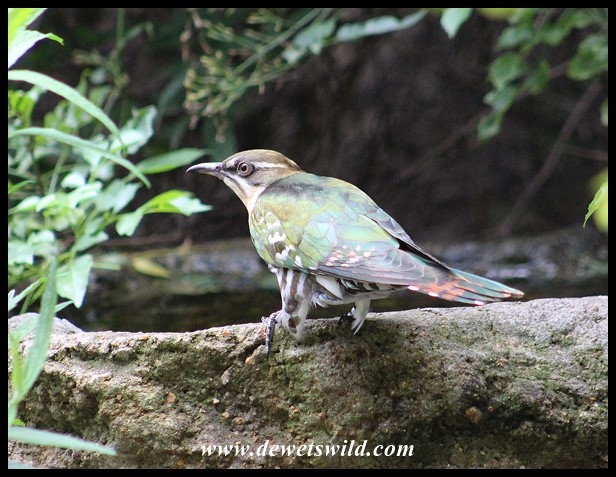
These in turn have been a boon for the Diederik Cuckoos that visit our part of the world in summer. Caterpillars are a staple for them.

An added bonus for the Diederikkies are the number of nests of Southern Masked Weavers to be found in our complex gardens. The Diederik Cuckoo is a brood parasite that is especially fond of using weavers as foster parents for their chicks. Of course this isn’t going down too well with the weavers, who frequently dive bomb any Diederikkie found exposed.

These photographs were all taken by Joubert in the past couple of days. His examinations are over and for all intents and purposes his Grade 6 year is concluded – all that he still needs to do is collect his report card and certificates. The dramas of the Diederikkies and their neighbours has been great entertainment and Joubert quickly got very adept at using both stories of our townhouse as photographic hides from which to capture their antics. Of course I am very grateful that he loves photography so much rather than vegetating on the couch with tv games.

Diederik Cuckoo

Chrysococcyx caprius

The Cuckoos are a family of birds notorious for their excellent hiding skills, and most of them are seldomly seen in the open (and even more difficult to photograph!) despite their often well-known calls attracting the attention of bird-watchers like ourselves. One notable exception to this frustrating trait is the Diederik Cuckoo, which is not averse to showing off its beautifully metallic green and copper plumage together with its giveaway “dee-dee-dee-dee-diederik” call (Diederik being a traditional masculine Afrikaans name).

The “Diederikkie” occurs over virtually the entire African continent south of the Sahara and in parts of the Arabian Peninsula, and it is only in the driest north-westernmost reaches of our country where you’re unlikely to hear them calling in our summer. A handful even stay here right through winter, though the majority departs northwards to central Africa at the start of autumn and then return with the onset of spring. The IUCN classifies the Diederik Cuckoo as being of least concern.

Diederik Cuckoos are usually seen singly or in pairs, and are not very picky about their habitat, though they do seem to prefer the more wooded areas even in otherwise open biomes like grasslands and the Karoo. They are also commonly encountered in suburban parks and gardens and feed almost exclusively on invertebrates, being especially fond of caterpillars, and thus great friends to the gardener.

The Diederik Cuckoo is a brood parasite, with females laying a single egg at a time (as many as 24 in a summer breeding season) in the nests of a wide variety of other birds (two dozen species recorded, with wagtails, weavers and sparrows being especially targeted) after getting rid of any eggs the host birds may already have laid. Shortly after hatching the Diederik chick will then dispatch any other eggs or chicks in the nest so that it can hog all the adoptive parents’ attention. The chick fledges about 3 weeks after hatching and stays with its foster parents for around 3 weeks more afterwards. Fully grown, Diederik Cuckoos measure 19cm in length and weigh around 30g.