
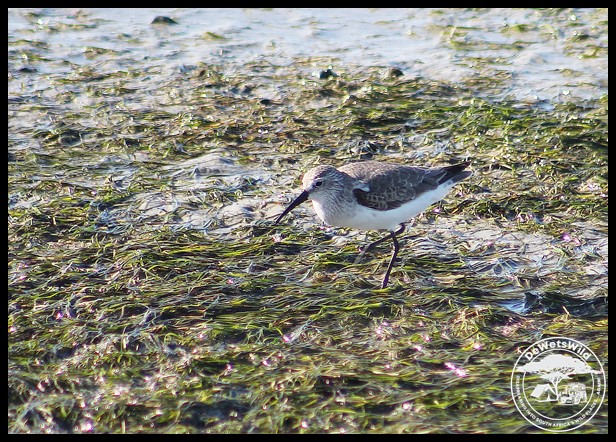
Calidris ferruginea
The Curlew Sandpiper is another wading bird that visits South Africa during our warmer months, arriving from about August and departing again by April before winter arrives in the southern hemisphere to return to their breeding grounds in Siberia. Some immature birds will however remain behind through the winter. While here they have a patchy distribution, occurring at coastal lagoons and estuaries and inland wetlands with muddy fringes where they probe for invertebrates living in the silt. Curlew Sandpipers are gregarious and often found in large flocks consisting of their own and other species of sandpiper and numbering into the hundreds and even thousands. Individual Curlew Sandpipers return year after year to the same area for overwintering. They measure about 20cm in length and weigh around 50-60g.
The Curlew Sandpiper has a rather interesting distribution range, with their occurrence during the breeding season fairly concentrated on Russia’s extreme northern reaches while their overwintering range covers an extremely large area of Africa, Asia and Australia. Locally, at the right time of year, they can be expected at suitable habitat along the coast as well as inland. The IUCN considers the Curlew Sandpiper to be near threatened for, despite a fairly large population estimated still at over a million, it would seem their numbers are declining at an alarming rate, caused mainly by loss of habitat.


 DeWetsWild