
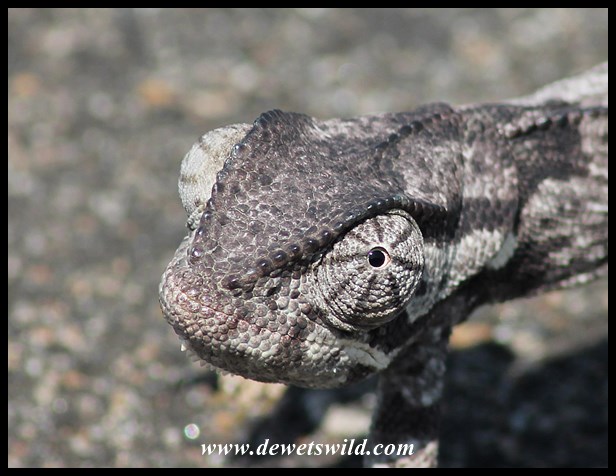
Chameleo dilepis
Few people would not be familiar with chameleons, those lizards with their independently moving eyes, long, sticky tongues and slow, deliberate movements belying their amazing ability to change colour in the blink of an eye (to blend in with their environment or to communicate their mood). We have 22 species of chameleon in South Africa, of which the Common Flap-neck Chameleon is the best known.
Flap-neck Chameleons feed on insects, mainly beetles and grasshoppers. They prefer savanna, thicket, woodland and forest habitats and are mainly arboreal, though thanks to their excellent camouflage amongst foliage they are mostly only noticed when moving across open ground. In South Africa they occur from coastal Kwazulu-Natal and the adjacent interior, into Mpumalanga, Limpopo, northern Gauteng, North West and the Kalahari regions of the Northern Cape. North of our borders they occur all the way to Cameroon in the northwest and Somalia in the northeast.
Three to four months after mating in the spring, female Flap-neck Chameleons lie clutches of 25-50 (exceptionally up to 65) eggs in a foot-long tunnel she digs in moist soil in the late summer months. The eggs can take up to a year to hatch. Newly emerged Flap-neck Chameleons measure about 5cm in length but grow quickly; adults grow to a length of 35cm (half of which is their prehensile tail).
When threatened, Flap-neck Chameleons inflate their bodies and open their mouths wide in a defensive display. They’re also quite likely to bite when handled. The IUCN considers the Flap-neck Chameleon to be of least concern. Unfortunately it is popular in the pet trade and often sold by informal traders along rural roadsides. This practice should never be supported by purchasing the chameleon, despite how sorry you may feel for the poor creature, as it just stimulates the market and triggers more and more people to go catch animals for sale, most of which will die, and leading directly to the local collapse of their populations.


 DeWetsWild