Belenois aurota
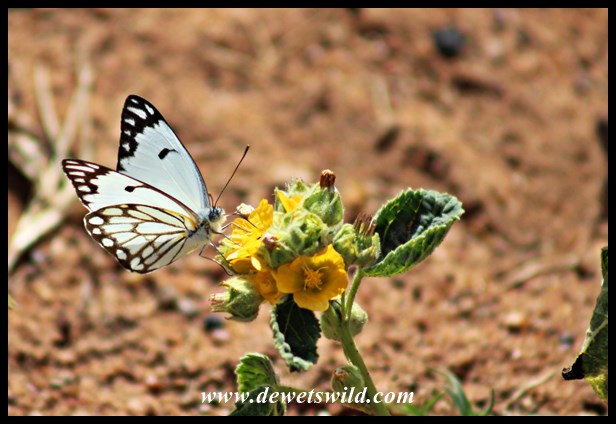
The Brown-veined White could probably be South Africa’s most commonly seen butterfly, occurring throughout the year and migrating in their millions between December and February away from areas of overcrowding in the arid west towards the Mozambique Channel, laying batches of around 20 eggs at their point of departure and along the way as they go. The Shepherd’s Tree is the preferred larval food plant for this species here in South Africa, but they are also found over most of the rest of sub-Saharan Africa and across Arabia and the Indian subcontinent where other members of the Caper plant-family would be important food sources. Adults, with a wingspan of about 4.5cm, feed on nectar and, while they are strong fliers, often pause at wet soil and mud for a drink.

Bontle’s also home to other beauties – this is a Brown-veined White butterfly

Brown-veined White

Brown-veined White

Brown-veined White

Brown-veined White

Brown-veined White

Brown-veined Whites

Brown-veined White

Brown-veined White

Brown-veined White

Brown-veined White

Brown-veined White

Brown-veined White

Brown-veined White

Brown-veined White

Brown-veined White

Brown-veined White

Brown Veined White

Brown-veined White

Brown-veined White

Brown-veined White butterfly

Brown-veined White in what I think is an Albizia (False Thorn) bush

Brown-veined White

Brown-veined White

Brown-veined White

Brown-veined White butterfly in flight (photo by Joubert)

Brown-veined White butterfly

Brown-veined White butterfly

Brown-veined White Butterfly

Brown-veined White Butterfly

Brown-veined White and African Migrant butterflies congregating at a mud puddle

Brown-veined White butterflies congregating on wet dung

 DeWetsWild