
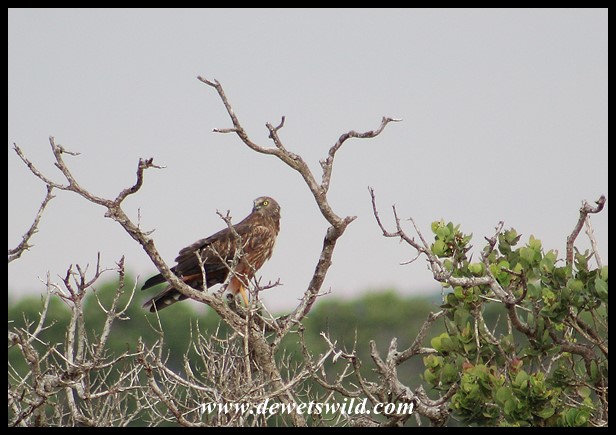
Circus ranivorus
The African Marsh-Harrier is an agile raptor that favours wetlands and feeds mainly on rodents, being particularly fond of the diurnal Four-striped Grass Mouse. They’re constantly on the wing, flying low over their wetland patch in search of prey, and it is estimated that they may cover as much as 200km on a single day!
Like many other birds of prey African Marsh-Harriers form monogamous pairs with a very strong bond and defend their territories year round. They may breed at any time of year, though nesting activity peaks through the spring season. They build their nest of sticks, reeds and grass in reed beds in their marshy habitat, often over the water. The female is solely responsible for incubating the clutch of up to 5 eggs for around a month, while the male will bring food to her at the nest during this time. He diligently continues providing food to the family for about the first 3 weeks after the chicks hatched while the female looks after the young at the nest but after that their ever expanding need for food requires that the mother starts helping in the process of hunting. The chicks leave the nest at about 6 weeks of age and become independent of their parents at about 10 to 12 weeks old.
In South Africa the African Marsh-Harrier is found mainly in the wetter parts of the Western and Eastern Cape, Kwazulu-Natal, the Free State, Gauteng and Highveld of Mpumalanga, with occasional sightings from other parts of the country. In the rest of the continent they’re found in a broad band stretching north to Kenya, Uganda and parts of the DRC. Despite a declining population attributed mainly to loss of habitat, which is the reason they’re listed as endangered in this country, overall the IUCN considers the African Marsh-Harrier to be of least concern.


 DeWetsWild