Tag Archives: Afrika Rotsluislang

Manyeleti Magic 2024: A massive serpent in an idyllic location

Late afternoon on the third day of our 2024 Manyeleti Magic photo-safari we were driving through a most beautiful spot of towering trees lining a stream and waterhole, with the most glorious golden light illuminating the scene. It was a little slice of paradise filled with various animals and birds and it is hard to describe just how blessed we felt to be there in the moment.

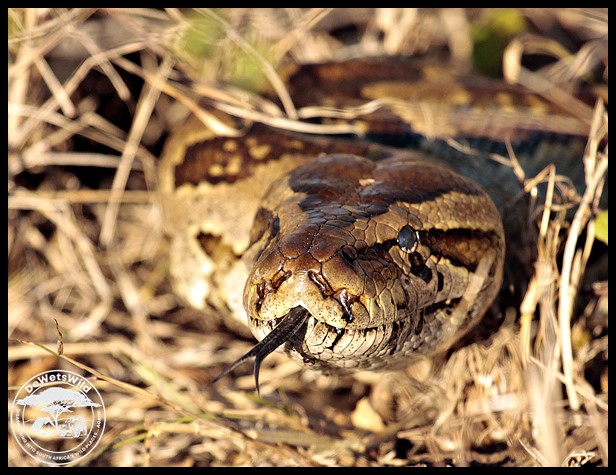
Our guide Beckson was the first to notice an enormous Southern African Rock Python slithering across the two-track road we were on. It was a magnificent specimen and must’ve only very recently shed its old skin as it was now resplendent with shiny new scales amplified by the golden light of the afternoon sun. With pythons, especially this size, being a rare sighting we all got off the vehicle and our guests had a chance to photograph the enormous snake from all angles before it moved underneath an old leadwood stump and disappeared from view. A most memorable encounter; the kind of which we’ve learned is pretty much par for the course in the magical place that is Manyeleti!

We’re already taking bookings for our 2025 Manyeleti Magic Photographic Safari and Workshop, to be conducted out of Buffelshoek Camp again in June of next year in conjunction with Hannes Rossouw Photography. Contact us if you’d like to join this one, or if you and a group of family and friends are keen to do something similar on other dates we’d be very glad to accommodate you!

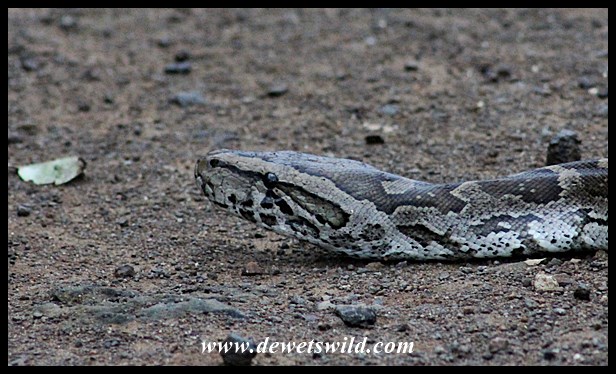
Southern African Rock Python

Python sebae natalensis

The largest snake occurring in Africa, and one of the biggest in the world, the African Rock Python is an impressive creature. Adult females are quite a bit heavier built than males and weigh around 55kg on average, attaining a length of around 4.8m though there are reports of snakes longer than 6m.

African Rock Pythons occur in a variety of habitats, from semi-arid scrub to riverine forests, and are fond of submerging in pools of water to ambush their prey. Adults will take prey as large as antelope and primates, constricting their prey before swallowing it whole. While it happens only very rarely, African Rock Pythons are capable of attacking and killing humans. They love to sunbathe on exposed rocks, especially after eating.

Females lay between 30 and 100 eggs, the size of tennis balls, in disused animal burrows, caves or termite mounds, and then curl around the clutch to protect them until they hatch after a 2-3 month incubation. She may even stay with the hatchlings until about two weeks after they’ve hatched. They may live from 12 to 27 years old in the wild.

Some authorities, including the IUCN, consider the southern race, P. s. natalenis, to be a separate species from the northern race (P. s. sebae). The Southern African Rock Python occurs from Kenya and the DRC southwards to South Africa, where they’re found in pockets of all provinces except the Western Cape and is considered a vulnerable and protected species. The IUCN considers the Southern African Rock Python to be of least concern. The Northern African Rock Python in turn is found from Kenya, Somalia and Ethiopia to Senegal. Due to a decreasing population the IUCN considers it to be near-threatened.