Category Archives: South African Wildlife

The inhabitants of South Africa’s wild places

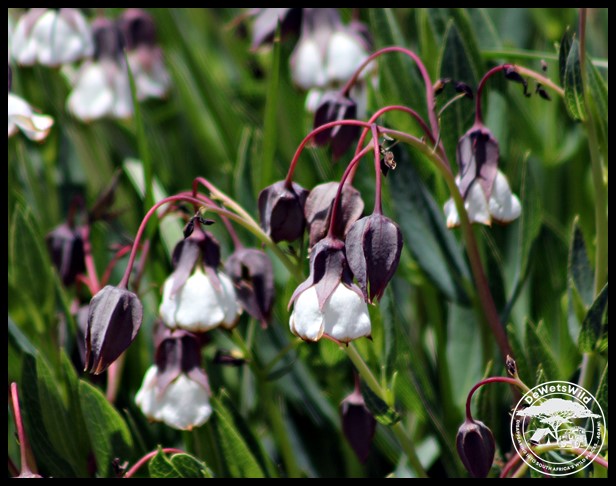
Chocolate Bells

Trichodesma physaloides

A conspicuous and beautiful plant when in bloom during the spring season on our Highveld grasslands, Chocolate Bells are found in parts of Gauteng, Mpumalanga, Limpopo and Kwazulu-Natal. They’re well adapted to survive the worst elements of life on the Highveld – cold, frosty winters and frequent veld fires – in fact the plants often don’t flower at all if they weren’t subjected to a fire first!

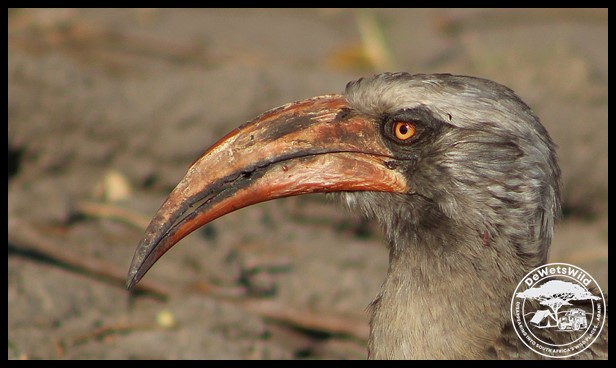
Bradfield’s Hornbill

Today is Birding Big Day in South Africa, so in a clever twist of irony we’re showcasing a bird that none of the participants in the event is at all likely to encounter! 😀

Lophoceros (Tockus) bradfieldi

Bradfield’s Hornbill is found in only five Southern African countries: Botswana, Namibia, Angola, Zambia and Zimbabwe. According to the IUCN it is not in any imminent danger of extinction though it does note that the population is probably in decline due to habitat loss as a result of logging operations. They occur in savanna-woodland and feed mainly on invertebrates, small vertebrates, seeds and berries. They’re usually seen in pairs or small flocks.

Typical of most hornbills, Bradfield’s Hornbill also breeds in holes in trees in which the female is plastered inside with the (usually) three eggs for the 4 week incubation period while the male feeds her through a slit. She leaves the nest a few days after the chicks hatched to help the male feed them until they’re ready to leave the nest at almost 2 months old. The parents take care of the chicks for another month of so thereafter.

Star Lily

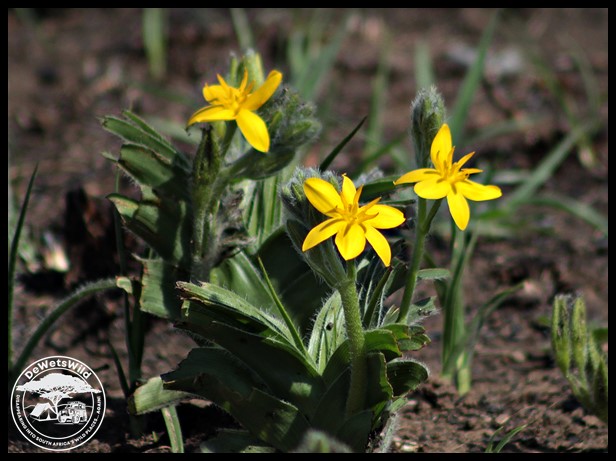
Genus Hypoxis

There is at least 90 species of plant in the genus Hypoxis, known colloquially as the Star Lily, with indigenous representatives being found in Australia, Asia, the Americas and sub-Saharan Africa. Almost half the known species are found in southern Africa. Most species occur in grasslands. They grow to about 50cm tall, with the star-shaped flowers – bright yellow in colour in the majority of species – being rather short lived. Leaves and flowers are only borne in the warmer months, with the plants overwintering through their underground rootstock. It is this rootstock that is used traditionally as food and medicine that gave the Star Lily its alternative name of African Potato, now even researched in western medicine as an immune booster.

Wild Rosemary

Eriocephalus africanus

Our Wild Rosemary, known in Afrikaans as Kapokbos (“snow bush”) because of its appearance when covered by masses of fluffy white seeds mid-winter, is an evergreen shrub that grows to about 1m tall and wide. The fragrant leaves can be used in perfume or to freshen rooms in homes, though it also taints the milk of goats that feed on it. It can be used in cooking instead of traditional rosemary and a tea made of it can be used to treat cold symptoms and stomach ailments. It can even be used to wash your hair! The Wild Rosemary is a beautiful and easy to care for addition to indigenous gardens. Naturally it grows best in rocky soil in the drier parts of our Eastern, Western and Northern Cape Provinces.

Common Scimitarbill

Rhinopomastus cyanomelas

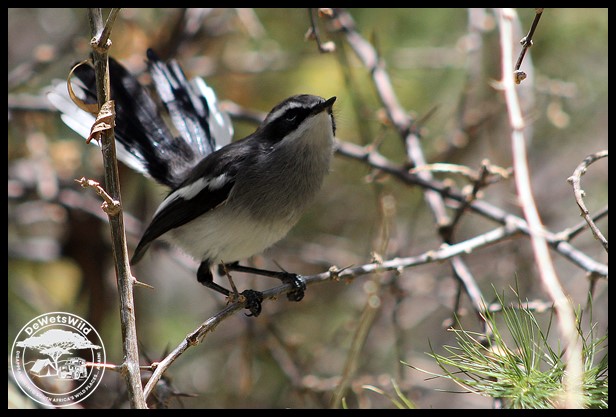
The Common Scimitarbill feeds almost entirely on insects and other invertebrates scrounged from behind the bark of trees, a task that its characteristic bill is well adapted to perform. These restless birds inhabit open, dry woodlands and are usually encountered singly, in pairs or small family groups.

Common Scimitarbills form territorial pairs and breed in spring and summer, nesting in cavities in tree trunks and often using the same nest for several consecutive years. The female is solely responsible for incubating the clutch of 2-4 eggs for a 2 week period, with the male providing her with food on the nest , and the chicks take their first short flights around 3 weeks after hatching. The chicks may remain with their parents for up to 6 months. Adults weigh about 35g and measure approximately 26cm in length.

In South Africa the Common Scimitarbill is found in all provinces with the exception of the Western Cape. They’re also found as far north as Angola on the African west coast and up to Kenya and Somalia on the eastern seaboard of the continent. Despite suspecting their populations to be decreasing due to habitat loss (and in particular the removal of trees with holes for breeding) the IUCN lists the Common Scimitarbill as being of least concern.

Flat-crown Tree

Albizia adianthifolia

The Flat-crown is a large tree occurring in coastal and mountain forests, in South Africa restricted to the subtropical coast of Kwazulu-Natal and an apparently isolated population in north-eastern Limpopo Province. It usually grows to about 25m tall with exceptional specimens towering to 40m high.

Elephants love browsing on the leaves and pods of the Flat-crown and several kinds of butterfly raise their caterpillars on it. While the bark is poisonous in sufficient quantities it is used in traditional medicine to treat intestinal parasites. Due to its interesting growth form the Flat-crown is often found in large gardens in frost-free parts of the country.

African Veined White Butterfly

Belenois gidica

The African Veined White is a commonly encountered butterfly species occurring in the savanna-bushveld habitats stretching from the Eastern Cape through Kwazulu-Natal to the Lowveld and Limpopo Valley in the north of the country. Adults are on the wing throughout the year and have a wingspan of around 5cm. The widespread wild caper bush (Capparis sepiaria) is an important food plant for the larvae of these butterflies.

Red-billed Spurfowl

Pternistis adspersus

The Red-billed Spurfowl is a game bird that is found in Angola, Zambia, Zimbabwe, Botswana and Namibia, and only marginally in South Africa’s North West and Northern Cape Provinces. They inhabit dry savanna habitats, often near water courses, and feed mainly on seeds and berries, with insects and other invertebrates making up a lesser percentage of their intake. They are generally very confiding around humans, especially in camp sites.

Outside of the breeding season Red-billed Spurfowls can be found in groups of up to 20. They nest in shallow scrapes among bushes or clumps of grass and may breed at anytime of year, often in response to rainfall. The female incubates the clutch of 3-10 eggs over a 3 week period. Fully grown they weigh up to half-a-kilogram and measure about 37cm in length.

The IUCN considers the Red-billed Spurfowl to be of least concern.

Striped Skaapsteker

Psammophylax tritaeniatus

The Striped Skaapsteker is a diurnal snake that is found over much of northern and central South Africa, where it inhabits grassland and savanna and takes shelter in burrows, termite mounds or under rocks and logs. It uses its mild venom to subdue to its preferred prey – rodents, frogs and lizards – but the venom has virtually no effect on humans. These snakes are exceptionally quick but rather meek when handled. Females lay 5-18 eggs in summer. Fully grown they measure almost a metre in length.

The name Skaapsteker (Afrikaans meaning “Sheep Stinger”) is entirely undeserved as this snake’s venom is unlikely to have any effect on a sheep.

Millipedes

Millipedes are among the most ancient of animals in all of Creation, and more than 12,000 species populate the planet. Only one known species actually has a thousand (or more) feet as the translation of their name from Latin would imply, with most boasting anywhere between 40 and 400 legs – still a number huge enough to be deserving of all the jokes told of them being late for some event or another due to the time it takes to tie their shoelaces…

Millipedes feed on a wide range of decaying organic material, playing a massively important role in the nutrient cycle of the ecosystems in which they occur, ranging from tropical forests to deserts. Depending on the species females may lay up to 300 eggs, which hatch after a few weeks. The tiny hatchlings usually have only 6 legs, adding more segments and legs to their body every time they moult. Some species of millipede may live for up to 10 years.

The most endearing trait exhibited by most species of Millipede, and also the primary protection measure they employ, is to roll into a tight coil that protects their legs and undersides. Others again may start wriggling manically to imitate a snake! Many species also excrete a noxious substance that make them unpalatable for almost all predators.

Millipedes range in size from tiny 2mm midgets to giants of 35cm in length.