Category Archives: South African Wildlife

The inhabitants of South Africa’s wild places

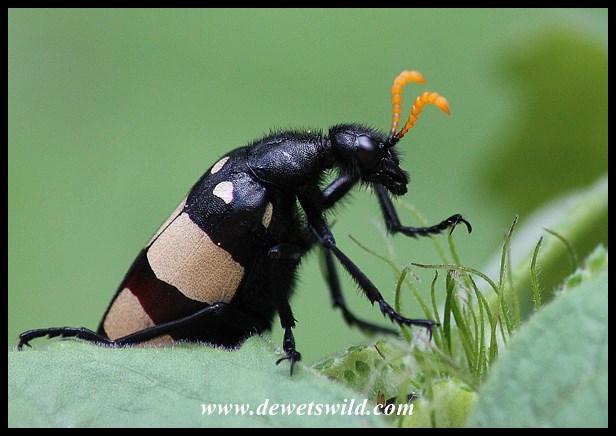
CMR Blister Beetle

Mylabris oculata

The CMR Blister Beetle is a large (4cm long) and colourfully-marked beetle in the family Meloidae, notorious for excreting the toxin cantharidin in defence against predators – this can cause blisters when making contact with skin and can even be fatal if ingested, both to humans and livestock.

After mating, the female lays her eggs in the ground. After hatching the larvae of the CMR Blister Beetle feeds on grasshopper eggs (including those of plague-causing locusts), while the adults feed on flowers and, often congregating in large numbers on flowering plants, are considered a pest in gardens and orchards. They are slow-flying insects. Adults are most often seen between late spring and early autumn. CMR Blister Beetles have very few specific habitat requirements and occur in almost every corner of South Africa.

The “CMR” acronym in this blister beetle’s name comes from the Cape Mounted Rifles, a military unit from South Africa’s colonial past whose colours resembled this beetle’s. In turn, the CMR Blister Beetle then became part of the Cape Mounted Rifles’ insignia.


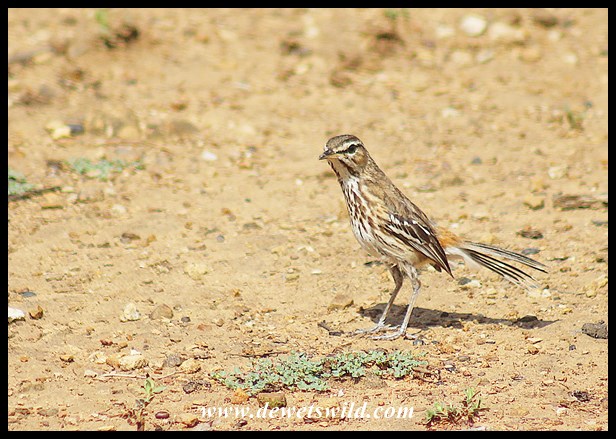
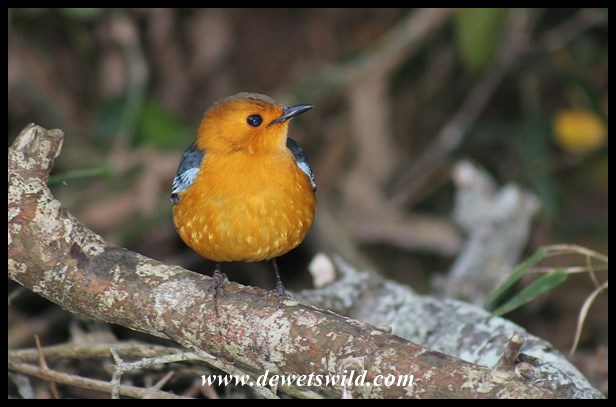
Red-capped Robin-Chat

Cossypha natalensis

The Red-capped Robin-Chat is an inhabitant of forests and dense woodlands, in South Africa to be found from the Eastern Cape through Kwazulu-Natal into the Lowveld and escarpment of Mpumalanga and Limpopo, and north of our borders widely through central and east Africa into southern Ethiopia. Insects make up the bulk of their diet and they are usually seen singly or in pairs.

Red-capped Robin-Chats breed in spring and summer. Pairs are monogamous and build cup-shaped nests in dense foliage or inside holes in trees, laying clutches of 2-4 eggs. This species occasionally hybridizes with the Chorister Robin-Chat. They are talented songbirds that can mimic up to 40 other kinds of birds, the whistling of a human and even the barking of a dog! Adults weigh around 32g with a length of about 16cm.

The IUCN classifies the Red-capped Robin-Chat as being of least concern.

Natal Green Snake

Philothamnus natalensis

The Natal Green Snake occurs only in southern Mozambique, Swaziland and South Africa (from the Garden Route, along the coast through the Eastern Cape into Kwazulu-Natal, Mpumalanga, Limpopo and Gauteng) with two subspecies – Eastern and Western – being recognized. It inhabits forests and woodland habitats, often near houses, where they feed mainly on frogs, small reptiles, chicks and large insects. This is an alert, active and agile snake that is entirely lacking in venom and thus harmless to humans. They breed in early summer, with females laying small clutches of 3-8 eggs (occasionally as many as 14). Adults grow to a length of about a meter.

The IUCN considers the species to be of least concern.

While visiting Umlalazi Nature Reserve in December 2018, Marilize was first to notice this Eastern Natal Green Snake one afternoon while enjoying the early evening hours on the patio of our accommodation unit. It was remarkably relaxed and unperturbed by our presence, and allowed us a few photographs before sneaking off while we weren’t watching.

African Mudhopper

Periophthalmus kalolo (P. koelreuteri africanus)

As a kid, the first time I learned about the existence of mudskippers, or mudhoppers, I was flabbergasted. Here was a fish-out-of-water that actually didn’t mind that at all! To this day I still find the idea absolutely fascinating. Mudskippers are amphibious fish that can survive out of water for considerable lengths of time by holding oxygenated water in their gill chambers and “breathing” through their wet skin and throat. Their pelvic fins are fused into suckers, allowing them to attach themselves to rocks and branches. And if that wasn’t astounding enough, they can use their fins and tails as legs and actually walk, run, hop, skip and jump on dry land!

The African Mudhopper is a small fish, growing to a maximum of about 14cm in length. They are carnivorous, feeding mainly on crustaceans, other invertebrates and smaller fish and spending most of their time looking for food on land rather than in water. When resting they usually do so with their tails in the water and bodies on the shore. Mudskippers live in the intertidal zone of river mouths, lagoons and estuaries, where the influence of the river, sea and tides conspire to create a challenging and constantly changing world of varying salinity and water levels. When their preferred mud flats become inundated by the incoming tide they hide from predatory fish in burrows that they dig themselves or they may use those of other creatures, like crabs, for the purpose. Males are territorial and display their colourful fins prominently to intimidate challengers and attract mates. Females lay their eggs inside the male’s nesting tunnels after mating, and the pair then cares for the eggs until they hatch.

The alternative name of “Common Mudskipper” is actually much more appropriate for this species, as they occur widely along the Indian and Pacific Ocean coastlines of Africa, Asia and Australasia. In our experience one of the very best places in our country to see these unique fish is the boardwalk through the mangrove swamp at Umlalazi Nature Reserve on the Kwazulu-Natal north coast.

Golden Orb-Web Spider

Genus Nephila

The Golden Orb-web Spiders are some of the most impressive, and noticeable, arachnids you’ll encounter in South Africa. With a body length of up to 6cm and legspan of 10cm or more, female Golden Orb-Web Spiders are much larger than the males (whose bodies are usually less than a cm long), whom are often found sharing a web with a female. The web from which their name is derived is extremely large; often over a meter wide and straddling the space between adjoining trees, bushes and fenceposts, woven in a wagon-wheel shape with concentric strands and strong enough to entrap even small birds, though insects are their main target. Several such webs are often found in close proximity to one another. These diurnal spiders can deliver a painful bite, but the venom of the Golden Orb-Web Spiders is not harmful to humans.

From his position at the edge of her web, the male will attempt to approach the female and mate with her while she is consuming her prey, for fear of becoming a meal himself (which often happens). Female Golden Orb-Web Spiders produce up to four egg sacs annually, each containing hundreds of eggs that take about two months to hatch.

There is eleven species of this genus in Africa.

African Firefinch


Lagonosticta rubricata

The shy African Firefinch is a tiny (11cm, 10g) seedeater inhabiting humid thickets in savanna and riverine woodland. They are usually seen in pairs or small groups.

Pairs are monogamous and the male is responsible for the building of the small ball-shaped grass-nest in a densely-leaved bush or dense grass during the summer months. Both parents share the incubation duties for the clutch of 2-5 eggs, which hatch after about two weeks. The nestlings are fed on small insects and fledge when they about 3 weeks old. The chicks become independent around 2 weeks after leaving the nest.

The African Firefinch has a rather patchy distribution across much of sub-Saharan AfricaThe IUCN lists it as being of least concern. In South Africa they can be found from the Eastern Cape, through Kwazulu-Natal, Mpumalanga and Limpopo and into Gauteng and the North West Province.


Sombre Greenbul

Andropadus importunus

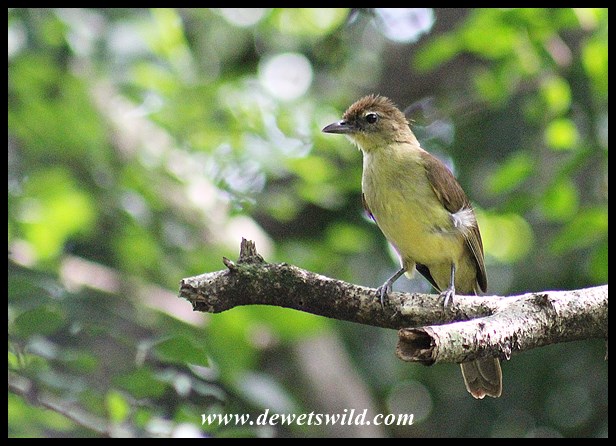
The Sombre Greenbul is a shy species, often more easily heard than seen. They are usually encountered singly or in pairs, feeding on insects and other invertebrates as well as ripe fruit and berries, nectar and flowers. They prefer dense habitats, ranging from forests to thickets in coastal scrub, where they usually move around in the middle and upper levels, and has adapted well to densely planted suburban gardens. Sombre Greenbuls breed in spring and summer, building their cup-shaped nests amongst dense leaves quite high above the ground.

The IUCN lists the Sombre Greenbul as being of least concern. It is distributed along Africa’s Indian Ocean coastline and adjacent hinterland from Somalia to South Africa, where it is to be seen in the Western and Eastern Cape, Kwazulu-Natal and the Lowveld and Escarpment of Mpumalanga and Limpopo provinces.


Greater Striped Swallow

Cecropis cucullata

One of our most familiar swallows, often found in close association with human habitation, is the Greater Striped Swallow. They prefer open, undulating and mountainous habitats, often near open water, where they hawk the flying insects that form their staple diet.

Greater Striped Swallows breed from early spring to deep in autumn and build mud-nests beneath overhanging rocks and toppled trees, but they have adapted well to using the underside of roofs and bridges for the purpose (see photos). Usually clutches consist of 3 eggs, incubated by the female alone for 3 weeks though both parents feed the chicks once hatched. The chicks start flying when they’re a month old but will return to the safety of the nest for a few days afterwards still. Adults measure about 18cm long and weigh around 25g.

Greater Striped Swallows are to be seen seasonally in most of Africa south of the equator, “wintering” in the DRC, Angola and Tanzania and moving southwards to breed in southern Africa from August to March – during summer they occur in virtually every corner of South Africa.  The IUCN considers it to be of least concern.


Arrow-marked Babbler

Turdoides jardineii

True to its name, the Arrow-marked Babbler is a noisy, social bird, usually encountered in territorial groups of between 3 and 15 individuals and commonly found in thickets in savanna and woodland habitats. Here they forage mostly on the ground, feeding on a variety of fruits, seeds, invertebrates and small reptiles. Pairs of Arrow-marked Babblers are monogamous, and assisted in the processes of nest building, incubation and chick-rearing by the entire group. They may breed at anytime of year, and clutches consist of 2-5 eggs that hatch after about 2 weeks. Adults of the species have a length of about 24cm and weight of around 72g

The Arrow-marked Babbler occurs in Africa south of the equator, and is listed as being of least concern by the IUCN. In South Africa it can be found in the provinces of Kwazulu-Natal, Mpumalanga, Limpopo, North West and Gauteng.

Umbrella Thorn

Vachellia (Acacia) tortilis

The Umbrella Thorn is one of the most characteristic large trees of our dry savanna regions, and occurs from South Africa through eastern Africa into northern Africa and Arabia. It is a hardy species and can grow to a height of 21m, with a classic umbrella-shaped canopy, though in very arid areas it seldom grows beyond a small scrub. The Afrikaans name, Haak-en-Steek, literally translates as Hook-and-Prick and is an excellent description of the arrangement of the Umbrella Thorn’s spikes. Umbrella Thorns flower in summer, producing dense masses of white flowers.

Umbrella Thorn wood can be used for making furniture, tools and fence posts, the leaves and pods are excellent fodder for game and livestock, and several parts of the plant is used in traditional medicines.