Category Archives: South African Wildlife

The inhabitants of South Africa’s wild places

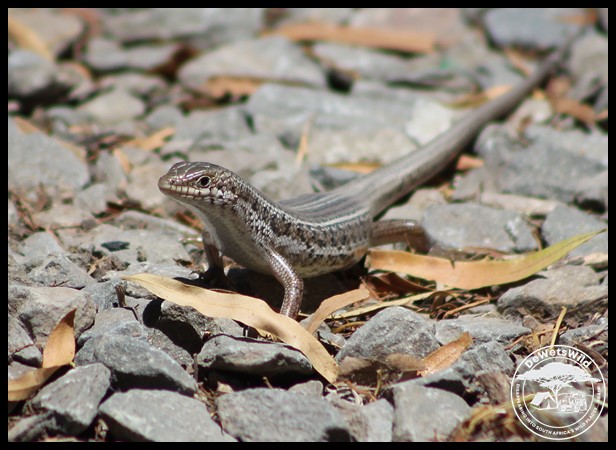
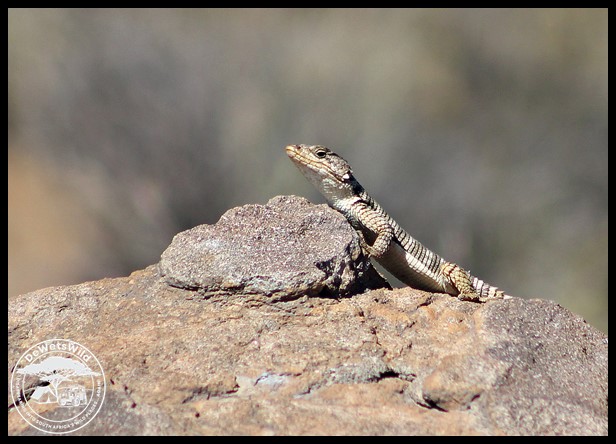
Tasman’s Girdled Lizard

Cordylus tasmani

Tasman’s Girdled Lizard occurs only in a limited area of the Eastern Cape, around (and on islands in) Algoa Bay. Here it lives in dead aloes and trees and on rocky outcrops and subsists on a diet of insects and other invertebrates. These are small lizards, growing to only about 7cm (tail excluded). Tasman’s Girdled Lizard is considered by some authorities, including the IUCN, to be a form of the more widely spread Cape Girdled Lizard.

World Wildlife Day 2025

In celebration of World Wildlife Day we take a look back at the 53 species of Southern African wildlife we featured in detail here at DeWetsWild through the past twelve months.

Barn Owl

Tyto alba

The species of owl with the widest distribution, being found on every continent except Antarctica, the Barn Owl is also found throughout South Africa and often in close association with human habitation. While it may roost in mine shafts and on buildings in towns and cities, in natural environments Barn Owls roost in trees and caves in any habitat with suitable numbers of prey. Barn Owls are almost completely nocturnal and feed on an extremely wide variety of creatures, ranging from insects and other invertebrates, small reptiles and birds to mammals the size of hares and rabbits.

Barn Owls nest at any time of year, using roost sites in building, hollows in trees or caves in which the female incubate clutches of about 6 eggs for approximately a month while the male provides her with food. When food is scarce chicks that hatch earlier may sometimes cannibalise their younger siblings. The chicks may stay in the nest for up to 2 months before taking their first flight, and usually start hunting for themselves at about 3 months of age.

With a worldwide population estimated at as many as 10 million, the IUCN considers the Barn Owl to be of least concern.

Common Milkweed Locust

Phymateus morbillosus

The vibrant colours of the Common Milkweed Locust, both in the adults and in the nymphs, serves as a warning to any would-be predators that these insects are not only foul-tasting but also potentially lethally toxic. They feed on poisonous plants, incorporating the toxins into their own tissues. The females lay their eggs in late summer with the nymphs then appearing the following spring and maturing slowly over the next 2 years. They’re found in open habitats over most of South Africa and usually in groups congregating on their favourite food plants.

Ludwig’s Bustard

Neotis ludwigii

Ludwig’s Bustard occurs only in the southern and western provinces of South Africa, Namibia and a corner of southern Angola. The IUCN considers it to be an endangered species, sadly indicating that, mainly due to in-flight collisions with telephone and power lines and wind turbines, their population has declined by at least 50% in the past 30 years.

The Ludwig’s Bustard inhabits open, arid scrubland in the Karoo, Kalahari and Namib, migrating considerable distances over these areas as it follows the rains and the resultant proliferation of seeds, rodents, insects and other invertebrates (it is an omnivore) that follows. They’re usually seen either singly or in small groups though congregations of up to 80 individuals have been recorded.

Male Ludwig’s Bustards are territorial, defending a small patch in which they try to keep and mate with as many females as possible during the breeding season that spans the spring and summer months, and playing no further role in the rearing of the precocial chicks. The female nests in a shallow scrape in the ground, usually surrounded by vegetation, incubating a clutch of 1-3 eggs. Fully grown they stand approximately 85cm tall, with a wingspan of up to 1.8m and weighing between 2.5kg and 4.5kg, males being considerably larger than females.

Karoo Toad

Vandijkophrynus gariepensis

The Karoo Toad is a medium-sized toad found in the dry Karoo, fynbos and moist mountain grassland from the Drakensberg on the border of the Free State and Kwazulu-Natal to the Atlantic coast of the Northern Cape. It is remarkably well adapted to both the extreme winter cold in the mountains and the high temperatures and dry climate of the West Coast. Adults are only about 7-9cm long, the females being larger than the males by a considerable margin. Like most other toads the Karoo Toad feeds mainly on worms and insects.

Fairy Flycatcher

Stenostira scita

The tiny Fairy Flycatcher occurs only in South Africa and Lesotho and marginally into neighbouring Namibia and Botswana. Their distribution in our winter months is much wider than in the rest of the year. Fairy Flycatchers live in the more arid and open regions of the country, preferring areas of thorny shrubland and grasslands with pockets of thorn trees, though they have become increasingly numerous in suburban gardens and plantations. Their diet is restricted to invertebrates, including insects and spiders, and they are usually seen singly or in pairs but only very rarely in small groups.

At the start of the nesting period in our spring season the female constructs a cup-shaped nest using very fine materials in a dense shrub. She also takes sole responsibility for incubating the clutch of 2 or 3 eggs which hatch within 3 weeks of being laid, though the male will provide her with food while she is on the nest. Fully grown Fairy Flycatchers weigh only about 6g and measure approximately 11cm in length.

According to the IUCN the Fairy Flycatcher is not at risk of extinction.

Indo-Pacific Bottlenose Dolphin

Tursiops aduncus

The Indo-Pacific Bottlenose Dolphin has a wide distribution in the coastal waters off Australia, Asia and Africa’s eastern seaboard. Locally they’re found as far west as Table Bay, living on a diet of fish and squid.

Indo-Pacific Bottlenose Dolphins live in pods numbering between 20 and 2,000 individuals. Females give birth to a single baby at 2-6 year intervals, following a 12-month long gestation. Fully grown, these dolphins measure about 2.6m in length and weigh between 150-230kg, and have a life expectancy of up to 40 years in the wild.

The IUCN considers the Indian Ocean Bottlenose Dolphin to be near-threatened, citing the species’ coastal occurrence which brings them into contact with many negative human-induced factors but also indicating that there’s been insufficient research on their population numbers and trends on a global scale.

Buff-streaked Chat

Buff-streaked Chat

Campicoloides bifasciatus

The Buff-streaked Chat is a bird that is found only in South Africa, Lesotho and Eswatini (formerly Swaziland), where it occurs mainly on the Drakensberg range and in its foothills (with an apparently isolated population in the Waterberg), being a denizen of grassy, boulder-strewn hillsides and isolated rocky outcrops, though it has also adapted to living near human dwellings on farms and in small towns. They feed primarily on insects and other invertebrates, taking seeds and nectar on occasion.

Usually encountered in territorial pairs, Buff-streaked Chats breed in the summer months, when the female builds a large, untidy cup of twigs, fine roots and grass in which she incubates a clutch of 2-4 eggs, usually in a crevice, under an overhanging rock or in a thick tuft of grass. Both parents take care of the nestlings and are often assisted by the young from the previous brood. Fully grown they measure about 16cm in length and weigh approximately 30g.

The IUCN considers the Buff-streaked Chat to be of least concern, and though commonly encountered where they occur their habitat must’ve been severely diminished in recent history with the proliferation on exotic plantations in their preferred distribution range.

Common Brown Water Snake

Lycodonomorphus rufulus

The Common Brown Water Snake is a small snake that on average grows to about 60cm in length, adult females being considerably larger than males. It is of no danger to anything except the small frogs, tadpoles and fish it feeds on, being as its name suggests closely associated with watery habitats where it is an excellent swimmer. The Common Brown Water Snake is non-venomous and kills its prey by constriction. It is placid by nature and rarely bites when handled. Females lay between 10 and 20 eggs in the summer months, with the babies hatching about 2 months later.

We have Joubert’s sharp eyes to thank for seeing this beautifully camouflaged specimen at a stream in the Mountain Zebra National Park. The sighting was rather unusual as these snakes are usually active at night.