Category Archives: South African Wildlife

The inhabitants of South Africa’s wild places

Sagewood

Buddleja salviifolia

With its sweetly-scented flowers, being a feature of our spring season, and its aromatic leaves, the Sagewood has become a popular garden plant frequented by a variety of birds and insects like bees and butterflies. It’s usual growth form is a shrub that may grow up to 4m tall. Sagewood occurs naturally throughout the wetter parts of South Africa, from the Western Cape to Limpopo, growing along streams and on hillsides. In traditional medicine the roots are boiled as a remedy for cough and colic, and in olden days the wood was used to make spears and fishing poles.

Wahlberg’s Striped Skink

Trachylepis striata wahlbergii

Wahlberg’s Striped Skink distribution centres in the Zambezi basin, from southern Angola, Zambia and western Mozambique into Zimbabwe, northern Botswana and northern Namibia. Some taxonomists consider it to be a species in own right, though more research is required to determine whether it is fact not only a subspecies of the Striped Skink, with which it shares many behavioural traits, including giving birth to live babies from eggs that develop and hatch inside the mother’s body instead of being laid. They are quite large and may grow to a length of 11cm, excluding the tail from the measurement.

Cuckoo Finch

Anomalospiza imberbis

The Cuckoo Finch is an uncommon and highly nomadic bird in South Africa, with a patchy distribution across parts of Gauteng, Limpopo, Mpumalanga and Kwazulu-Natal, and a much sought-after tick on the list of many avid local birdwatchers. These seed-eaters may migrate widely in response to rainfall and are usually seen in small flocks of between 8 and 50, though sometimes up to a thousand may move together. They’re also found over much of sub-Saharan Africa, though in a similarly patchily distributed and nomadic fashion.

Cuckoo Finches inhabit moist grasslands and wetlands and get their name from their habit of laying their own eggs in the nests of species of Cisticola and Prinia. Females lay up to 30 eggs during the summer season, leaving a single egg per nest after removing all the host’s own eggs from it. The chick hatches within two weeks and, being fed insects by its adoptive parents, grows quickly to the point where it is able to leave the nest before it is 3 weeks old. Its host parents will take care of it for several more weeks before it joins up with a flock of other Cuckoo Finches.

The IUCN lists the Cuckoo Finch as being of least concern.


Cape Skink

Trachylepis capensis

The Cape Skink inhabits a wide range of habitats and occurs in all South Africa’s provinces, in Namibia, Lesotho and parts of Eswatini, Zimbabwe and Botswana, and the IUCN considers the species to be of least concern. Sadly they suffer badly in urban areas due to predation by domestic cats. They tame easily and are quite gentle. These lizards are diurnal and hunt for insects in open patches. Females give birth to up to 18 live babies, usually in the summer months. Fully grown, and not including the tail, they may reach a length of 13cm.

Sickle-winged Chat

Emarginata sinuata

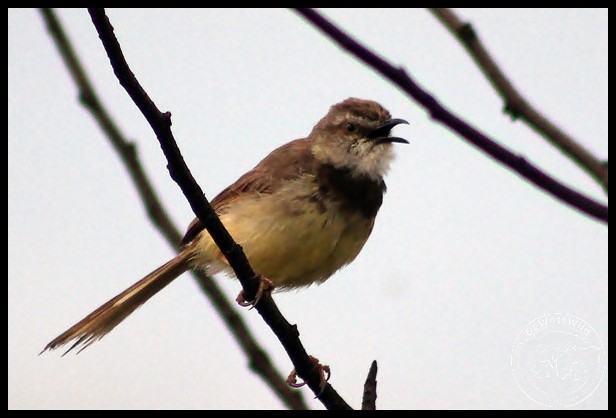
Many birds that live in arid habitats sport a rather dull colouration, and the Sickle-winged Chat, which inhabits fynbos, the open and arid Karoo plains and rocky mountain sides follows the same recipe for blending in with their sparsely vegetated surroundings. They feed mainly on insects and other invertebrates.

Sickle-winged Chats are usually seen alone or in pairs. They breed during the warmer parts of the year, building their nest on the ground at the base of a shrub of a tuft of grass and raising a clutch of 2-4 chicks.

The Sickle-winged Chat is endemic to Southern Africa, occurring in the western and central provinces of South Africa, throughout Lesotho and into southern Namibia. The IUCN considers it to be of least concern, given an apparently stable population and wide distribution.

Buquet’s Vagrant

Nepheronia buquetii

Buquet’s Vagrant – also sometimes called the Green-eyed Monster – is a species of butterfly occurring from the Western Cape, through coastal Eastern Cape and Kwazulu-Natal and into the Lowveld of Mpumalanga and Limpopo. Adults have a wingspan of about 5cm and can be seen throughout the year.

Southern Tchagra

Tchagra tchagra

The Southern Tchagra is a secretive bird that rarely ventures into the open and is difficult to see and even more so to photograph, even though they may be quite plentiful in at least parts of their range. They’re found from the Western Cape to the escarpment in Mpumalanga, occupying thickets in fynbos, thorny riverine vegetation, and woodland as well as the margins of evergreen forests. It feeds primarily on insects and other invertebrates, occasionally supplementing their diet with seeds and berries.

Southern Tchagras are monogamous and territorial. They build their cup-shaped nests well hidden inside a densely leafed shrub. The clutch of 2 or 3 eggs take a day or two over 2 weeks to hatch. The chicks grow quickly and leave the nest by the time they’re 2-3 weeks old. Fully grown Southern Tchagras measure around 21cm in length and weigh approximately 47g.

According to the IUCN there’s evidence that the Southern Tchagra is increasing in numbers and expanding its range and therefore lists it as being of least concern.

Karoo Girdled Lizard

Karusasaurus (Cordylus) polyzonus

The Karoo Girdled Lizard inhabits a large swathe of arid central and western South Africa, extending into southern Namibia, where it prefers rocky habitats and feeds on insects, being especially fond of beetles and grasshoppers. They’re often observed basking on exposed rocks, even in the heat of the day, and some populations hibernate through winter in tunnels dug beneath boulders. Females give birth to usually 2 babies during the height of summer. They grow to about 10cm in length, tail excluded. The IUCN considers the Karoo Girdled Lizard to be of least concern.

Orange-breasted Waxbill

Amandava subflava

A beautiful little seed-eating bird that is very patchily distributed across Sub-Saharan Africa, the Orange-breasted Waxbill, or Zebra Waxbill, inhabits moist grasslands and reedbeds. In South Africa it is therefore found mainly in the higher rainfall areas of the northern Free State, eastern North West Province, Gauteng, Limpopo, Mpumalanga and Kwazulu-Natal.

These waxbills take over the disused nests of other birds, converting it to their liking at the onset of the breeding season at the end of summer. The parents incubate the clutch of 3-7 eggs in turns, with the chicks hatching after about two weeks. The chicks grow quickly, fledging before they’re 3 weeks old and becoming independent about a fortnight later.

According to the IUCN the Orange-breasted Waxbill is in no danger of extinction.

Spike-heeled Lark

Chersomanes albofasciata

Spike-heeled Larks are nondescript little birds that inhabit open grasslands and scrublands, feeding on a wide variety of insects and other invertebrates. They move around in groups of up to 10 individuals and prefer areas with natural vegetation and seldom venture into cultivated or otherwise disturbed land.

Spike-heeled Larks nest in a scrape on the ground, usually made at the base of a grass tussock or shrub but in more arid areas even a pile of stones or sticks will do, as long as it provides some shade during the hottest hours of the day. It appears that they breed in response to rainfall and clutches may number up to 5 eggs, though 2 or 3 is the norm. The female incubates the eggs which hatch within 2 weeks, but both parents take responsibility for feeding the chicks until they leave the nest – sometimes even before they can fly. The chicks become independent at less than a month old.

Despite noting that their populations are probably declining due to expanding agriculture, the IUCN lists the Spike-heeled Lark as being of least concern. The species is found in parts of every South African province with its core distribution extending into neighbouring Botswana, Namibia and beyond into Angola, with isolated populations in the DRC and Tanzania.