Category Archives: South African Wildlife

The inhabitants of South Africa’s wild places

Greater Honeyguide

Indicator indicator

Famous for its habit of leading humans to beehives – bees, their larvae, honey and wax making up the bulk of its diet – the Greater Honeyguide is one of those birds that people find very interesting. The symbiotic relationship with a mammalian creature that’s brave and strong enough to open up a beehive for it was honed over millennia and is a powerful reminder that humans are supposed to be part of the ecology and not separate from it. The call it uses when leading a human to a beehive is very different to the song it uses to communicate with others of its species. There is a superstition in the bush that, if you’re not going to help the honeyguide get its meal this time next time it will lead you straight to a dangerous predator as punishment.

Greater Honeyguides live in a wide range of habitats, from fynbos to woodland and riverine forests and even plantations of exotic trees. They are brood parasites, meaning that the female sneaks a fertilised egg into the nest of a different species of bird (and destroys any of the host’s eggs in the process) so that they can raise the chick. This usually happens from early spring to mid-summer, during which time the honeyguide female can lay as many as 21 eggs in separate nests, with almost 40 kinds of host birds recorded in southern Africa alone. The honeyguide chicks usually depart their adoptive family at about 2 months of age.

Although they’re not common the Greater Honeyguide has a wide distribution across most of South Africa and beyond our borders inhabit most of sub-Saharan Africa, with the exception of deserts and the equatorial forests. The IUCN considers it to be a species of least concern.

Southern African Vlei Rat

Otomys irroratus

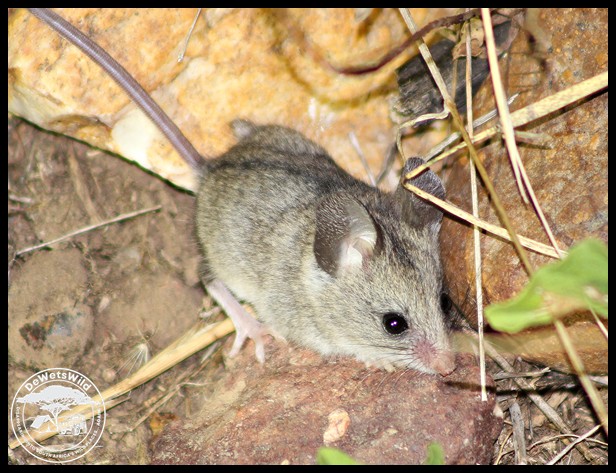
The Southern African Vlei Rat is found in South Africa, Lesotho, Eswatini, Zimbabwe and Mozambique. The species is closely associated with wet and marshy areas in grassland and heathland, often on mountains and hillsides, feeding mainly on fresh shoots of grasses, reeds and sedges. Like others of the family the Southern African Vlei Rat is diurnal and move along singly or in family groups using well worn pathways radiating from their nest, built in a thicket using a variety of plant materials.

The Southern African Vlei Rat is extremely fertile and females may have up to 7 litters of as many as 7 babies each in a year. The babies are weaned by the time they’re between 2 and 3 weeks old and females are sexually mature before they’re 3 months of age. Fully grown adults weigh around 120g and measure about 25cm in length (including their tail). They have a life expectancy of less than 2 years in the wild and are a favourite prey of a wide range of predatory mammals and birds.

Toad Tree

Tabernaemontana elegans

The Toad Tree gets its name from its characteristic warty green fruit’s superficial resemblance to the amphibian. They’re usually found in the form of a shrub or small tree up to 5m tall, growing along riverbanks in the Lowveld or the coastal forests of Kwazulu-Natal. Toad Trees flower in our summer months. The ripe fruit, often still on the plant, split open to reveal the pulp inside, which is eaten by a range of animals and birds, including people and black rhinos. Most browsing animals will also feed on the leaves. Other parts of the plant is sometimes used in traditional medicine though some of these have been found to be toxic.

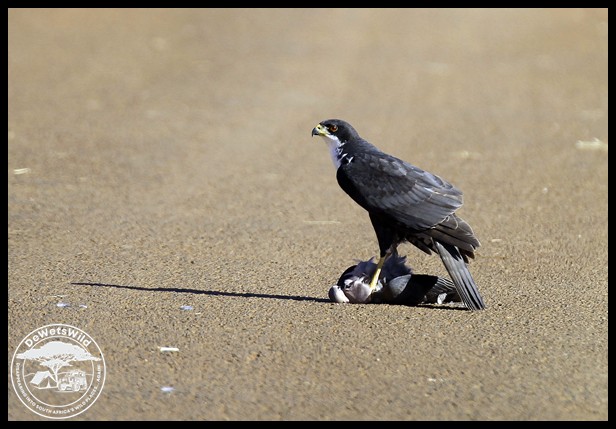
Peregrine Falcon

Falco peregrinus

The Peregrine Falcon is a cosmopolitan bird, found on every continent except Antarctica. According to the IUCN the species is growing in number and therefore considered to be of least concern. Though widely distributed in South Africa they’re not common here. Most local birds are resident throughout the year, though some migrants join them during our summer months.

Peregrine Falcons are fond of mountainous areas, where they breed on the cliffs. In urban locations city skyscrapers are useful alternatives to cliffs and as a result they can be a very effective biological control agent of pigeon population in city centres, as Peregrine Falcons feed mainly on birds caught and killed in flight – in a dive they can reach speeds of 300km/h, usually killing their prey instantly when striking it with their talons at high speed.

Peregrine Falcons form permanent monogamous pairs, building a stick platform nest on a ledge or cavity (natural or man-made) in which they usually lay a clutch of 1-4 eggs at the end of winter or early spring. The female is mostly responsible for incubating the eggs over a 5 week period, while the male will provide food for her at the nest. The chicks make their first flight at about 7 weeks of age but only become independent at about 4-5 months old.

During a visit to the Dullstroom Bird of Prey and Rehabilitation Centre in September 2020 we were treated to a display of the Peregrine Falcon’s prowess in the sky by Charlie, a hand-raised bird being cared for at the centre.

Charlie the Peregrine Falcon

A Giraffe with a bone to pick

While on a recent tour of the Pilanesberg National Park we came across this Giraffe comically sucking on an old bone it picked up in the veld. Osteophagia – the behaviour in which herbivorous animals chew on bones – is thought to be a way for these animals to supplement the calcium and phosphate levels in their bodies, especially during the dry season when their usual fodder – leaves, in the case of giraffes – may not be adequately providing in their needs.
Bushveld Rain Frog

Breviceps adspersus

The adorably rotund Bushveld Rain Frog is found in parts of all South African provinces, with the exception of the Western Cape. They inhabit areas with sandy soil in savanna and grassland habitats, feeding mainly on invertebrates and being especially fond of termites. They walk or run and can’t hop like other frogs do. When feeling threatened they inflate their bodies to become even rounder!

During the dry winter Bushveld Rain Frogs remain underground, but emerge after the first rains when the males start calling from above ground. Adult females, at 6cm in length, are quite a bit larger than the males, and so when it is time to mate the male secretes a glue-like substance that attaches him to the back of the female. She then burrows backwards, male still stuck to her back, to end in a chamber about 30cm deep in the soil. They mate as she lays about 45 large eggs and cover them with a jelly which is thought to turn to a liquid when the eggs hatch. With the female staying nearby the young complete their metamorphosis inside the underground chamber and emerge as fully formed little frogs.

Retz’s Helmetshrike

Prionops retzii

In South Africa, Retz’s Helmetshrike occurs only in the north-eastern corner of the country, from the escarpment and Lowveld of Limpopo to the extreme north of Kwazulu-Natal, which is a clue to its habitat preference, being for tall woodlands and riverine forests in areas with higher rainfall. North of our borders they’re found widely over Africa south of the Equator and the IUCN considers it to be of least concern.

Retz’s Helmetshrike follows a mainly insectivorous diet, though they’ll also take spiders and other invertebrates as well as the occasional gecko. It lives in territorial family groups numbering up to 10, who all work together to raise the dominant pair’s latest brood – the whole group works at building the cup-shaped nest, incubating the clutch of 3-5 eggs that is usually laid in late spring or early summer, and feeding the nestlings which hatch after about 3 weeks and leave the nest roughly the same length of time after hatching.

Lesser Crested Tern

Thalasseus bengalensis

Lesser Crested Terns occur near sandy beaches at estuaries and lagoons, often foraging inland or up to 6km from shore over the ocean,  but usually roosting at the beach, often in mixed flocks with other terns and gulls. They feed mainly on fish, with crustaceans, squid and octopus featuring only occasionally in their diet.

A non-breeding summer visitor to South African shores, while common during this time along the coast of Kwazulu-Natal, the Lesser Crested Tern is found much less frequently in the Eastern and Western Cape. Beyond our borders they occur widely through the Indian Ocean and nearby parts of the Pacific, as well as along the coastline of North Africa. According to the IUCN they’re in no danger of extinction at present.

Long-winged Orange Acraea

Acraea (Hyalites) alalonga

The Long-winged Orange Acraea has a limited distribution, being found only on the Drakensberg escarpment and its foothills from Limpopo to northern Kwazulu-Natal. They inhabit montane grasslands. Adults are seen specifically only in two periods of the year; November to January, and again March to May, and have a wingspan of around 6-7cm. The larvae feed on the leaves of plants from the legume family.

Giant Waterbug

Family Belostomatidae

The Giant Waterbugs – the South African species, of which there are 7, grow up to 9cm long! – are fierce insect predators that inhabit well vegetated ponds, marshes and slow-flowing streams. These insects store air in a chamber underneath their wings allowing them to stay submerged while hunting for prey. They’ll catch and devour anything that they can overpower, including insects, tadpoles, frogs and fish. The adults are strong fliers and often attracted to outside lights. In five of the local species the male carries the eggs on his back until the larvae hatch, which is why they’re also called Brooding Waterbugs, while the remaining two species simply attach their eggs to vegetation.