Category Archives: South African Wildlife

The inhabitants of South Africa’s wild places

Marsh Owl

Asio capensis

The Marsh Owl inhabits wetlands, covered by reeds and sedges, and tall grasslands, occasionally venturing into areas of thorny savanna, and are quite nomadic. Where it occurs it is seen more easily than most other kinds of owls as they are often active from early dusk till well after first light, especially when feeding chicks. They’re also much more social than others of their kind and may congregate in groups of more than 50 birds outside of the breeding season. Marsh Owls hunt mostly on the wing, gliding low to the ground and taking prey ranging in size from termites and snails to bats, rodents, snakes, lizards, frogs and birds up to the size of pigeons. They often store their captured prey in a larder to consume later.

Marsh Owls nest in shallow depressions on the ground, well hidden at the base of dense vegetation, usually during the dry season. They form monogamous pairs and the female takes sole responsibility for incubation of the clutch of 2-6 eggs while the male brings her food at the nest. The chicks stay in the nest for only about two-and-a-half weeks, even though they won’t be able to fly for several weeks more, staying well hidden in dense vegetation at ground level until they fledge. They probably remain dependent on their parents until they’re about 3 months old. Fully grown Marsh Owls measure about 35cm in length and weigh approximately 300g.

The IUCN considers the Marsh Owl to be of least concern. It is widely distributed in Madagascar and east, central and southern Africa, with isolated populations on various parts of West Africa and Morocco. Here in South Africa they’re mainly found in the grasslands of the Highveld (Gauteng, Free State, Mpumalanga and North West) where the Rietvlei Nature Reserve on Pretoria’s southern outskirts is an excellent location to find and view them.

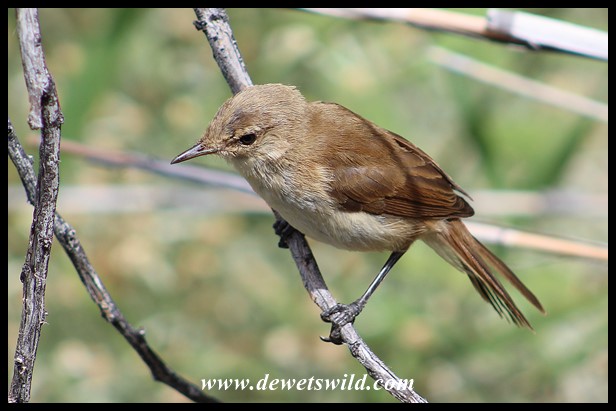
African Reed Warbler

Acrocephalus baeticatus

As its name suggests the African Reed Warbler is a small (∼10g in weight, ∼13cm in length) insectivorous bird closely associated with reedbeds and wetlands and even garden ponds, farm dams, sewage works and sugar-cane fields.

African Reed Warblers are monogamous and territorial and breed during spring and summer. Their nest is a cup-shaped construction of grass and reed leaves attached to emergent vegetation or willow twigs drooping over the water. Both parents incubate the clutch of 2 or 3 eggs for about a fortnight, with the chicks leaving the nest when they’re around two weeks old.

African Reed Warblers are found at suitable habitat throughout South Africa throughout the year and over much of Sub-Saharan Africa and Arabia as well. The IUCN considers the African Reed Warbler to be a subspecies of the Common Reed Warbler (Acrocephalus scirpaceus) which is also found in Europe and parts of Asia and which it lists as being of least concern.

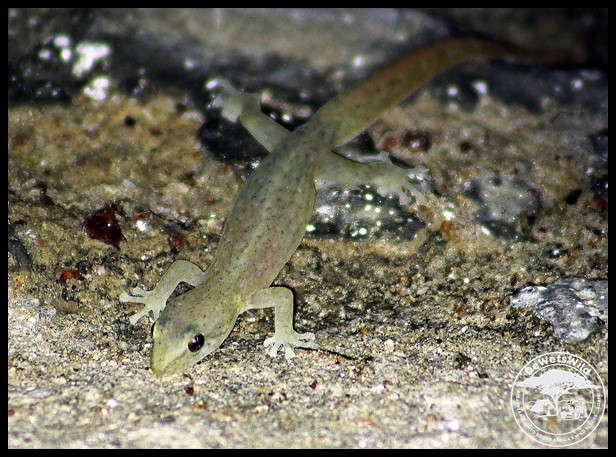
Marbled Leaf-toed Gecko

Afrogecko porphyreus

A nocturnal gecko that is endemic to South Africa and occurs only in pockets of our Eastern and Western Cape Provinces, the Marbled Leaf-toed Gecko is commonly found in rocky areas, fallen trees and in and around houses within the fynbos biome. It would appear that they’re not territorial and are often found in close proximity to several other individuals of the same species where food is plentiful. Females lay two small eggs under bark or in a crack in a rock, but several females may lay their eggs in the same spot. The baby geckos emerge about two months later and grow quickly. Fully grown Marbled Leaf-toed Geckos measure about 5cm long excluding their tails.

Perennial Glasswort

Salicornia perennis

The Perennial Glasswort is a creeping, low growing – up to only about 30cm high – succulent plant adapted to growing in soil with extreme salinity, occurring along coastlines of Africa, Europe and North and South America. It thrives in areas subject to calm tidal inundation, like the salt marshes of the Langebaan Lagoon in our West Coast National Park, where the plants cover large swathes of muddy ground and are often entirely covered by sea water when the tide is high.

Blue-billed Teal

Spatula hottentota

A shy bird that is easily overlooked, the Blue-billed Teal inhabits permanent freshwater wetlands with densely vegetated banks and lush emergent vegetation like rushes and reeds. They’re omnivores and their diet includes a wide variety of aquatic plants and invertebrates and occasionally even frogs. Blue-billed Teals are usually encountered in pairs or small flocks.

Blue-billed Teals breed mainly towards the end of summer and into early autumn. The male plays little to no role in the incubation of the eggs or the rearing of the chicks. It’s the female that constructs the bowl-shaped nest of grass and down on the ground, that incubates the clutch of up to 12 eggs for about 4 weeks and that rears the chicks, which fledge by about 2 months of age. Fully grown they’re about 35m long and weigh approximately 250g, making it one of the smallest duck species in our country.

The Blue-billed Teal is rather uncommon in South Africa, with a limited distribution and populations concentrated in Gauteng and adjacent parts of the Free State and Mpumalanga, parts of Kwazulu-Natal and coastal pockets in the Eastern and Western Cape. Beyond our borders they’re found in a band across central and eastern Africa as far north as Ethiopia, with further populations in Madagascar and northern Nigeria and neighbouring parts of Niger and Chad. According to the IUCN this species is of least concern.

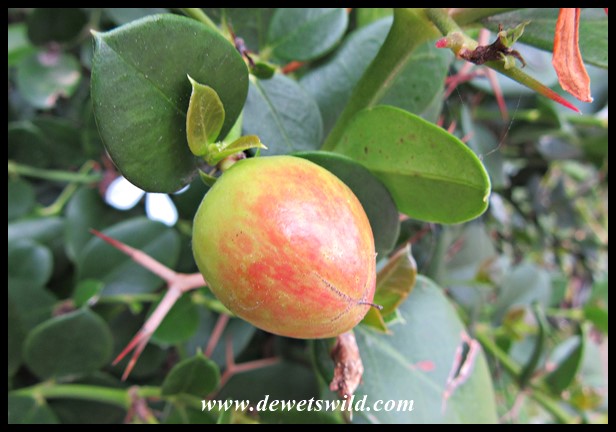
Natal Plum

Carissa macrocarpa

The Natal Plum – also known as the Big Num-num – is an evergreen shrub species that thrives in coastal bush and forests stretching from the district of Gqeberha (formerly Port Elizabeth) in the Eastern Cape to southern Mozambique. Its usual growth form is a densely leafed, spiny shrub up to about 4m high. It is a popular garden plant in frost-free areas as it lends itself perfectly to being trimmed into a hedge, its pure white blossoms smell of citrus flowers and the large fruit are edible in their entirety – it is even used in jams – and extremely rich in vitamin C, magnesium and phosphorous.

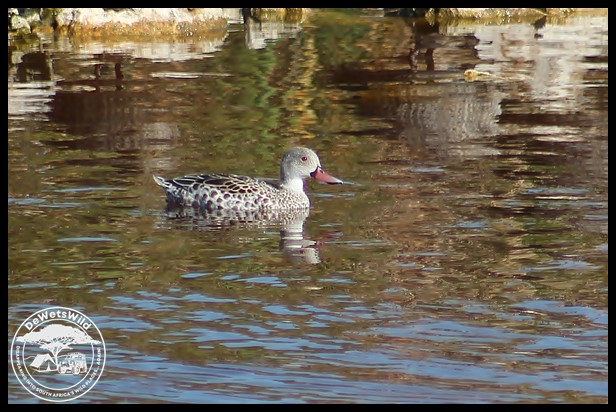
Cape Teal

Anas capensis

An inhabitant of permanent and ephemeral wetlands of varying salinity, the Cape Teal feeds mainly on aquatic invertebrates and tadpoles with plant material making up a smaller part of its diet. They have also adapted to using farm dams and sewage ponds and greatly expanded their range as a result. They’re usually seen in pairs or small mixed flocks, though they may congregate in enormous numbers on deep water when moulting. They will move over short distances to find more suitable habitats when seasonal water bodies start drying up.

Pairs of Cape Teal are monogamous and breed on dry land, following good rains. The female builds a bowl-shaped nest of soft plant material lined with down. She lays a clutch of up to 13 eggs, though more usually around 8, and incubates them for about 4 weeks. She leads the ducklings to water very soon after hatching and they are adept at swimming and diving right from the start. The ducklings stay with their mother until they’re about 2 months old. Fully grown Cape Teals weigh around 400g and measure about 46cm long.

The Cape Teal has a rather patchy distribution in sub-Saharan Africa. Being especially numerous in our Western Cape Province, they’re found widely in South Africa and our neighbouring states as far as Angola, with more isolated populations in eastern and central-west Africa. According to the IUCN the Cape Teal is of least concern.

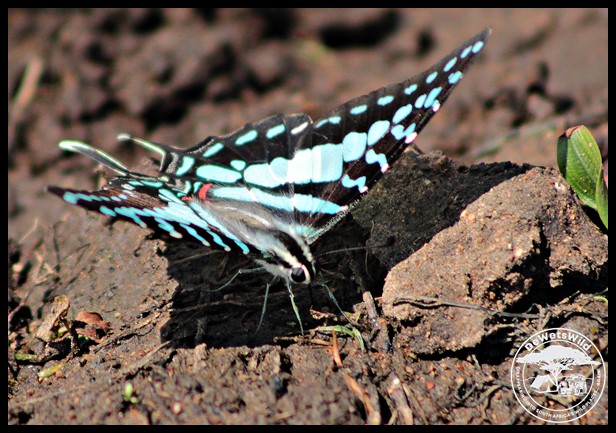
Large Striped Swordtail Butterfly

Graphium antheus

A big and striking butterfly, the Large Striped Swordtail inhabits moist savannas and coastal forests and in South Africa can be seen through most of Limpopo, low-lying parts of Mpumalanga and most of Kwazulu-Natal. Adults of both sexes, on the wing from spring to autumn and boasting a wingspan of around 7cm, can often be seen visiting flowers but the males – as depicted in some of the images below – are especially fond of muddy puddles as well and will often congregate there in large numbers. These butterflies are very strong fliers.


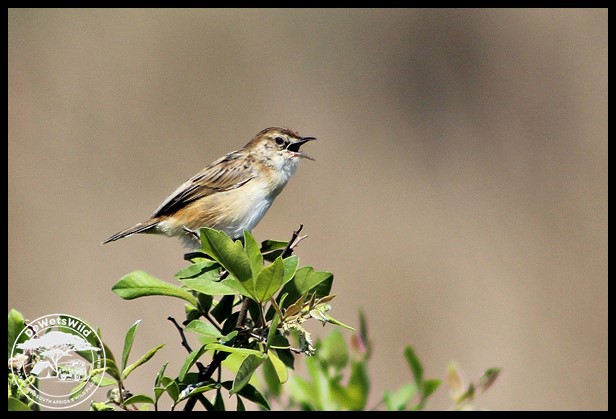
Zitting Cisticola

Cisticola juncidis

The Zitting Cisticola – also known as the Streaked Fantail Warbler in parts of its range – is the most widely distributed of its family and occurs over much of Africa, Europe, Asia and Australia with most of these populations being resident year round. In South Africa it is found in all our provinces, being absent only from the driest parts in the west of the country. The IUCN, siting its wide distribution and apparently increasing population, lists the Zitting Cisticola as being of least concern.

Zitting Cisticolas inhabit open country; naturally mostly savannas, grasslands and seasonally flooded wetlands, but they’ve also taken to croplands, golf courses and airstrips. They feed exclusively on insects and other invertebrates and have a special liking for grasshoppers.

In the breeding season, which peaks in summer, the male constructs a pear-shaped nest inside a tuft of green grass using spider web and plant material – a process that could take in excess of 2 weeks to complete without any guarantee that the female will approve (and if she doesn’t, he has to take the whole thing apart and start over!). The female in turn is solely responsible for incubating the clutch of 2-5 eggs over a two week period, and she also does most of the feeding of the chicks which grow rapidly and fledge within 2 weeks of hatching. Infidelity is common among males and he may have several consecutive mates in a breeding season, and sometimes more than one at the same time! Adults weigh around 9g and measure about 11cm long. They’re usually encountered alone or in pairs and the males are probably territorial.

World Wildlife Day 2024

In celebration of World Wildlife Day we take a look back at the 75 species of South African wildlife we featured in detail here at DeWetsWild through the past twelve months.