Category Archives: Kwazulu Natal Province

Our experiences in the reserves of Kwazulu-Natal, South Africa

The rugged beauty of Mission Rocks

Today a very popular picnic and fishing spot north of St. Lucia Town in the iSimangaliso Wetland Park, Mission Rocks is named for a Catholic mission station established in the area in 1888. The path leading from the parking area to the beach opens onto a scene of rugged, rocky beauty, revealing rock pools teeming with life at low tide and impressing with the thundering of crashing waves at high tide. There’s a sandy, open beach 500m northwards of the rocks, with a sea-cave where thousands of bats roost.

On the way to Mission Rocks, the uMziki viewpoints and picnic site, set right in the coastal forest, is a worthwhile stop. From atop the dune there’s views over Lake Saint Lucia to the west and the Indian Ocean to the east, and down below in the forested picnic site there’s an astounding variety of birds that would normally be very shy but here seems quite habituated to having humans around. There’s also usually a couple of red duiker to be seen.


St. Lucia’s Crocodile Centre

Lake Saint Lucia is the core of a vast ecosystem, rightfully included in South Africa’s first designated World Heritage Site, the iSimangaliso Wetland Park. The Crocodile Centre, managed by Ezemvelo KZN Wildlife at the Bhangazi Gate into the Park, and the self-guided trails in the adjacent game park, offers an excellent introduction to this Park of “miracles and wonders” (the English meaning of the isiZulu word iSimangaliso). It also has the best stocked curio shop in town and a lovely tea garden.

Of course the crocodiles, an integral part of the lake’s ecological functioning, are the star attractions. On display are not only specimens of our indigenous Nile Crocodiles ranging in size from newly hatched babies to “monsters” over 4m in length, but the centre also houses Dwarf and Slender-Snouted Crocodiles from tropical Africa and a couple of American Alligators. You can also try your hand at spotting another of iSimangaliso’s very secretive inhabitants, the extremely venomous and expertly camouflaged Gaboon Adder.

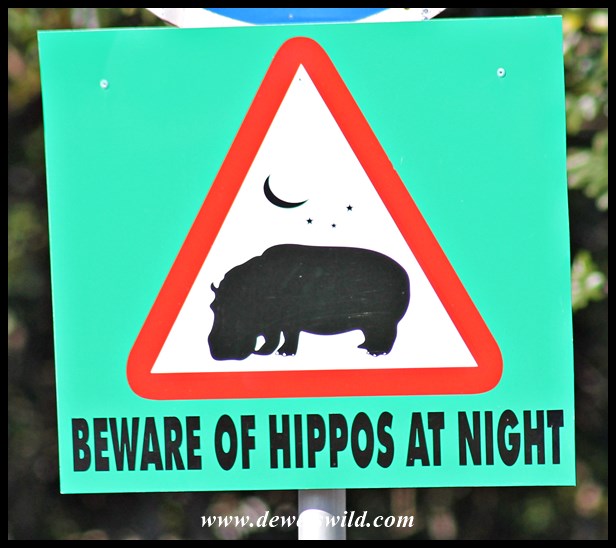
The centre’s beautiful gardens are a magnet for other wildlife, and we always get a kick from the humorous signs (to us, anyway).

Saint Lucia is a unique town, located on a wedge of land at the mouth of Lake St. Lucia, between the lake and the Indian Ocean, and entirely surrounded by the iSimangaliso Wetland Park. All kinds of wildlife roam the town, including hippopotamus and leopard. Right in town, a magnificent piece of coastal forest can be explored along the Gwalagwala Trail. A number of private operators offer guided tours of the area, and several launch-tours operate on the estuary. Two camping areas and a host of privately run establishments offers overnight accommodation, and the town has most of the facilities you’d expect (shops, restaurants, doctor, fuel station, boat club, picnic sites), making St. Lucia an excellent base for a bush-and-beach holiday.
Crocodile Centre (23)


Cruising Lake St. Lucia

Participating in a guided launch tour of Lake St. Lucia is one of the most memorable experiences to be had in the iSimangaliso Wetland Park. Several operators offer tours lasting about two hours and departing at different times of the day. In this time the cruisers move about 8km up into the lake from the jetties in St. Lucia town, bringing visitors close to a variety of aquatic life and giving an interesting glimpse into the ecology of the lake system.

During our recent visit to iSimangaliso, we enjoyed a tour on the 80-seater Santa Lucia, a joint operation between Ezemvelo KZN Wildlife and Thompsons Tours. A cashbar on board sells drinks and snacks while a guide gives detailed explanations of the surroundings and wildlife encountered along the way. We passed several pods of hippos (witnessing one naughty youngster chewing on another tourboat), a few crocodiles, numerous birds, wildlife on the shore, got a chance to view the mangrove marshes and even saw a shark’s dorsal fin briefly break the water’s surface.

This gallery should give you some idea of what you can look forward to on a guided launch tour of Lake Saint Lucia!

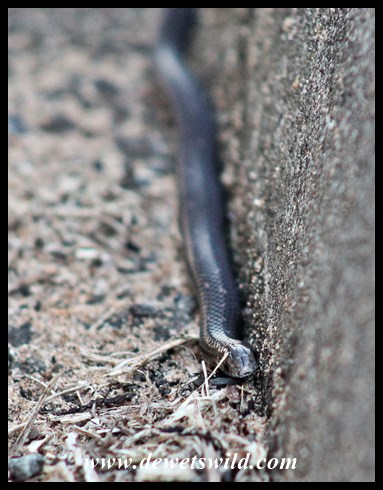
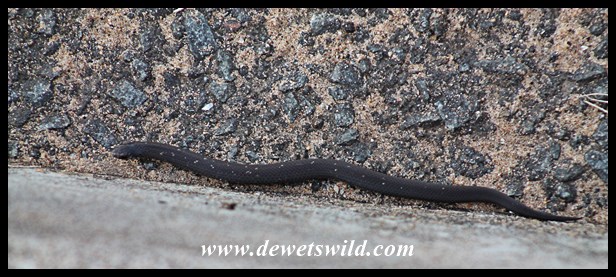
Variegated Slug Eater

Duberria variegata

While visiting the iSimangaliso Wetland Park recently, we came across this tiny snake at  the Amazibu Hide between St. Lucia Town and Cape Vidal.

Variegated Slugeater (2) Variegated Slugeater (4)

Referring to our copy of the Field Guide to Snakes and Other Reptiles of Southern Africa (Bill Branch, Third Edition 1998), Marilize suspected it to be a Variegated or Spotted Slug Eater, an identification confirmed with the assistance of the helpful people at the SA Reptiles Forum.

These snakes are endemic to a very small piece of South Africa’s north-eastern and Mozambique’s southern coastline, occurring in dune forests and grasslands (habitat in abundance at iSimangaliso). It burrows in leaf litter and sandy substrates and, as its name suggests, feeds on slugs and snails. Females give birth to between 7 and 20 live young, about 10cm in length, in late summer, which would mean the 12cm-long specimen we encountered was still quite young (Adults grow to between 22cm and 34cm).

Just goes to show that no matter how much time you spend in natural environments, there’s always something new to discover and interesting to learn!


Hungry Hungry Hippo!

Just when you thought it was safe to go back into the water…

Well, when it’s Lake Saint Lucia you’re talking about then it is never safe to go into the water, thanks to the hippos, crocodiles and sharks that populate this aquatic environment. Better to be safe ON the water then? Only if you don’t encounter this playful young hippo, seemingly intent on making a meal of the tourist launch!

Luckily for the tourists on the boat, mom intercedes and calls him to order, dispensing quick discipline hippo-style with a bite and a roll on top of the little delinquent.

This delightful scene played out while we were enjoying a guided launch-tour of Lake Saint Lucia aboard the Santa Lucia, during our recent visit to the iSimangaliso Wetland Park. We’ll share more photos and memories from the cruise in an upcoming edition of de Wets Wild.

At the end of a wonderful long weekend…

Our long weekend at the iSimangaliso Wetland Park has come to an end, but please “stay tuned” in the weeks to come as we’ll share some of our latest experiences from this spectacular world heritage site.

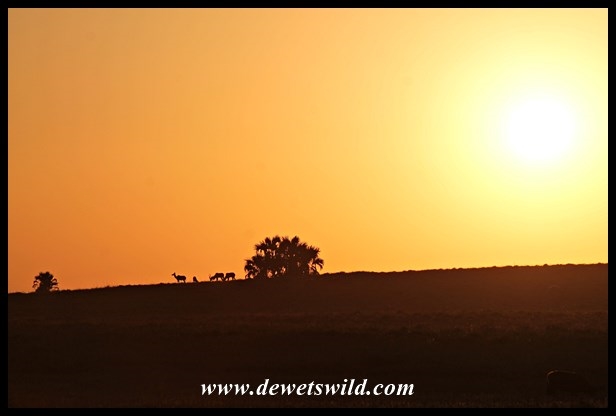
iSimangaliso Sunrise

No place like Cape Vidal…

Apart for Cape Vidal and the iSimangaliso Wetland Park, we can’t think of any other place in South Africa (or the world) where you can end a day of fun at the beach with a fantastic sighting of a leopard walking mere centimeters away from your car window. And that’s exactly how our day played out!

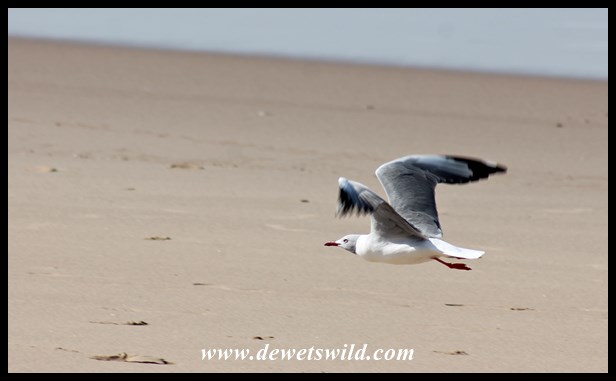
Grey-headed gull taking flight at Cape Vidal's beach

Grey-headed gull taking flight at Cape Vidal’s beach

Leopard sighting on the Grassland Loop - 15th June 2015

Leopard sighting on the Grassland Loop – 15th June 2015

St. Lucia flypast

Today we joined a tour of Lake Saint Lucia aboard the Santa Lucia cruiser, and this low level flypast by an African Fish Eagle was just one of the highlights!

St Lucia Flypast

Cape Vidal, 13 June 2015

We were the first car into the iSimangaliso Wetland Park through Bhangazi Gate this morning, before sunrise. And this leopard sighting was just one of the day’s highlights!

We’re spending three nights at picturesque Cape Vidal, and can’t wait to experience all that iSimangaliso has in stall for us tomorrow…

Cape Vidal Leopard 20150613

Time off

Time away from work and school.

Time to allow the warm glow of an African sunset to rejuvenate body and mind.

We’re spending a long weekend in the iSimangaliso Wetland Park!

Time off

Off-Season” is the theme for this week’s WordPress Photo Challenge