April ’25 update from Rietvlei Nature Reserve

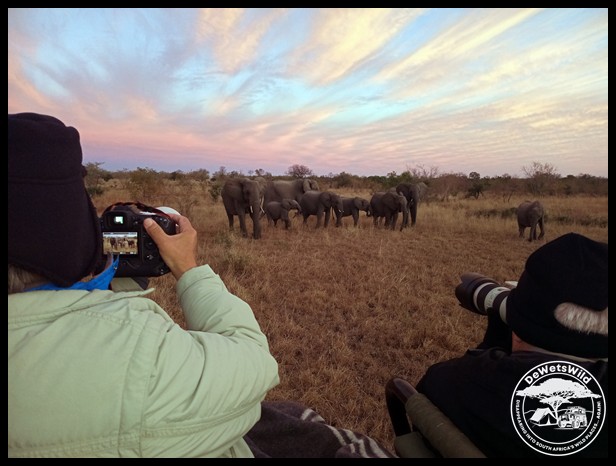
March and April knell in the autumn season in our part of the world, and while we still had lots of rain in both months temperatures have also declined noticeably of late with the sun rising ever later and setting ever earlier. Misty mornings are the order of the day now at our local Rietvlei Nature Reserve and the colours in the leaves are matched by a large number of autumn butterflies. I’ve had the pleasure of guiding several groups on drives through the reserve the past two months, and in conjunction with Hannes Rossouw Photography we also hosted learners from Joubert’s high school’s photography club on a wildlife and nature photography workshop.

As mentioned, we’re experiencing many misty mornings at this time of the year and, while it makes early morning game-viewing tricky the multitude of wet spiderwebs illuminated by the first rays of sunlight are a sight to behold!

A most remarkable sighting this past month was of a Black-headed Heron that had caught a Brown House Snake!

Rietvlei is still delivering lots of interest for bird lovers, not least of which was a flock of cuckoo finches that spent several weeks in the reserve before moving on.

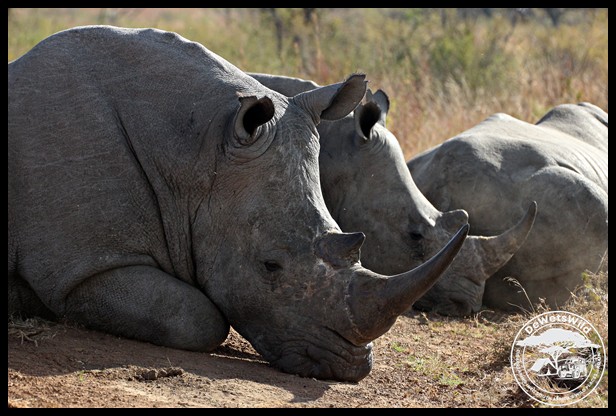
Rietvlei’s densely vegetated grasslands is still making it very difficult to see any of the smaller kinds of mammals that call the reserve home, but thankfully the large population and wide variety of larger animals are still playing their part to make our guided drives and walks most memorable.

If you’d like to join me on a guided tour of Rietvlei – on a hike or on an open vehicle drive – you can book through melanie@rietvleicoffee.co.za / +27(0)74-820-9926.

List of birds we saw at Rietvlei Nature Reserve during March and April 2025 (109 species):

Scientific Afrikaans English
Acridotheres tristis Indiese Spreeu Common Myna
Acrocephalus gracilirostris Kaapse Rietsanger Lesser Swamp Warbler
Afrotis afraoides Witvlerkkorhaan Northern Black Korhaan
Alopochen aegyptiaca Kolgans Egyptian Goose
Amandava subflava Rooiassie Orange-breasted Waxbill
Amblyospiza albifrons Dikbekwewer Thick-billed Weaver
Anas sparsa Swarteend African Black Duck
Anas undulata Geelbekeend Yellow-billed Duck
Anhinga rufa Slanghalsvoel African Darter
Anomalospiza imberbis Koekoekvink Cuckoo-Finch
Anthus cinnamomeus Gewone Koester African Pipit
Apus apus Europese Windswael Common Swift
Apus caffer Witkruiswindswael White-rumped Swift
Ardea melanocephala Swartkopreier Black-headed Heron
Asio capensis Vlei-uil Marsh Owl
Batis molitor Witliesbosbontrokkie Chinspot Batis
Bostrychia hagedash Hadeda Hadeda Ibis
Bubulcus ibis Veereier Western Cattle Egret
Burhinus capensis Gewone Dikkop Spotted Thick-knee
Butorides striata Groenrugreier Green-backed Heron
Caprimulgus pectoralis Afrikaanse Naguil Fiery-necked Nightjar
Cecropis cucullata Grootstreepswael Greater Striped Swallow
Centropus burchellii Gewone Vleiloerie Burchell’s Coucal
Ceryle rudis Bontvisvanger Pied Kingfisher
Chalcomitra amethystina Swartsuikerbekkie Amethyst Sunbird
Chrysococcyx caprius Diederikkie Diederik Cuckoo
Cinnyris talatala Witpenssuikerbekkie White-belled Sunbird
Circaetus pectoralis Swartborsslangarend Black-chested Snake Eagle
Circus ranivorus Afrikaanse Vleivalk African Marsh Harrier
Cisticola fulvicapilla Neddikkie Neddicky
Cisticola juncidis Landeryklopkloppie Zitting Cisticola
Cisticola tinniens Vleitinktinkie Levaillant’s Cisticola
Colius striatus Gevlekte Muisvoel Speckled Mousebird
Corvus albus Witborskraai Pied Cow
Corythornis cristatus Kuifkopvisvanger Malachite Kingfisher
Crinifer concolor Kwevoel Grey Go-Away Bird
Crithagra mozambica Geeloogkanarie Yellow-fronted Canary
Dendropicos fuscescens Kardinaalspeg Cardinal Woodpecker
Dessonornis caffer Gewone Janfrederik Cape Robin-Chat
Dicrurus adsimilis Mikstertbyvanger Fork-tailed Drongo
Elanus caeruleus Blouvalk Black-winged Kite
Estrilda astrild Rooibeksysie Common Waxbill
Euplectes albonotatus Witvlerkflap White-winged Widowbird
Euplectes ardens Rooikeelflap Red-collared Widowbird
Euplectes axillaris Kortstertflap Fan-tailed Whydah
Euplectes orix Rooivink Southern Red Bishop
Euplectes progne Langstertflap Longtailed Widowbird
Falco biarmicus Edelvalk Lanner Falcon
Fulica cristata Bleshoender Red-knobbed Coot
Gallinago nigripennis Afrikaanse Snip African Snipe
Gallinula chloropus Grootwaterhoender Common Moorhen
Hirundo albigularis Witkeelswael White-throated Swallow
Hirundo rustica Europese Swael Barn Swallow
Icthyophaga vocifer Visarend Fish Eagle
Jynx ruficollis Draaihals Red-throated Wryneck
Lamprotornis bicolor Witgatspreeu Pied Starling
Lamprotornis nitens Kleinglansspreeu Cape Glossy Starling
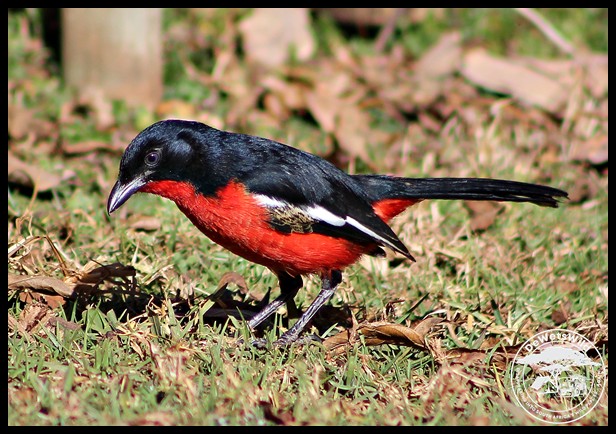
Laniarius atrococcineus Rooiborslaksman Crimson-breasted Shrike
Laniarius ferrugineus Suidelike Waterfiskaal Southern Boubou
Lanius collaris Fiskaallaksman Common Fiscal
Lanius minor Gryslaksman Lesser Grey Shrike
Lophoceros nasutus Grysneushoringvoel African Grey Hornbill
Macronyx capensis Oranjekeel Kalkoentjie Cape Longclaw
Merops apiaster Europese Byvreter European Bee-eater
Microcarbo africanus Rietduiker Reed Cormorant
Mirafra africana Rooineklewerik Rufous-naped Lark
Motacilla capensis Gewone Kwikkie Cape Wagtail
Muscicapa striata Europese Vlieevanger Spotted Flycatcher
Neophedina cincta Gebande Oewerswael Banded Martin
Numida meleagris Gewone Tarentaal Helmeted Guineafowl
Oena capensis Namakwaduifie Namaqua Dove
Ortygospiza atricollis Gewone Kwartelvinkie African Quail Finch
Oxylophus jacobinus Bontnuwejaarsvoel Jacobin Cuckoo
Passer diffusus Gryskopmossie Southern Grey-headed Sparrow
Passer melanurus Gewone Mossie Cape Sparrow
Phalacrocorax lucidus Witborsduiker White-breasted Cormorant
Phoeniculus purpureus Rooibekkakelaar Green Wood-hoopoe
Phylloscopus trochilus Hofsanger Willow Warbler
Ploceus capensis Kaapse Wewer Cape Weaver
Ploceus velatus Swartkeelgeelvink Southern Masked Weaver
Prinia flavicans Swartbandlangstertjie Black-chested Prinia
Prinia subflava Bruinsylangstertjie Tawny-flanked Prinia
Pternistis swainsonii Bosveldfisant Swainson’s Spurfowl
Pycnonotus tricolor Swartoogtiptol Dark-capped Bulbul
Quelea quelea Rooibekkwelea Red-billed Quelea
Saxicola torquatus Gewone Bontrokkie African Stonechat
Scleroptila gutturalis Kalaharipatrys Orange River Francolin
Scopus umbretta Hamerkop Hamerkop
Sigelus silens Fiskaalvlieevanger Fiscal Flycatcher
Sphenoeacus afer Grasvoel Cape Grassbird
Spilopelia senegalensis Rooiborsduifie Laughing Dove
Streptopelia capicola Gewone Tortelduif Cape Turtle Dove
Streptopelia semitorquata Grootringduif Red-eyed Dove
Struthio camelus Volstruis Common Ostrich
Tachybaptus ruficollis Kleindobbertjie Little Grebe
Tadorna cana Kopereend South African Shelduck
Tchagra senegalus Swartkroontjagra Black-crowned Tchagra
Telophorus zeylonus Bokmakierie Bokmakierie
Terpsiphone viridis Paradysvlieevanger African Paradise Flycatcher
Threskiornis aethiopicus Skoorsteenveer African Sacred Ibis
Trachyphonus vaillantii Kuifkophoutkapper Crested Barbet
Turdoides jardineii Pylvlekkatlagter Arrow-marked Babbler
Turdus smithi Geelbeklyster Karoo Thrush
Urocolius indicus Rooiwangmuisvoel Red-faced Mousebird
Vanellus armatus Bontkiewiet Blacksmith Lapwing
Vanellus coronatus Kroonkiewiet Crowned Lapwing
Vanellus senegallus Lelkiewiet Wattled Lapwing
Vidua macroura Koningrooibekkie Pin-tailed Whydah
Zosterops virens Kaapse Glasogie Cape White-eye

List of mammals we saw at Rietvlei Nature Reserve during March and April 2025 (14 species):

Scientific Afrikaans English
Alcelaphus buselaphus Rooihartbees Red Hartebeest
Antidorcas marsupialis Springbok Springbuck
Canis mesomelas Rooijakkals Black-backed Jackal
Ceratotherium simum Witrenoster White Rhinoceros
Connochaetes gnou Swartwildebees Black Wildebeest
Cynictis penicillata Witkwasmuishond Yellow Mongoose
Damaliscus pygargus Blesbok Blesbuck
Equus quagga Bontsebra Plains Zebra
Hippopotamus amphibius Seekoei Hippopotamus
Hydrictis maculicollis Kleinotter Spotted-necked Otter
Kobus ellipsyprymnus Waterbok Waterbuck
Sylvicapra grimmia Grysduiker Common Duiker
Syncerus caffer Buffel Cape Buffalo
Taurotragus oryx Eland Eland

Dotted Blue Butterfly

Tarucus sybaris

The tiny Dotted Blue butterfly – it has a wingspan of only about 2.5cm – may be seen throughout the year but they’re much more numerous during spring, summer and early autumn. They fly slow and low to the ground, settling often on small flowers and muddy patches of ground. Larvae feed on the leaves of the buffalo thorn tree and its close relatives. In South Africa they are found from the Eastern Cape, through the Free State, Kwazulu-Natal, North West and Gauteng to Limpopo and Mpumalanga, indicative of their preference for grassland and savanna habitats.

Lesser Swamp Warbler

Acrocephalus gracilirostris

Lesser Swamp Warblers, as their name suggests, confine themselves to reedbeds and stands of bullrushes in a wide variety of wet habitats – marshes, estuaries, riversides and even man-made wetlands like sewage ponds. Here they feed on a wide range of invertebrates picked off the surface of the water or emergent plants.

Lesser Swamp Warblers are usually seen in pairs – they are monogamous and territorial. The female builds their conical nest using strands of reeds and other plant material, usually placing it in a well-vegetated thicket over the water. They breed through spring and summer. Both parents incubate the clutch of 2 or 3 eggs over a two week period and then feed the nestlings until they fledge about 2 weeks after hatching.

In South Africa, Lesser Swamp Warblers are found in suitable habitat throughout the country, having expanded their distribution even into arid areas thanks to artificial water bodies constructed on farms and for municipal water supply and waste water treatment. Aside from isolated populations in Nigeria and Tchad it occurs widely through the eastern, central and southern parts of the continent. The IUCN considers the Lesser Swamp Warbler to be of least concern.

Banded Martin

Neophedina cincta

Banded Martins prefer open habitats, such as grassveld, marshlands and the fynbos shrublands. They visit South Africa during our spring and summer, arriving from about September to breed and then departing again by May to their overwintering areas in central Africa. They feed on flying insects caught in flight and are usually seen in pairs or small flocks. Banded Martins nest in tunnels that they dig in aardvark burrows, stream banks or eroded gullies. Both parents care for the 2-4 chicks, which leave the nest when they’re about 3 weeks old.

In South Africa Banded Martins are commonly found on our central highlands, with a smaller concentration occurring in the Western Cape and scattered records from elsewhere. Depending on the season they roam over most of sub-Saharan Africa. The IUCN lists the Banded Martin as being of least concern and note that their population is probably increasing due to agricultural practices opening up more areas for them to utilise.

Black-chested Prinia

Prinia flavicans

A denizen of shrublands, thornveld and riverine thickets in more open areas, the Black-chested Prinia is a very active little insectivorous bird, hopping about the branches gleaning its food from among the leaves and bark of shrubs and trees. Black-chested Prinias are usually encountered in pairs and may nest at any time of year, though more usually in the spring and summer months, incubating a clutch of 2-6 eggs over a 2 week period in a pear-shaped nest woven of green grass and placed in a dense shrub. The chicks leave the nest about 2 weeks after hatching. The cuckoo finchwhich we featured a short while ago here on DeWetsWild – often parasitizes the nests of Black-chested Prinias.

The Black-chested Prinia occurs widely in north-western and central South Africa and in Namibia and Botswana, as well as in western Zimbabwe and Zambia and southern Angola. According to the IUCN it is in no danger of extinction.

African Quail-Finch

Ortygospiza atricollis

The African Quail-Finch occurs throughout South Africa, being absent only from the arid west of the country, and patchily through most of sub-Saharan Africa. Though difficult to observe up close due to their skittish nature, these highly nomadic flock-living birds are common in grasslands and woodlands with bare ground, where they feed on seeds and small insects, and usually found close to water. Their nesting season coincides with periods of high rainfall when grasses are in seed. It takes a little over 2 weeks for the clutch of up to 6 eggs to hatch. The chicks leave the nest when they’re about 3 weeks old and become self-sufficient about a month later.

The IUCN lists the African Quail-Finch as being of least concern.

Sagewood

Buddleja salviifolia

With its sweetly-scented flowers, being a feature of our spring season, and its aromatic leaves, the Sagewood has become a popular garden plant frequented by a variety of birds and insects like bees and butterflies. It’s usual growth form is a shrub that may grow up to 4m tall. Sagewood occurs naturally throughout the wetter parts of South Africa, from the Western Cape to Limpopo, growing along streams and on hillsides. In traditional medicine the roots are boiled as a remedy for cough and colic, and in olden days the wood was used to make spears and fishing poles.

Wahlberg’s Striped Skink

Trachylepis striata wahlbergii

Wahlberg’s Striped Skink distribution centres in the Zambezi basin, from southern Angola, Zambia and western Mozambique into Zimbabwe, northern Botswana and northern Namibia. Some taxonomists consider it to be a species in own right, though more research is required to determine whether it is fact not only a subspecies of the Striped Skink, with which it shares many behavioural traits, including giving birth to live babies from eggs that develop and hatch inside the mother’s body instead of being laid. They are quite large and may grow to a length of 11cm, excluding the tail from the measurement.

Cuckoo Finch

Anomalospiza imberbis

The Cuckoo Finch is an uncommon and highly nomadic bird in South Africa, with a patchy distribution across parts of Gauteng, Limpopo, Mpumalanga and Kwazulu-Natal, and a much sought-after tick on the list of many avid local birdwatchers. These seed-eaters may migrate widely in response to rainfall and are usually seen in small flocks of between 8 and 50, though sometimes up to a thousand may move together. They’re also found over much of sub-Saharan Africa, though in a similarly patchily distributed and nomadic fashion.

Cuckoo Finches inhabit moist grasslands and wetlands and get their name from their habit of laying their own eggs in the nests of species of Cisticola and Prinia. Females lay up to 30 eggs during the summer season, leaving a single egg per nest after removing all the host’s own eggs from it. The chick hatches within two weeks and, being fed insects by its adoptive parents, grows quickly to the point where it is able to leave the nest before it is 3 weeks old. Its host parents will take care of it for several more weeks before it joins up with a flock of other Cuckoo Finches.

The IUCN lists the Cuckoo Finch as being of least concern.


Cape Skink

Trachylepis capensis

The Cape Skink inhabits a wide range of habitats and occurs in all South Africa’s provinces, in Namibia, Lesotho and parts of Eswatini, Zimbabwe and Botswana, and the IUCN considers the species to be of least concern. Sadly they suffer badly in urban areas due to predation by domestic cats. They tame easily and are quite gentle. These lizards are diurnal and hunt for insects in open patches. Females give birth to up to 18 live babies, usually in the summer months. Fully grown, and not including the tail, they may reach a length of 13cm.