St. Lucia’s Igwalagwala Trail

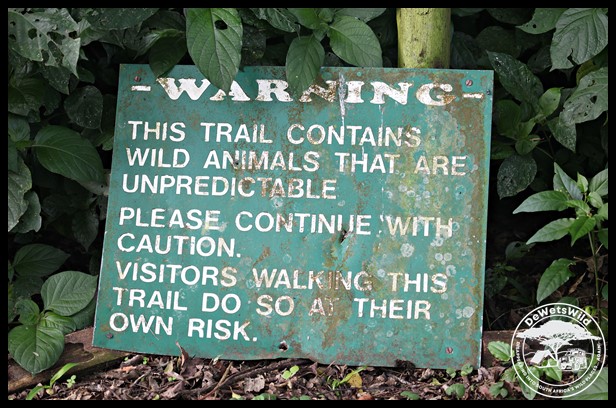
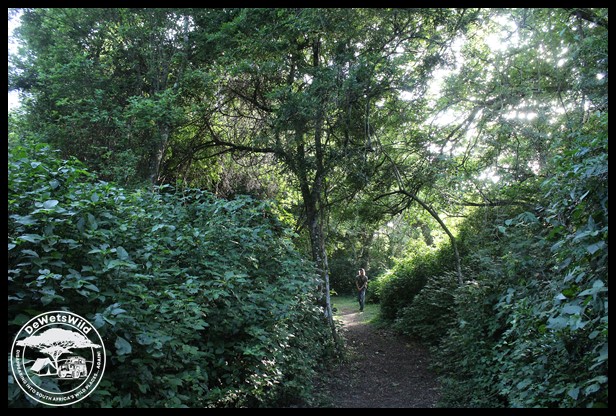
One of the things that make the holiday town of St. Lucia in South Africa’s Kwazulu-Natal Province so popular is the fact that it is entirely surrounded by the wild iSimangaliso Wetland Park and thus inhabited by an amazing variety of wildlife – even more dangerous kinds like hippos and leopards. On the southern edge of the town is a large pocket of indigenous swamp forest through which the Igwalagwala Trail (actually a network of trails) winds its way. Walking through the forest, marveling at the trees and the bushes and the blooms and the berries and the birds and the bucks and the bugs and the butterflies as you go, will really be one of the highlights of your visit to this special corner of our country.

As you can imagine the forest abounds with various kinds of creatures – some easy to see and others expert at hiding. The calls of birds fill the air as you walk – Igwalagwala is the isiZulu name for the turacos, of which two kinds (the purple-crested and Livingstone’s) can be seen and heard here.

While you are welcome to walk the Igwalagwala Trail by yourself and unguided (during daylight!) – and that certainly is a wonderful experience – if you really want the forest to “open up” for you then you absolutely must take a hike through Igwalagwala with expert birding guide Ian Ferreira of St. Lucia Birding Tours.
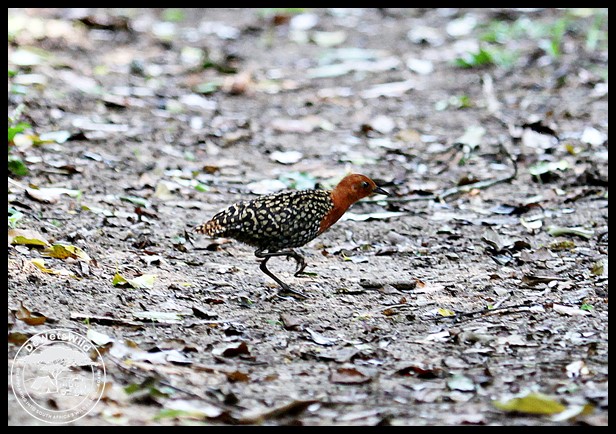
If it wasn’t for Ian’s expert knowledge of their habits and haunts and his skill at imitating their calls I would never have been able to photograph the rarely seen Buff-spotted Flufftail, about which I will tell you more in the next installment of DeWetsWild.

If you are interested in visiting St. Lucia and the iSimangaliso Wetland Park, remember that De WetsWild can assist you with reservations in the Eden Park and Sugarloaf Campsites in town or at wonderful Cape Vidal set on the Indian Ocean in the Eastern Shores section of the Park. We’ll also gladly help you arrange a walk with expert St. Lucia-based birding guide Ian Ferreira, and as soon as we start offering guided tours to the area you can be sure we’ll include an excursion with Ian in the itinerary.


Another breakaway to iSimangaliso

If you thought I was a little quiet over the past week-and-a-bit, you’d be right, as I disappeared into the wonderful iSimangaliso Wetland Park again, this time along with my younger brother. We were based in the holiday town of St. Lucia from where we made excursions into the surrounding sections of the park, and had a wonderful time, collecting lots of pictures to share with you in the weeks to come – this is just a little teaser.

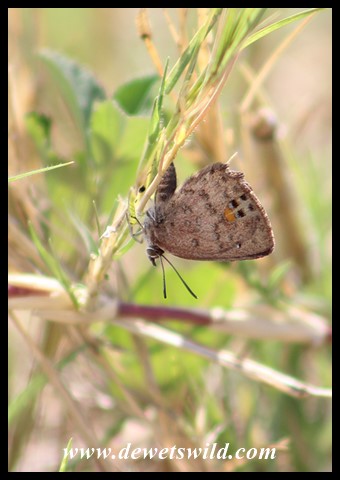
Dusky Copper Butterfly

Aloeides taikosama

The Dusky Copper is a small butterfly with a wingspan of only about 3cm which occurs from Kwazulu-Natal to North West through Mpumalanga, Gauteng and Limpopo where they inhabit grasslands and thorny savanna. They usually occur in small colonies and even when disturbed will not fly far from their colony. Adults are seen from September to May.

European Honey-Buzzard

Pernis apivorus

European Honey-Buzzards are rare visitors to South Africa during our summer months, arriving around November and departing again by May. While they’ve been recorded in all our provinces it seems most of the limited sightings are in and around Gauteng. Their breeding range stretches from western Europe to central Asia, migrating to sub-Saharan Arica when the northern climes get chilly. The IUCN considers it to be of least concern, with an estimated population of between a quarter- and half-a-million.

European Honey Buzzards are insectivorous and have a particular liking for wasp and bee larvae and pupae, even digging up nests from underground. They are usually encountered in densely vegetated habitats, like forest, woodland, plantations and gardens. They’re about 55cm long and weigh approximately 750g.

Pill-millipede

Genus Sphaerotherium

54 species of Pill-millipede from the genus Sphaerotherium are known from Southern Africa, and coastal Kwazulu-Natal Province is especially rich in the number of species found there.

South Africa’s largest species, the Giant Pill Millipede, can grow to 5cm in length and is the size of a ping-pong ball when it is curled up. This habit of rolling into an impenetrably tight ball when threatened is probably the most endearing characteristic of these fascinating creatures. Another unusual trait of Pill-millipedes is that the males intent on breeding can produce a sound by stridulation – rubbing modified back legs against ridges on the final segment produces a vibrating sound, unique to each species, that the female picks up and then allows the male to mate with her.

Pill-millipedes live in the moist leaf-litter on forest floors, feeding on decaying leaves, fruit and wood, and thus perform a vital ecological function by recycling nutrients. They’re mostly active at night.

Introducing DeWetsWild Photography!

The very best of DeWetsWild’s photographs is now available for purchase at DeWetsWild Photography


African Small White Butterfly

Dixeia charina

One of the smaller species of the family, with a wingspan ranging only up to 4cm, the African Small White has a limited distribution stretching from the Garden Route to the southern Lowveld where they inhabit coastal, montane and riverine forests and dense woodlands. Larvae feed on the leaves of caperbushes. Adults fly year-round, reaching peak numbers towards the end of summer.

Redbreast Tilapia

Coptodon (Tilapia) rendalli

A popular angling species, growing to a weight of about 2.5kg and a length of roughly 45cm, the Redbreast Tilapia prefers still, well-vegetated waters in rivers and marshes and thrives in dams. Water plants and algae form the bulk of their diet, but they will also eat invertebrates and even small fishes.

When breeding, which occurs in summer, the pair clears a nest up to a meter in diameter among the plants in shallow water in which they protect the eggs (up to 8,000!) and the fry, until these are between 1 and 2cm long. They can live for up to 7 years.

Redbreast Tilapia are found naturally from the DRC southwards, and have been introduced to a number of other African countries where they’re valued in aquaculture. In South Africa they occur naturally in the east-flowing rivers from the Limpopo-system in the north to the Tugela-system in the south, but there have also been some introductions to waters outside of this area. According to the IUCN, this species is of least concern.

Announcement! Ezemvelo KZN Wildlife Reservations

Announcement!

Next time you are planning a visit to any of the reserves managed by Ezemvelo KZN Wildlife (EKZNW), remember that DeWetsWild can assist you with your reservations!

https://dewetswild.com/about/reservation-services/ezemvelo-kzn-wildlife-reservations/

In the not-too-distant future we will also be offering tailor-made tours to Kwazulu-Natal’s nature reserves – watch this space!

Side-striped Jackal

Canis adustus

The Side-striped Jackal is the lesser known of South Africa’s two jackal species and far less common than the Black-backed Jackal.

Side-striped Jackals are mainly nocturnal, active from dusk to dawn, and by day they den in burrows, rocky outcrops or thickets. They hunt small mammals, birds, reptiles and invertebrates, will eat fruit and berries and will also consume carrion if it is available. They are usually seen singly, in territorial pairs or in family groups.

Female Side-striped Jackals have litters of 2-6 puppies, usually during spring and summer in South Africa, after a 2 month gestation. The male of the pair will bring food back to the den for the female and puppies. The young ones are weaned before they’re 3 months old, but stay with the parents for almost a year. Fully grown, Side-striped Jackals weigh about 10kg and stand about 45cm high at the shoulder. They have a life expectancy in the wild of 10 to 12 years.

Although Side-striped Jackals usually occur at low densities, they’re not endangered and according to the IUCN is of least concern. They’re found throughout the moist savanna habitats of sub-Saharan Africa, from West Africa to Ethiopia, and southwards as far as Angola in the west and South Africa in the south-east. In our country they used to be found only in the north of Kwazulu-Natal and the Lowveld of Mpumalanga and Limpopo, but it appears that they are expanding their range of late. The South African population is estimated at a maximum of around 9,000.