Winter in Mokala: Stofdam Hide

Almost smack in the middle of the Mokala National Park you will find the Stofdam Hide; an excellent place to stop for a while, stretch your legs and wait for the wildlife to come to you instead of driving around to find them.

This is a little compilation of sightings Hannes and I had one morning at Stofdam while visiting Mokala earlier in June.

We’ll soon be announcing a very exciting spring-time tour to the Mokala National Park – and we’re sure to spend some time at Stofdam on that trip! Do keep an eye on DeWetsWild’s facebook page so that you don’t miss out!

Winter in Mokala: Birdwatching

The Mokala National Park has a very healthy population of birds, and even in winter with all the summer migrants having left for warmer parts of the globe Hannes and I still managed to tick 66 species without much effort during our recent 4-night stay.

If you are a bird lover you are in for a treat, because we’ll be sharing even more of Mokala’s bird life tomorrow.

We’ll soon be announcing a very exciting spring-time tour to the Mokala National Park – Do keep an eye on DeWetsWild’s facebook page so that you don’t miss out!


Winter in Mokala: Quintessential Africa

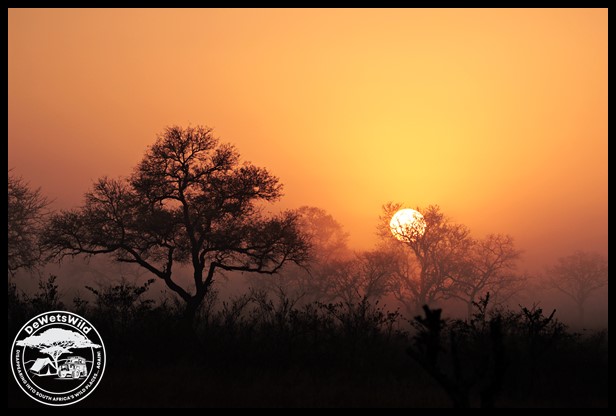
The scenery in Mokala National Park seems purpose-built for a television documentary on Africa, and I might be biased but there’s no continent with more beautiful sunrises and sunsets than ours.

Come take a drive with us through this beautiful national park:

We’ll soon be announcing a very exciting spring-time tour to the Mokala National Park – do keep an eye on DeWetsWild’s facebook page so that you don’t miss out!

Winter in Mokala: Familiar Pririt

This female Pririt Batis was also a regular visitor to Chalet #1 in Mokala National Park’s Lilydale Rest Camp when I visited along with Hannes Rossouw last week, but she was a lot more demure than the Chestnut-vented Warbler I showed you two days ago.

We’ll soon be announcing a very exciting spring-time tour to the Mokala National Park – do keep an eye on DeWetsWild’s facebook page so that you don’t miss out!

Winter in Mokala: Peeping Tom Gecko

On the last night of our visit to Mokala National Park last week I found this Bibron’s Thick-toed Gecko on the floor of the bathroom in Lilydale Rest Camp’s Chalet #1. I didn’t question it about its intentions but I did carry it outside to more suitable habitat. The towel was a very necessary precaution; she’s a biter!

We’ll soon be announcing a very exciting spring-time tour to the Mokala National Park – do keep an eye on DeWetsWild’s facebook page so that you don’t miss out!

Winter in Mokala: A very chummy Chestnut-vented Warbler

This little Chestnut-Vented Warbler came to welcome us to Lilydale’s Chalet 1 immediately on our arrival – Hannes and I hadn’t even unpacked the car yet! Invariably it would appear in a flash every time we stepped outside. So habituated was it that it would peck crumbs from beneath our hands where we sat eating sandwiches on the deck outside the chalet, offering wonderful opportunities for up-close views of a bird species that is notoriously frustrating to photograph because it never sits still!

We’ll soon be announcing a very exciting spring-time tour to the Mokala National Park – do keep an eye on DeWetsWild’s facebook page so that you don’t miss out!


Winter in Mokala: Lilydale Rest Camp

I am fresh back from a mid-week visit to the Mokala National Park in our Northern Cape Province with friend and colleague Hannes Rossouw.

We stayed in the beautifully situated Lilydale Rest Camp, where our chalet – # 1 – had a lovely view over the Riet River. Truth be told, all the chalets in the camp as well as the dining room behind reception have equally good views of the fast-flowing stream down below.

Lilydale might be built to provide a comfortable stay to human visitors, but it seems to be even more popular with Mokala’s wildlife – from tiny birds to kudus paid us a visit during our stay, and I’ll be telling you more about three of the cutest visitors in the next three posts on DeWetsWild.

We’ll soon be announcing a very exciting spring-time tour to the Mokala National Park – do keep an eye on DeWetsWild’s facebook page so that you don’t miss out!

Agapanthus

Genus Agapanthus

The genus Agapanthus, known as Blue Lily, Star of Bethlehem, Lily of the Nile and African Lily in different parts of the world, is a family of flowering plants consisting of between 6 and 10 species that occur naturally in southern Africa, though they’ve been spread to nearly all corners of the world due to their popularity as garden plants. These are hardy plants, relatively pest resistant and easily propagated. Agapanthus plants grow to about 1m tall. It contains chemical compounds that are useful for a wide range of medical conditions, ranging from inflammation to coughing, explaining why it is so widely used in traditional medicine and folklore.
Incidentally, the winner of this year’s Chelsea Flower Show Plant of the Year was an Agapanthus bred here in South Africa by another De Wet (no relation, as far as I know).

Mole Snake

Pseudaspis cana

The Mole Snake is a large snake – it may grow to 2m in length – that kills its prey, which includes small reptiles and mammals like moles and rodents, by constriction. Left unmolested, Mole Snakes are harmless to humans; in fact they’re very useful to have around as an effective control measure for pests. Attempting to catch one by hand however is likely to end up in deep bite marks that need stitches to close.

Mole Snakes get their name from their habit of staying mainly underground in animal burrows, where of course they also find their preferred prey. They mate in spring and females give birth to between 20 and 90 live babies in autumn. Males will fight each other viciously.

Mole Snakes are widely distributed in Africa south of the equator and occur all over South Africa. The IUCN considers it to be of least concern.

Platannas

Genus Xenopus

Known in the rest of the world as the African Clawed Frog, there are three kinds of Platannas found in South Africa:

  • Xenopus gilli, the Cape Platanna, which occurs only in a narrow strip along the coast from Cape Town to Cape Agulhas. It is considered to be critically endangered due to habitat loss and fragmentation of their population. Grows to about 6cm long.
  • Xenopus muelleri, the Tropical Platanna, which occurs in extreme northern Kwazulu-Natal and the Lowveld of Mpumalanga and Limpopo, extending further as far as southern Kenya. Measures around 9cm in length.
  • Xenopus laevis, the Common Platanna, found over most of South Africa and our neighbouring states. Can grow to almost 15cm in length.

Platannas are almost entirely aquatic amphibians that will only leave the water to migrate to new water bodies, which usually happens during rainy periods or when their current abode dries out (and in the latter instance they might just as easily dig themselves into the mud to aestivate until the water returns). They’re commonly found in almost every fresh water habitat, whether natural or man-made. Platannas are carnivores that feed on a wide variety of aquatic creatures ranging in size from zooplankton to fishes and even their own young. Unlike other frogs they don’t have long, sticky tongues but will use their hands and fingers to hold onto food and push it into their mouths.

Platannas breed at the start of the rainy season, when the male holds onto the back of the female – a position known as amplexus – and the couple then swims around their pond to deposit several hundred eggs singly on solid objects. The tadpoles hatch within two days and metamorphose quickly, being capable of fully transforming into adult form within 2 to 4 months of hatching depending on temperatures and food supply. Platannas are a favourite food item for many kinds of large fish, reptiles, birds and mammals but may live to 15 years old in the wild.

Between the 1930s and 1960s Platannas were used in crude but reliable pregnancy tests, as the females will start laying eggs within hours of being injected under the skin with the urine of a pregnant woman. They’re still widely used in experiments and biological studies, and this is likely the method by which they’ve become exotic invaders in many places of the world beyond their natural distribution in Sub-Saharan Africa.